
www.aero-defence.tech
15
'26
Written on Modified on
DLR research flights target Atlantic winter weather forecasting
DLR supports the NAWDIC campaign using the HALO research aircraft to collect high-resolution Atlantic atmosphere data, improving winter storm forecasts, climate models and civil security preparedness in Europe.
www.dlr.de
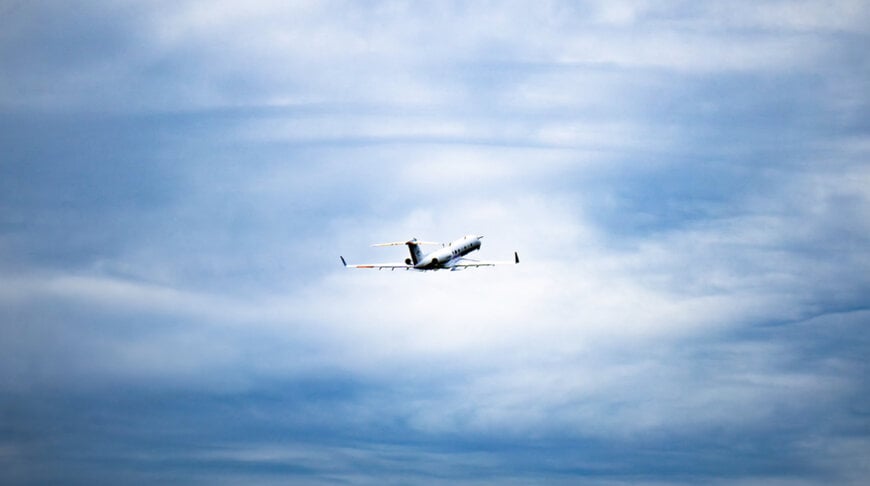
Severe winter weather in Western Europe is often driven by atmospheric processes that develop far upstream over the North Atlantic. Yet this region remains sparsely observed.
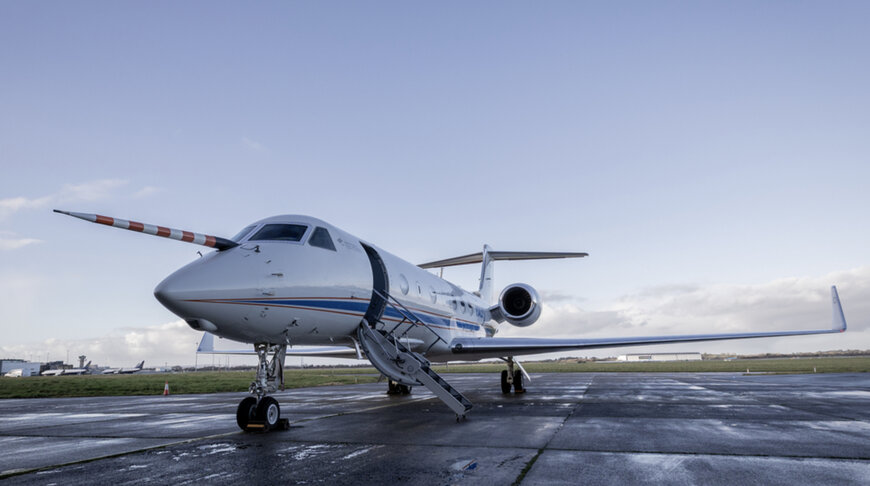
To address this gap, the international NAWDIC (North Atlantic Waveguide, Dry Intrusion, and Downstream Impact Campaign) measurement campaign began on 13 January 2026, deploying airborne and ground-based instruments to improve understanding of winter storm formation and downstream impacts. A central role is played by the HALO (High Altitude LOng Range) research aircraft operated by Deutsches Zentrum für Luft- und Raumfahrt (DLR).
Closing a critical observation gap over the Atlantic
Low-pressure systems forming over the North Atlantic are a primary driver of strong winds, heavy rainfall and sudden cold spells in Europe. Events such as Storm Elli in January 2026 highlighted how rapidly these systems can disrupt transport, infrastructure and public safety.
Many of the key physical processes involved — including jet-stream dynamics and interactions between the ocean and atmosphere — occur far from land-based observation networks. NAWDIC aims to close this data gap through coordinated, high-resolution measurements over a six-week winter campaign.
The project is led by the Karlsruhe Institute of Technology (KIT) with major scientific support from the DLR Institute of Atmospheric Physics. Researchers from more than 30 institutions across Europe and North America are involved, focusing on improving both short-term weather forecasts and longer-term climate models.
Focus on dry intrusions and extreme weather
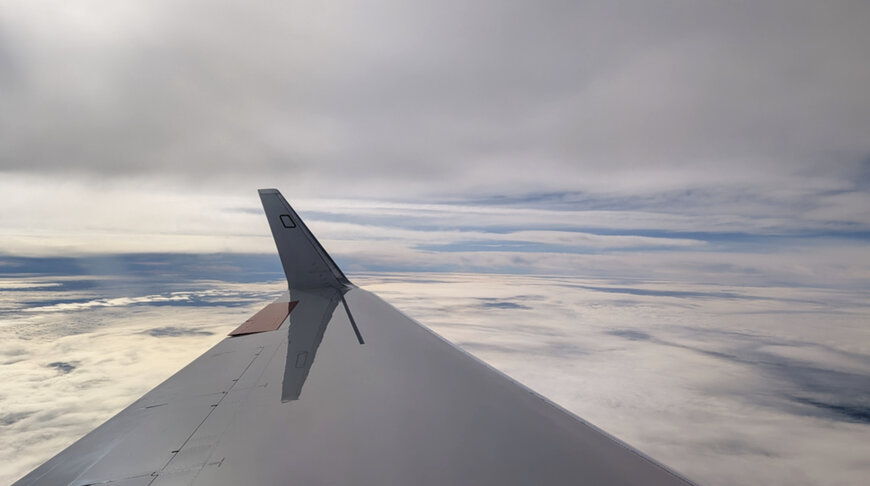
A core scientific objective of NAWDIC is the investigation of so-called dry intrusions. These are descending air masses originating from the upper troposphere or lower stratosphere that can intensify cyclones and contribute to strong winds, turbulence and extreme precipitation, particularly in winter.
Many forecast models still struggle to represent these processes accurately. By capturing their structure and evolution in detail, the campaign seeks to improve predictive capability for high-impact winter weather events that have significant societal and economic consequences.
HALO and advanced lidar measurements
HALO operates at altitudes of up to 14 kilometres and is uniquely suited for long-range missions over remote ocean regions. During NAWDIC, the aircraft is equipped with advanced lidar remote-sensing instruments developed by DLR.
These include the WALES water vapour lidar and the HEDWIG wind lidar, which is being deployed on HALO for the first time. Together, they provide continuous vertical profiles of wind, humidity and ozone between the aircraft and the Earth’s surface, enabling detailed analysis of atmospheric layering and moisture transport.
The campaign is based at Shannon International Airport in Ireland, allowing HALO to cover large areas of the North Atlantic thanks to its extended range.
Operational complexity and coordination
Conducting research flights over the North Atlantic presents operational challenges. The region is characterised by dense transatlantic air traffic organised along daily redefined NAT tracks, limited radar coverage and high coordination requirements.
DLR’s Flight Experiments facility is responsible for flight planning and coordination with international air traffic control authorities. During missions, flight crews integrate research operations safely into controlled airspace using data-based communication systems.
Ground-based and international integration
Airborne observations are complemented by ground-based measurements using KITcube, KIT’s mobile atmospheric observation system, deployed in Brittany, France, since November 2025. KITcube combines multiple remote-sensing instruments to observe atmospheric processes from near-surface levels up to around 10 kilometres altitude.
NAWDIC is also coordinated with parallel meteorological campaigns in North America under long-term planning with the World Meteorological Organization (WMO). In January and February 2026, up to ten research aircraft — including HALO — are operating simultaneously from the Pacific to Europe, enabling a transcontinental view of evolving weather systems.
Relevance for forecasting and civil security
By improving representation of Atlantic atmospheric processes in numerical models, NAWDIC aims to enable earlier and more reliable forecasts of winter storms and associated hazards. Accurate prediction of such events is critical not only for aviation and weather services, but also for civil protection authorities responsible for safeguarding people, infrastructure and economic activity.
The campaign highlights how advanced airborne observation platforms and international collaboration can directly support improved resilience to extreme weather in Europe.
www.dlr.com
