
www.aero-defence.tech
05
'26
Written on Modified on
Xylem's Guide to Flexible Impeller Pumps for Marine Engine Cooling
Flexible impeller pumps are widely used in marine engine cooling systems due to their self-priming capability, compact design, and ability to deliver reliable cooling across varied operating conditions.
www.xylem.com
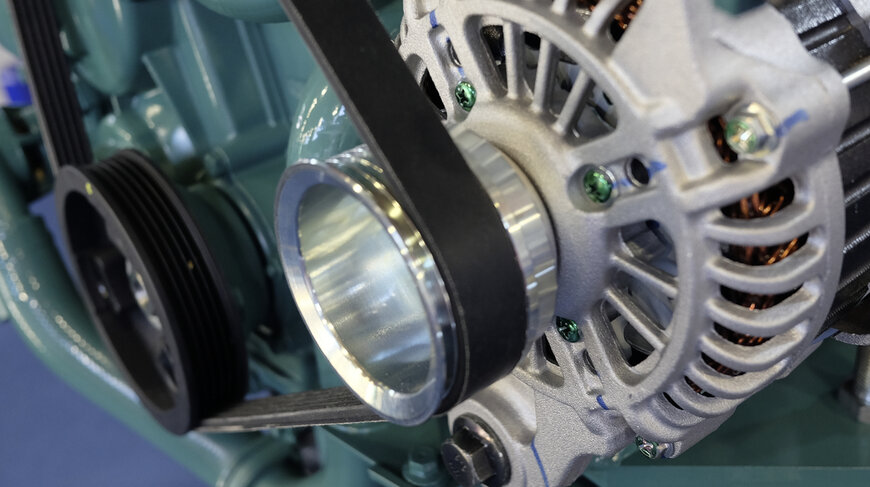
Marine engine cooling systems play a critical role in ensuring reliable propulsion, thermal stability, and long service life under demanding operating conditions. Selecting the appropriate pump technology is therefore a fundamental design decision. Among the available options, flexible impeller pumps (FIPs) are commonly used in raw-water and auxiliary cooling circuits because they combine operational simplicity with broad application flexibility.
Operating principles and advantages of flexible impeller pumps
Flexible impeller pumps are positive displacement pumps that use an elastomer impeller rotating within an eccentric housing. As the impeller blades flex, they create sealed chambers that draw in and discharge fluid at a consistent rate. This design enables several practical advantages for marine cooling applications.
FIPs are inherently self-priming, capable of lifting water up to approximately 3 m under dry conditions and up to 8 m when wetted. This allows simpler installations without foot valves and supports reliable operation even when suction conditions vary. Because the impeller is the only moving component in contact with the fluid, the pump design avoids metal-to-metal contact, reducing noise, wear, and the risk of mechanical seizure.
These pumps can handle thin or moderately viscous liquids and tolerate limited suspended solids, making them suitable for seawater and freshwater cooling circuits. Their compact size and ability to operate across a wide speed range allow flexible mounting orientations and integration into constrained engine compartments.
Performance ranges and operating limits
Standard flexible impeller pumps are designed for continuous operation within defined pressure, temperature, and speed limits. Typical operating heads range from approximately 12 m for small port sizes to 20 m for larger ports, corresponding to pressures up to 2 bar. Temperature limits generally extend from 7 °C to 80 °C, with colder applications requiring manufacturer consultation.
Maximum operating speeds depend on pump size and bearing configuration. Smaller port sizes may operate at speeds up to 3600 rpm, while larger pumps are typically limited to around 2200 rpm to maintain bearing life and suction stability. Operating within the lower portion of the recommended pressure range extends impeller service life and reduces maintenance frequency.
Marine engine cooling system architectures
Flexible impeller pumps are most commonly used in three marine engine cooling configurations: heat exchanger cooling, keel cooling, and direct raw-water cooling.
In heat exchanger systems, the engine block is cooled by a closed freshwater circuit, while a raw-water pump circulates seawater through the heat exchanger to remove heat. In these systems, pump sizing must accommodate engine heat rejection, additional coolers, and safety margins for continuous operation. For commercial diesel engines, raw-water flow is typically selected at approximately 15 gallons per minute per 100 horsepower at maximum load.
Keel cooling systems replace the raw-water heat exchanger with external piping attached to the vessel hull. Where system pressure losses are high, flexible impeller pumps may supplement or replace centrifugal circulation pumps to maintain sufficient flow through the engine and exhaust components.
Direct cooling systems circulate raw water directly through the engine block. Although simpler, this approach requires lower operating temperatures to limit scaling and corrosion, making it less suitable for high-duty commercial engines.
Importance of safety margins and suction design
Adequate safety margins are essential in marine cooling systems, as reductions in water flow can quickly lead to overheating. Flow capacities are typically selected with margins of around 30% to account for fouling, wear, and adverse operating conditions. Gasoline engines often require additional capacity due to higher heat rejection at idle.
Suction system design is particularly critical for flexible impeller pumps. Suction pipe diameters should be at least equal to the pump inlet size, with larger diameters recommended for longer runs. Straight pipe runs, smooth bends, correctly sized strainers, and unobstructed seacocks all contribute to stable pump operation and reduced cavitation risk.
Pump selection and drive considerations
Pump selection depends on required flow, available space, operating speed, and drive method. Ball-bearing pumps are preferred for higher speeds and continuous duty, while heavy-duty designs offer increased resistance to belt tension, abrasive conditions, and elevated pressures.
Drive arrangements—including direct coupling, belt drives, gear drives, and crankshaft-mounted configurations—must be carefully aligned and tensioned. Improper alignment or excessive belt tension is a common cause of premature bearing and seal failure. Flexible hoses and correctly designed torque arms are necessary to prevent unintended loads on pump bearings.
Designing for reliability in marine cooling systems
Flexible impeller pumps remain a proven solution for marine engine cooling when correctly selected, installed, and maintained. Their ability to self-prime, tolerate variable conditions, and deliver reliable flow makes them well suited to raw-water and auxiliary cooling circuits across a wide range of vessel types.
By combining appropriate pump sizing, robust suction design, and preventive maintenance practices, marine engineers can ensure long-term cooling performance and protect engine assets under both recreational and commercial operating profiles.
www.xylem.com
