
www.aero-defence.tech
26
'25
Written on Modified on
AI Sustainment for U.S. Combat Aircraft
Lockheed Martin and MANTECH will integrate AI-driven sustainment technologies to improve readiness, availability, and lifecycle performance across U.S. military aircraft fleets.
www.lockheedmartin.com
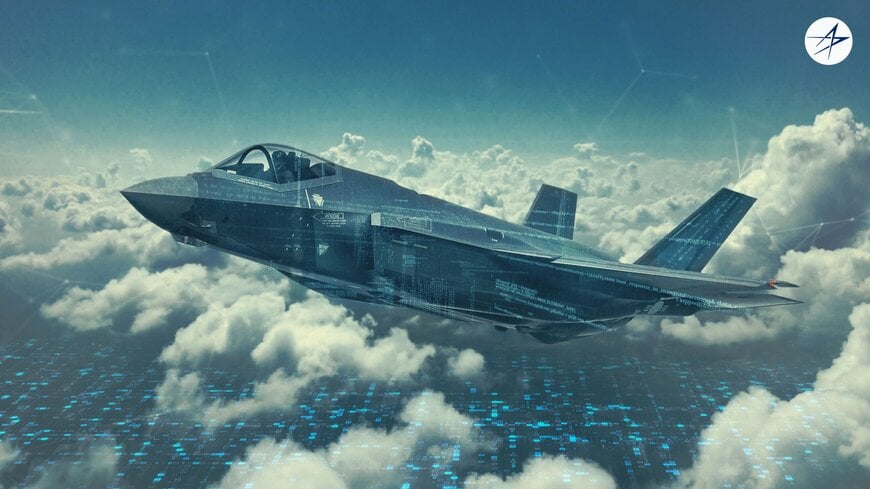
Lockheed Martin and MANTECH have signed a strategic teaming agreement to deploy artificial intelligence–enabled sustainment solutions across the U.S. combat aircraft fleet, targeting improved readiness, predictive maintenance, and operational efficiency.
Rationale for AI-enabled sustainment
Modern combat aircraft operate in increasingly complex and data-intensive environments, where sustainment performance directly affects mission availability and force readiness. Legacy maintenance approaches often rely on scheduled inspections and fragmented logistics data, which can limit responsiveness and increase downtime.
The Lockheed Martin–MANTECH collaboration focuses on applying AI-driven analytics to address these constraints, enabling real-time aircraft performance monitoring, predictive maintenance, and optimized logistics support across both legacy and next-generation platforms. All solutions are intended to meet stringent defense cybersecurity and data protection requirements.
Integrated sustainment architecture
The teaming agreement combines Lockheed Martin’s AI Factory—its internal framework for developing, deploying, and scaling AI capabilities across defense programs—with MANTECH’s experience in defense analytics, enterprise modernization, and secure mission integration.
Together, the companies aim to create integrated sustainment ecosystems that link aircraft health data, maintenance actions, and supply-chain information. Such integration supports earlier fault detection, more accurate prediction of component life, and better alignment between maintenance planning and operational demand.
Operational and strategic impact
By shifting from reactive to predictive sustainment, AI-enabled approaches can reduce unplanned maintenance events, improve fleet availability, and extend platform service life. These outcomes are particularly relevant for combat aircraft fleets operating at high tempo, where readiness margins are critical.
The collaboration is designed to be scalable and deployable across U.S. forces and allied operators, supporting global sustainment needs while maintaining interoperability and security.
Perspective from the partners
Lockheed Martin describes the agreement as a step toward building resilient, globally deployable sustainment ecosystems that support both U.S. and allied air forces. MANTECH highlights the role of real-time performance data and analytics in maximizing aircraft readiness and operational lifespan.
Broader context in defense sustainment
The agreement reflects a wider shift within defense aviation toward data-centric sustainment models, where AI and advanced analytics play a central role in managing increasingly complex platforms. As aircraft systems generate larger volumes of operational data, integrating AI into sustainment workflows is becoming a key enabler for maintaining readiness under constrained budgets and evolving mission requirements.
In this context, the Lockheed Martin–MANTECH partnership illustrates how defense primes and technology integrators are aligning to embed AI directly into sustainment architectures, rather than treating it as a standalone capability.
www.lockheedmartin.com
