
Starting Five: An Interview with JPB Système’s CEO
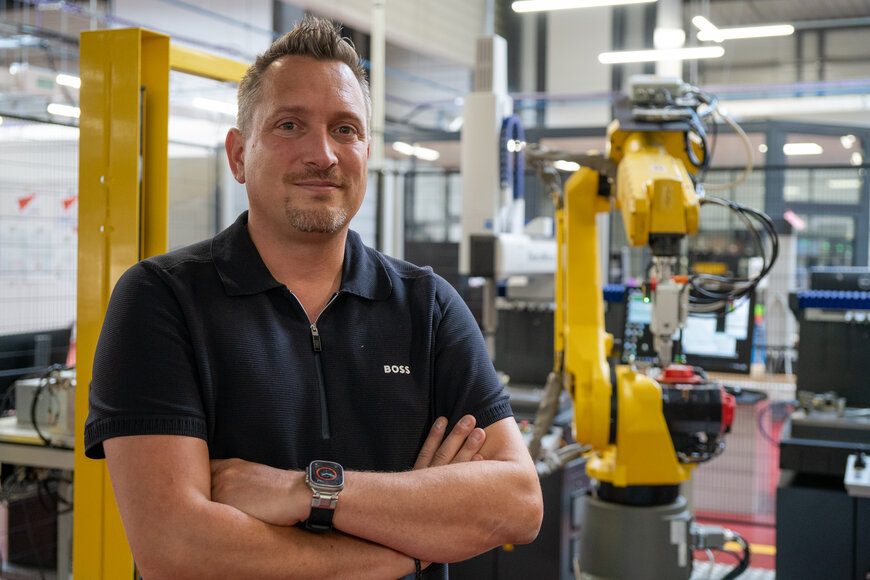
As the company marks 30 years of business and the recent opening of a new production facility in Eastern Europe, we caught up with JPB Système’s man at the helm, Damien Marc, who offered his insight on the current challenges and opportunities presented to aerospace manufacturers, and the impact of digitalisation on production operations.
www.jpb-systeme.com
1. Can you first give our readers a quick reminder of who JPB Système is and what you do?
Sure, we are a France-based manufacturer of technology solutions for aerospace, aeronautics and other industries. These include heritage products, notably self-locking systems used by the world’s leading aircraft engine manufacturers, as well as more recent digital-based efficiency-enhancing solutions. These comprise our advanced KeyProd production monitoring solution for the manufacturing floor, and our innovative Smart Washer solution, which improves maintenance efficiencies by enabling intelligent monitoring of bolt tightening. 2025 is a significant year for us in that we have not only celebrated our 30th anniversary, but have recently opened a 4,000 m² manufacturing facility in Poland. This will increase our manufacturing capacity by +60% while supporting regional and global growth.
2. As an aerospace manufacturer, what are the main challenges confronting companies like JPB Système, and others like you?
I think it’s fair to say that this industry faces several key challenges, including supply chain disruptions, sustainability and decarbonisation, as well as spiralling costs and geopolitical uncertainty. And those are just the external issues that, while having a bearing on our day-to-day operations, are additional to the various internal challenges specific to our own businesses and with which we typically have to contend.
To highlight just one current and foremost challenge, global inflation continues to pose a problem, and something we’re feeling across our supplier base with things like raw materials, tooling and machinery, and even salaries. You can’t simply hike up your own prices to customers to compensate for the price increase. The instability across the world and the uncertainty that it presents, especially with the way it can hit exchange rates, can impact customer confidence. We are constantly monitoring market shifts, looking at the wider context, using our judgement and trying as best as possible to predict what might happen next and the potential ramifications as we negotiate with suppliers and customers. Ultimately, there is always a degree of understanding in that we’re all in it together and trying to be ahead of the curve.
At the same time, while conscious of the need to be flexible and cautious, we still need to invest and add to our workforce, so it’s always a bit tricky. But it has been like this ever since COVID, so we are accustomed to it now.
3. Research and analysis company, Deloitte, recently said* that the industry has the potential for broad-based operationalization of many technologies, including AI. From your own perspective, is this something that you see holding true?
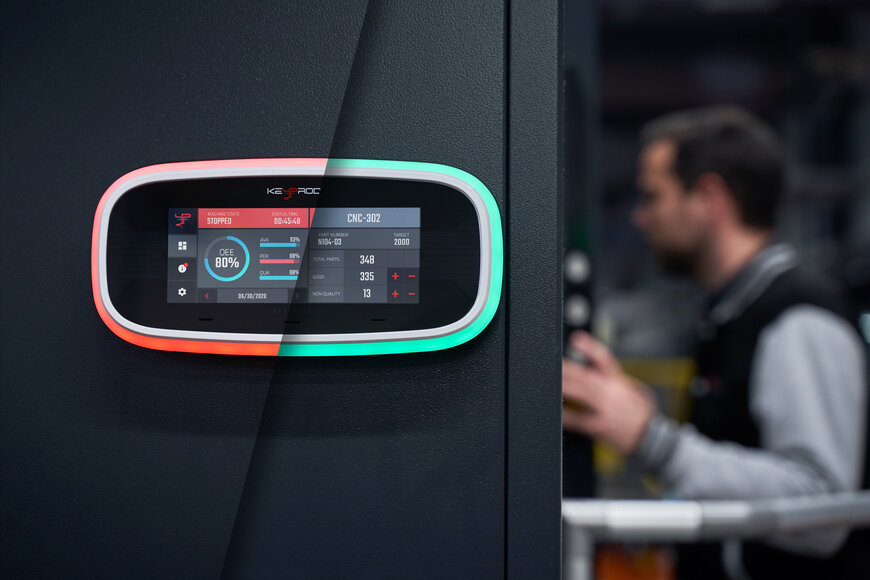
Yes, definitely, but I still think it’s quite varied insofar as the number of companies that are presently deploying Industry 4.0 enabled technologies to drive their operations via a connected factory floor. Taking our own situation as an example, we are an active member of many tech-focused Industry of the Future initiatives and have been intensifying our efforts to digitalise our operations for some time. This has seen us employ robotics and IT to automate production, track manufacturing progress, and store detailed records, including serialised product images. A key objective of this transformation is to refine our manufacturing processes, ensuring seamless data collection and analysis to improve planning, tracking, and product traceability. Indeed, our own KeyProd solution has been instrumental in enabling us to collect production data in real time.
For me, and others like me who are at the helm of manufacturing businesses, transforming production operations in this way offers invaluable insight to help us take the steps necessary to realise our objectives. Indeed, for JPB Système, the ability to leverage precise data analytics, enables us to enhance production planning, improve material efficiency, and reduce energy consumption — ultimately contributing to our decarbonization efforts.
But as I mentioned, there’s still a lot of disparity across the industry. I see plenty of companies that do not have access to their data and if that’s the case and it’s not centralised and archived to provide the retrospective insight needed, then it’s impossible to think about using AI.
4. To what extent does the digitalisation of certain manufacturing processes offset the ongoing issues of skilled labour shortages?
I think it helps address the issue of recruitment for certain tasks in some instances, but not categorically across the board when it comes to skilled labour – at least as regards replacing it like for like. There are clear advantages to be had from technologies like AI and robotics insofar as automating manufacturing operations, but for me, these advantages extend beyond enhancing factory floor efficiencies to improve production operations. It allows the re-distribution of labour to other functions, where in some cases, the individual’s skills can be utilised better, thereby inspiring that employee more than they perhaps would have been performing a mundane task that can now be undertaken by a robot.
It is here that the digitalisation of certain manufacturing processes can address skilled labour shortages, because those employees that were previously tasked with jobs now performed by a robot can, in some cases, potentially be re-trained to acquire the necessary specialist skills that are in short supply on the market, or indeed cannot be performed by machines. From my own standpoint, this has seen us, for example, look at personnel who were previously undertaking assembly-based roles, and re-train them in functions like specialist welding activities. But that said, as I often tell people, humans need robots and robots need humans and underscoring that point is the fact that JPB Système typically adds new employees every time we install a new robot.
5. Despite the challenges that you outlined, what opportunities do you feel exist for aerospace manufacturers right now?
Clearly, there are many opportunities to be seized for those of us operating in this space. I think the stance of the new administration in the USA – vis-à-vis its level of future support to European NATO members – presents a significant opportunity for contractors, solution providers and companies within the aerospace and defence manufacturing and supply chain. But even prior to that, the conflict in Ukraine has contributed to an increase in defence spending among certain member countries, which offers real benefits to manufacturers; from the larger players like BAE Systems and Thales, right through to the many smaller ones.
I can feel this push happening and sense a tangible drive within our industry as companies seek to better understand how they can leverage the opportunity to support the growth of the aerospace and defence industry in Europe. And like others, we are actively involved in conversations to explore where our own technology proposition could play a role.
www.jpb-systeme.com
