
www.aero-defence.tech
18
'24
Written on Modified on
SAFRAN'S GSG-8 GPS/GNSS SIMULATOR TRAINS PILOTS TO REACT TO REAL-WORLD SITUATIONS
By being trained with real instruments, pilots are more in-touch with the situation on the ground, ensuring better performance and safety during military air missions.
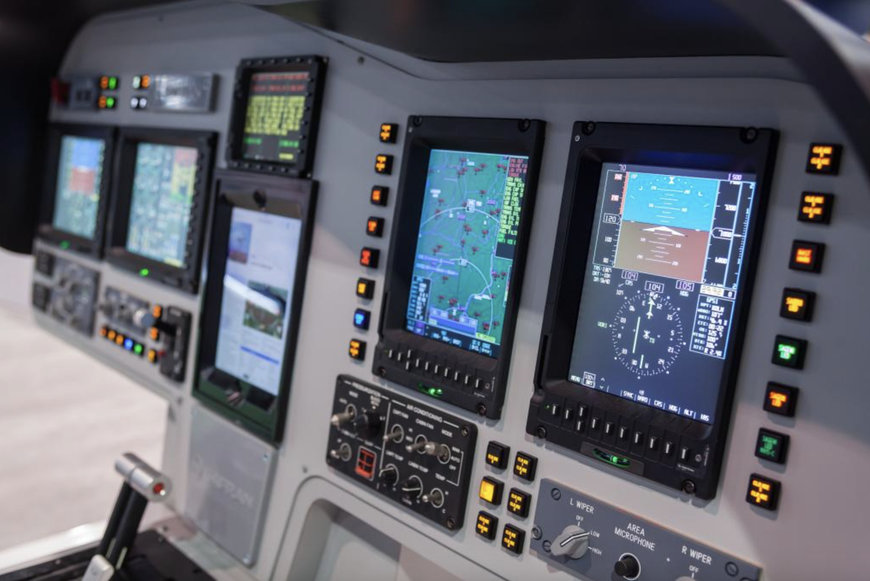
Military aircraft programs train pilots against threats such as drone swarms, but often neglect GPS/GNSS simulation to reproduce real cockpit instruments, instead using facsimile instruments.
However, the benefits of using a GPS/GNSS simulator are clear. It reproduces the GPS signals needed for the cockpit's navigation instruments to work properly by providing the signal in real-time, in contrast to a facsimile.
It comes with several advantages:
Pilots are trained with instruments and simulators that perfectly mimic the real aircraft. For the simulator designer, this means no trade-off between development costs and the quality of the simulation.
On the other hand, a GNSS simulator is able to detect any anomaly in an instrument and in the flight dynamics (forces applied to a flying aircraft), which gives the pilot real-time feedback from instruments, which is much more accurate than the feedback provided by a facsimile.
Customers who trust us
A leading military avionics company has already called on Safran in the past to equip a life-sized cockpit. The flight simulator used Safran's GSG-8, which faithfully recreates the aircraft's GPS/GNSS dynamics using HWIL (Hardware-in-the-Loop) technology. By sending out simulated real-time GPS signals, the flight simulator provides a true-to-life learning environment for the learner. For the customer, this solution is attractive for several reasons: it comprises sophisticated functionality, high performance, HWIL compatibility and cost-effectiveness.
