
www.aero-defence.tech
23
'23
Written on Modified on
Versatility and the military vehicle landscape
In this article, Roger Brereton, chief of sales at Pailton Engineering, explains how military vehicle design experts try to create vehicles that can work in difficult conditions and against new threats.
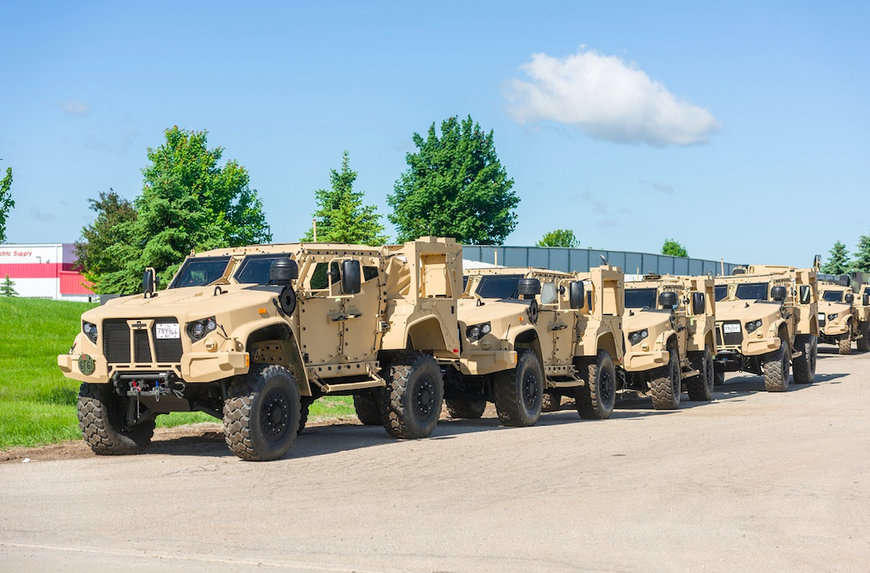
Despite the ending of the Cold War, the 1990s saw the emergence of new forms of conflict. One key trend was the growing prevalence of intrastate conflict, civil wars that spilled across national borders and were transnational in form. Another was the prevalence of security threats from non-state actors, such as terrorist or insurgent groups.
Following the tragic events of September 11, Western defence forces found themselves embroiled in brutal counter insurgency campaigns in Afghanistan and Iraq. The nature of the threats faced in these conflicts created new challenges for military vehicle design.
From Humvees to Oshkosh
It was the use of improvised explosive devices (IEDs), perhaps more than any other factor, that shaped the changing equipment needs of Western forces. This was especially so for military vehicles, which now needed to be engineered to withstand the threat of roadside bombs.
This challenge exposed the shortcomings of one of the world’s most famous vehicles. The High Mobility Multipurpose Wheeled Vehicle, or Humvee as it is better known, was widely used in the first Gulf War in 1991, a conflict whose short and decisive outcome showcased US military power at its zenith in the immediate post-Cold War period.
Although widely used early on in the conflicts in Afghanistan and Iraq , the Humvee was not originally designed for a combat role. Its low profile and lack of body armour made it an easy target for insurgents. Additional armour was hastily added following a high number of casualties in 2006, but that meant additional weight that the Humvee was not designed to carry. By 2010, their use outside of bases was increasingly restricted. Henceforward, Western forces used much more heavily armoured vehicles.
Military original equipment manufacturers (OEMs) set out designing vehicles that were specifically engineered to cope with the challenge posed by the IED threat. Heavier armour was key, but perhaps the most visible engineering change was the emergence of the V-shaped hull designed to offer better blast protection.
Improving survivability in the face of this threat was not the only engineering challenge that military vehicle OEMs had to face. The rugged terrain and searing temperatures also placed heavy demands on the vehicles. These vehicles and the parts they rely on must be extensively tested to withstand temperature extremes and the harshest under-chassis environments.
Looking to the future
The Humvee’s successor, the Joint Light Tactical Vehicle (JLTV), is built on a decade of experience in Mine Resistant Ambush Protection (MRAP) trucks in Afghanistan and Iraq and is combined with performance capabilities that would have seemed staggering a couple of decades ago. Anticipating what the next set of requirements e in a strategic environment where constant change is the norm is a major challenge for engineers who design these vehicles.
The IED threat is unlikely to disappear quickly. Their use by nonstate actors has increased significantly in the last decade, not just in the conflicts in Afghanistan and Iraq, but in any conflict where jihadist insurgents have been involved. Heavy body armour, and the design innovations brought about to accommodate this, will likely remain for many vehicle types.
On the other hand, military planners are having to hedge their bets in an uncertain world, where global security risks are rising, but where budgetary constraints an ever-present factor in decision-making. Those vehicles that offer versatility have a better chance of retaining their value. Vehicles like the JLTV and the Boxer, that can offer both IED protection and versatility, will likely retain their value in the face of new and emerging threats.
www.pailton.com
