
www.aero-defence.tech
04
'26
Written on Modified on
Raytheon Wins DARPA Contract to Build Advanced Optical Processing Circuits
Under a new DARPA contract Raytheon will develop all optical circuits that eliminate electrical conversions enabling faster threat detection and superior awareness in contested environments.
www.rtx.com
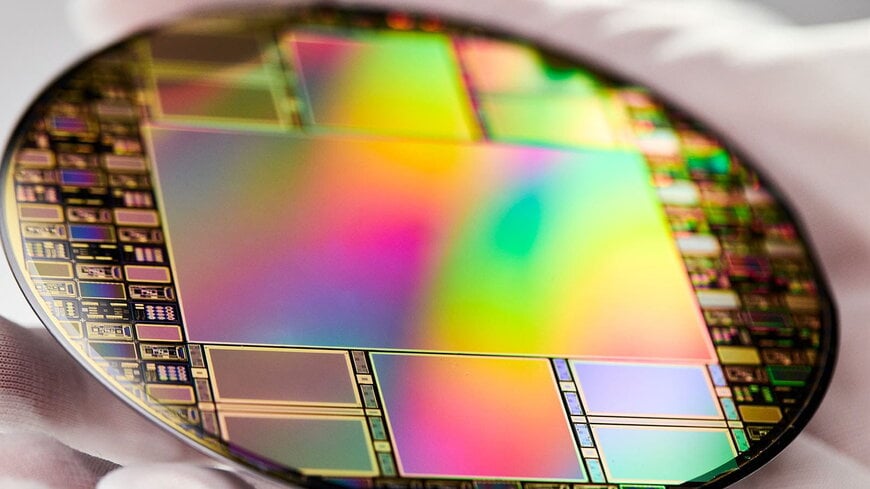
Raytheon has received a phase one contract under the Defense Advanced Research Projects Agency PICASSO program to develop an all-optical signal processing architecture. The engineering effort focuses on advancing digital infrastructure and embedded computing hardware for high-speed signal analysis in aerospace and defense systems.
Industrial Processing Challenges
Conventional hybrid photonic circuits route data as optical signals but rely on optical-to-electrical conversions to execute digital processing steps. These intermediate conversion stages introduce propagation delay, generate thermal dissipation, and reduce signal integrity as component density scales. For high-bandwidth applications operating in contested radio frequency environments, the latency and power demands of continuous electro-optical signal conversion constrain data throughput and response intervals.
Technical Architecture and Implementation
Under the PICASSO framework, Raytheon Advanced Technology is designing photonic integrated circuits that execute computation entirely in the optical domain using light instead of electrical currents. Maintaining the signal within the optical medium avoids conversion losses and preserves dynamic range and signal strength across compact, high-density topologies.
The hardware implementation requires specialized electronic and photonic design automation tooling to model high-density optical waveguide interactions. Synopsys supplies specialized simulation and circuit modeling environments to simulate light propagation, optimize layout parameters, and verify the performance of the optical processing pathways before fabrication. Raytheon applies its proprietary radio frequency system design knowledge and photonics manufacturing experience to transition the simulated architectures into physical prototypes.
Operational Impact and Deployment
Executing logic directly on optical carrier waves provides an architectural pathway to scale device complexity while shrinking system volume. In target applications, including tactical radar and electronic warfare, real-time all-optical processing allows systems to parse incoming signals at raw optical line rates, providing faster threat detection and improved situational awareness.
"By moving critical processing entirely into the optical domain, we can enable significantly faster response times for a broad range of applications," stated Colin Whelan, president of Advanced Technology at Raytheon.
The first phase focuses on validating baseline architectures and testing physical optical logic blocks, establishing verified design models for subsequent integrated system prototyping.
Edited by Evgeny Churilov, Induportals Media - Adapted by AI.
www.rtx.com
