
www.aero-defence.tech
28
'26
Written on Modified on
Naval Missile Launcher Enhances Distributed Fleet Air Defense
BAE Systems evaluated the Adaptable Deck Launcher to solve magazine constraints and replenishment challenges for naval surface combatants.
www.baesystems.com
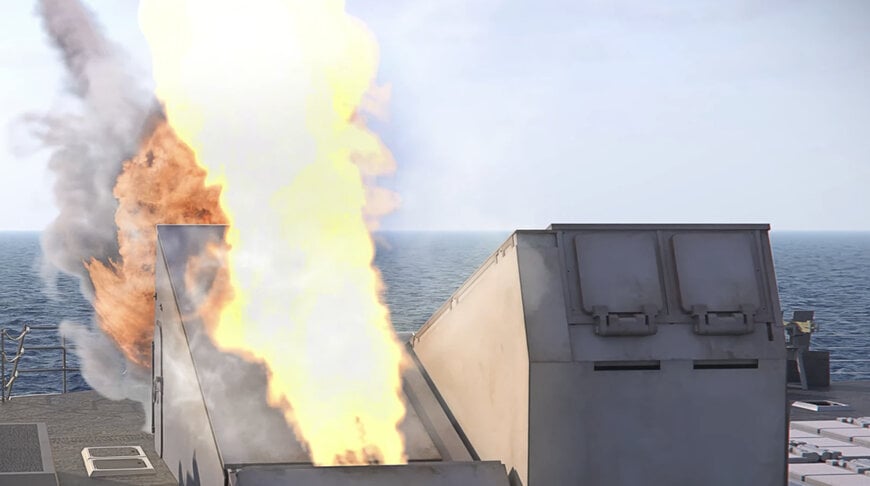
Modern maritime surface warfare requires resilient fleet air defense and distributed lethality across hulls that lack the deep structural wells required for conventional vertical launch magazines. BAE Systems conducted the initial live-fire demonstration of the Adaptable Deck Launcher (ADL), a fixed-angle, deck-mounted missile launching system engineered to deliver Mk 41 Vertical Launching System compatibility to a wider range of surface combatants and unmanned vessels.
Addressing Below-Deck Footprint Constraints and At-Sea Replenishment
Conventional multi-cell missile launch installations, such as hull-penetrating vertical launch cells, demand significant structural volume, internal shipboard clearance, and specialized dockside rearming infrastructure. These mechanical and architectural constraints prevent smaller combatants, auxiliary platforms, amphibious warfare vessels, and unmanned surface craft from fielding dense air defense systems. Furthermore, standard vertical launchers cannot be replenished quickly in contested waters, obliging surface groups to transit back to base facilities for ordnance reloads.
The Adaptable Deck Launcher is engineered to mount directly onto shipboard decks without cutting through structural decks or requiring dedicated below-deck weapon vaults. By accommodating standard missile enclosures above the main deck, the assembly expands anti-air warfare capacity across aircraft carriers, amphibious platforms, patrol craft, and medium unmanned surface vessels (MUSVs) without requiring extensive vessel redesign.
Integration With Mk 41 Vertical Launch Architecture
The operating principle of the Adaptable Deck Launcher centers on direct compatibility with existing Mk 41 VLS logistics, firing electronics, and canister enclosures. Developed under a contract for the NATO Seasparrow Project Office (NSPO), the ADL mechanical frame handles the Evolved SeaSparrow Missile (ESSM) packaged in Mk 25 Quad-Pack canisters.
By utilizing the standard Mk 25 Quad-Pack canister, each launcher module accommodates four ESSM surface-to-air interceptors designed to counter supersonic anti-ship cruise missiles, fixed-wing aircraft, and unmanned aerial systems. The integration of established Mk 41 launch electronics ensures that shipboard combat direction systems can communicate directly with the munitions through validated launch sequencers and motor-ignition circuits.
Expedited Deck Reloading Mechanics
A central operational feature of the deck-mounted configuration is the ability to conduct expedited replenishment while underway. Because the launcher sits exposed at an inclined angle on the open deck rather than recessed deep into an internal armored canister grid, standard shipboard cranes and light handling equipment can place replacement Mk 25 canisters directly into the frame.
Jason Casciotti, vice president of Weapons Systems at BAE Systems, stated that the system complements the Mk 41 VLS by providing rapid replenishment using standard shipboard equipment, providing surface fleets with operational flexibility to sustain combat loads at sea rather than returning to shore-based logistics terminals.
Additional Context:
This section details technical specifications and competitive benchmarking not included in the original product announcement.
Naval surface combatants historically rely on either deep-penetration strike-length or tactical-length Mk 41 multi-cell modules, or dedicated topside canister mounts such as the Mk 57 peripheral vertical launch system and Mk 29 trainable box launchers. The Mk 41 system requires approximately 7.6 meters (25 feet) of vertical clearance beneath the deck for strike-length variants, limiting its use on ships under 3,000 tonnes displacement. In contrast, bolt-on launchers such as the legacy Mk 29 fire single ESSM interceptors from an unarmored, trainable eight-cell housing requiring external deck drive mechanisms, while the ADL holds fixed-elevation Quad-Packs in a low-maintenance, fixed footprint.
The system shares technical positioning with modular bolt-on missile installations such as the Lockheed Martin Single Cell Launcher and the Danish StanFlex modular container systems. Operating at fixed launch angles between 35 and 45 degrees, deck-mounted modular launchers manage rocket exhaust plume dispersion through an integrated aft gas management exhaust j-duct rather than the centralized uptake plenum used in multi-cell vertical launch blocks. This configuration reduces thermal loading on adjacent shipboard composite materials and topside sensor installations while maintaining missile staging rates identical to internal silo firings.
Edited by Natania Lyngdoh, Induportals editor, with AI assistance.
www.baesystems.com
