
www.aero-defence.tech
07
'26
Written on Modified on
Advanced Multi-Role Fighter Jet Completes Maiden Test Flight
Lockheed Martin completed the maiden flight of Morocco's first F-16 Block 72, advancing modernized tactical air defense capabilities.
www.lockheedmartin.com
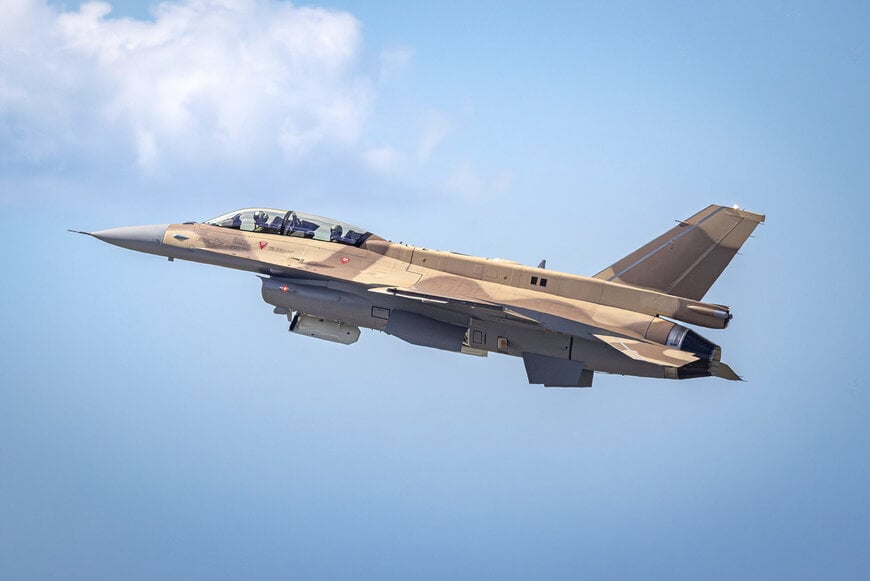
Modern air forces face dense electronic countermeasures and contested airspace requiring higher situational awareness, enhanced datalink bandwidth, and extended airframe longevity beyond legacy fourth-generation platforms. Addressing these operational theater requirements, defense manufacturer Lockheed Martin completed the maiden flight of the Royal Moroccan Air Force's first F-16 Block 72 aircraft, validating flight characteristics and onboard avionics before progressing toward operational delivery.
Avionics Modernization and Mission Systems Architecture
The F-16 Block 72 incorporates a fourth-generation-plus systems architecture engineered around advanced digital processing, upgraded weapon management interfaces, and integrated sensor fusion. A central element of this upgrade is the integration of an active electronically scanned array fire-control radar alongside a modernized Modular Mission Computer. The high-speed data bus architecture allows the aircraft to rapidly cross-cue tracking data between radar tracks, targeting pods, and datalink nodes, providing pilots with a unified common operational picture.
Cockpit ergonomics have been overhauled with a high-resolution 6x8-inch center pedestal display, night-vision imaging system compatibility, and an all-digital flight control computer. The integration of the Automatic Ground Collision Avoidance System serves as a vital safety automation layer, using digital terrain elevation data and aircraft flight parameters to detect imminent controlled flight into terrain and execute recovery maneuvers if the pilot becomes incapacitated.
Airframe Life Extension and Regional Maintenance Strategy
In addition to avionics enhancements, the Block 72 structural baseline extends the operational service life of the airframe, reducing life-cycle fatigue maintenance and ensuring extended availability during high-stress operational sorties. Mike Shoemaker, vice president and general manager of Lockheed Martin’s Integrated Fighter Group, noted that the F-16 represents a critical element of modern air defense infrastructure and provides an operational baseline supporting national sovereignty and regional security partnerships.
The aircraft flight test milestone aligns with an expansion of domestic industrial capabilities within Morocco's aerospace sector. Lockheed Martin is supporting local technical expertise through ventures such as Maintenance Aero Maroc. Infrastructure plans center around an 8,000-square-meter Maintenance, Repair, and Overhaul facility situated in Benslimane, designed to execute heavy depot-level maintenance and modernization workflows for C-130 transport aircraft with scheduled expansion into tactical fast-jet fleets, establishing regional sovereign depot sustainment capabilities.
Additional Context:
This section details technical specifications and competitive benchmarking not included in the original product announcement.
The Block 72 designation identifies the aircraft as utilizing a Pratt & Whitney turbofan engine, specifically the F100-PW-229, producing approximately 29,100 pounds of thrust with afterburner, whereas the companion Block 70 configuration uses the General Electric F110-GE-129. The airframe has a length of 49.3 feet, a wingspan of 31 feet, an empty weight of approximately 20,300 pounds, and a maximum gross takeoff weight of 48,000 pounds, with an extended structural service life certified to 12,000 flight hours.
The primary sensor suite incorporates the Northrop Grumman AN/APG-83 Scalable Agile Beam Radar, an active electronically scanned array radar sharing substantial hardware and software commonality with the APG-77 and APG-81 radars installed on fifth-generation F-22 and F-35 platforms. The radar provides simultaneous synthetic aperture radar mapping, wide-angle tracking, and enhanced electronic protection against active jamming.
Within the competitive international multi-role fighter segment, the F-16 Block 70/72 competes against the Saab JAS 39E Gripen and the Dassault Rafale F4. The single-engine JAS 39E features a lower maximum takeoff weight of 36,400 pounds and utilizes the Raven ES-05 AESA radar with a wide-angle swashplate repositioner, emphasizing dispersed operations and reduced operating costs per flight hour. The twin-engine Dassault Rafale F4 offers a higher external payload capacity of approximately 21,000 pounds and integrates the Thales RBE2 AESA radar with advanced internal SPECTRA electronic warfare suites. The F-16 Block 72 balances these operational capabilities by providing interoperability with NATO munitions inventories, widespread global supply-chain support, conformal fuel tank integration for an unrefueled combat radius exceeding 550 nautical miles, and fifth-generation cockpit and radar architectures.
Edited by Natania Lyngdoh, Induportals editor, with AI assistance.
www.lockheedmartin.com
