
www.aero-defence.tech
07
'26
Written on Modified on
Armoured Vehicle Autonomy
Rheinmetall and Breaker Integrate Voice Controlled Autonomy for Armoured Vehicles.
www.rheinmetall.com
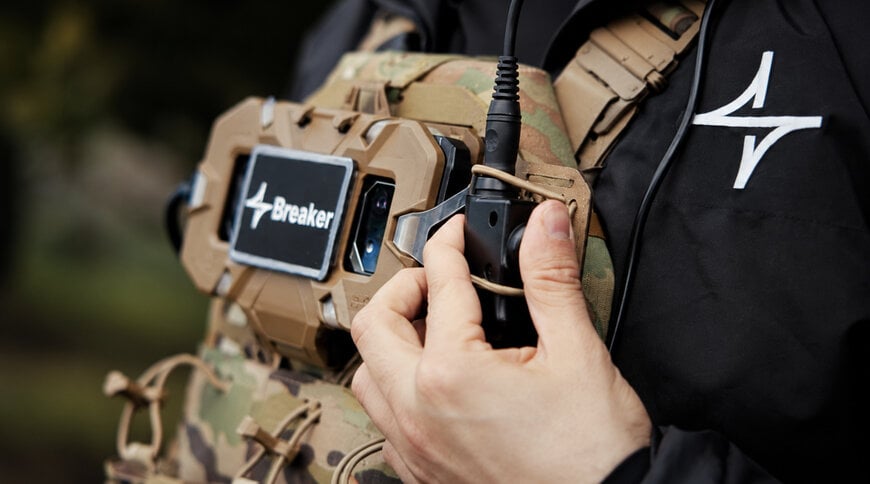
Rheinmetall Defence Australia and defense technology startup Breaker have established a technical partnership to integrate voice-controlled tactical orchestration software into the Boxer Combat Reconnaissance Vehicle using the platform's open electronic architecture.
Partners and Operational Roles
Rheinmetall Defence Australia acts as the prime platform developer, supplying the Boxer Combat Reconnaissance Vehicle procured under the LAND400 Phase Two program and providing the open-architecture vehicle systems environment. Breaker contributes its tactical orchestration software agent, which processes natural language voice commands to control uncrewed aerial and ground systems. The cooperation was established to address the operational challenge of extending battlespace situational awareness and reconnaissance reach without increasing vehicle crew size or cognitive workload.
Technical Solution and Responsibilities
The joint technical solution involves integrating Breaker's platform-agnostic autonomy software into the electronic architecture of the Boxer vehicle. Responsibilities are divided so that Rheinmetall manages the base vehicle electronics, data bus communication, and physical hardware integration, while Breaker manages the natural language processing pipeline and robotic swarm coordination algorithms. The system interfaces with the vehicle's standard-issue crew microphones and headsets, enabling operators to issue commands through standard audio hardware. The architecture complies with military vehicle electronic standards, utilizing modular open systems approaches to decouple mission software from core platform controls.
Deployment and System Integration
The integration was deployed and validated within a Rheinmetall simulation facility and subsequently demonstrated on a physical Boxer vehicle within six months of initial project inception. Implementation involved mapping software interfaces to the vehicle bus data streams to ensure low-latency communication between the crew station and autonomous robotic assets. Engineering support teams from both companies collaborated to configure application programming interfaces, allowing a single crew member with less than 30 minutes of training to command a swarm of drones while operating the vehicle.
Applications and Use Cases
Target applications include military reconnaissance, security patrols, and high-threat tactical engagements where crew survivability is paramount. Concrete use cases involve a vehicle commander executing driving duties while simultaneously directing uncrewed aerial systems via voice commands to scout ahead, locate obstacles, and relay telemetry data. Operational benefits include enhanced force protection, reduced cognitive load on operators, and extended surveillance ranges without deploying additional personnel.
Results and Operational Impact
Demonstrations conducted with the Australian Army showed that a vehicle crew member can command autonomous swarms using standard audio interfaces while maintaining normal operational duties. The technical validation confirms that open architecture frameworks enable rapid prototyping and deployment of third-party software onto legacy military platforms, achieving functional integration within a compressed development timeline.
Edited by Sucithra Mani, Induportals editor – adapted by AI.
www.rheinmetall.com
