
www.aero-defence.tech
15
'26
Written on Modified on
Liquefied Hydrogen Carrier Automation System Deployment
Yokogawa Electric Corporation supplies integrated automation systems for Kawasaki Heavy Industries to manage cryogenic hydrogen transport and marine fuel operations.
www.yokogawa.com
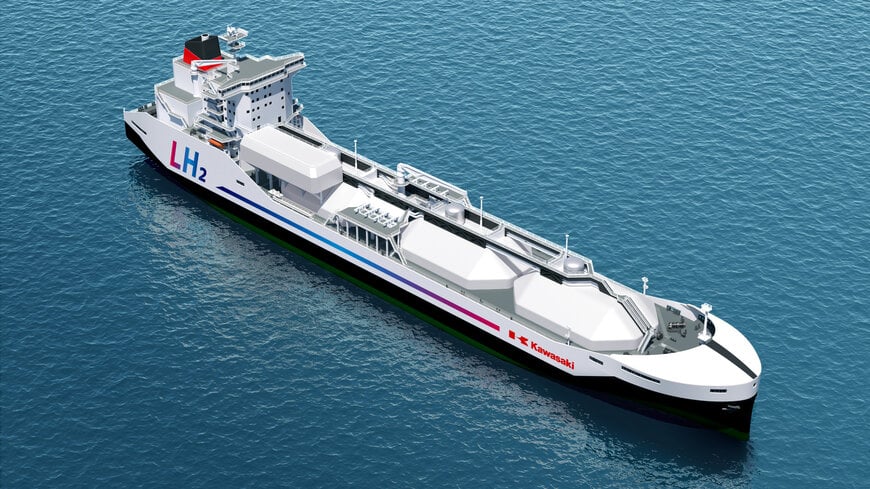
Yokogawa Electric Corporation and Kawasaki Heavy Industries collaborate to implement industrial automation and safety instrumentation for next-generation maritime hydrogen infrastructure. Kawasaki Heavy Industries constructs a 40,000 cubic meter liquefied hydrogen carrier alongside hydrogen-fueled vessels under a project supported by the New Energy and Industrial Technology Development Organization. Cooperation is required to integrate complex cryogenic containment monitoring, real-time telemetry, and fail-safe interlocks required for handling liquid hydrogen at ultra-low temperatures.
Technical Architecture and Division of Responsibilities
Yokogawa Electric Corporation designs, engineers, and delivers the integrated automation systems and marine hydrogen fuel systems control architecture. Kawasaki Heavy Industries executes the naval architecture, vessel construction, and integration of the marine hydrogen fuel systems comprising cryogenic storage tanks and fuel delivery hardware. The automation platform provides centralized monitoring, closed-loop control of auxiliary machinery, and independent emergency shutdown layers to manage thermal gradients, boil-off gas handling, and pressure variances.
System integration relies on digital infrastructure protocols connecting field instrumentation, programmable logic controllers, and bridge-based supervisory workstations. This configuration continuously tracks fluid state parameters, gas detection metrics, and inerting conditions across cargo containment systems and fuel supply lines.
Deployment and Operational Integration
Installation occurs during the shipbuilding phase at Kawasaki Heavy Industries shipyards, proceeding through factory acceptance testing, port commissioning, and sea trials. The control network interfaces with vessel power management and navigation systems to synchronize fuel feed rates with propulsion loads. Engineering teams from both organizations coordinate sensor calibration, loop checks, and emergency shutdown validation according to marine classification standards.
Applications and System Impact
The deployment targets large-scale maritime energy supply chains and zero-emission shipping operations. Technical use cases include continuous cryogenic custody transfer monitoring and dynamic fuel regulation for hydrogen internal combustion or fuel cell propulsion. Operational benefits include reduced manual operator intervention through automated sequence controls, enhanced thermal safety margins, and compliance with emerging international hydrogen transport regulations.
Edited by Sucithra Mani, Induportals editor – adapted by AI.
www.yokogawa.com
