
www.aero-defence.tech
11
'26
Written on Modified on
Syensqo Materials Selected for NOEMI Electric Amphibious Aircraft
The carbon fiber prepregs and structural adhesives enable lightweight, out-of-autoclave manufacturing for the nine-passenger seaplane.
www.syensqo.com
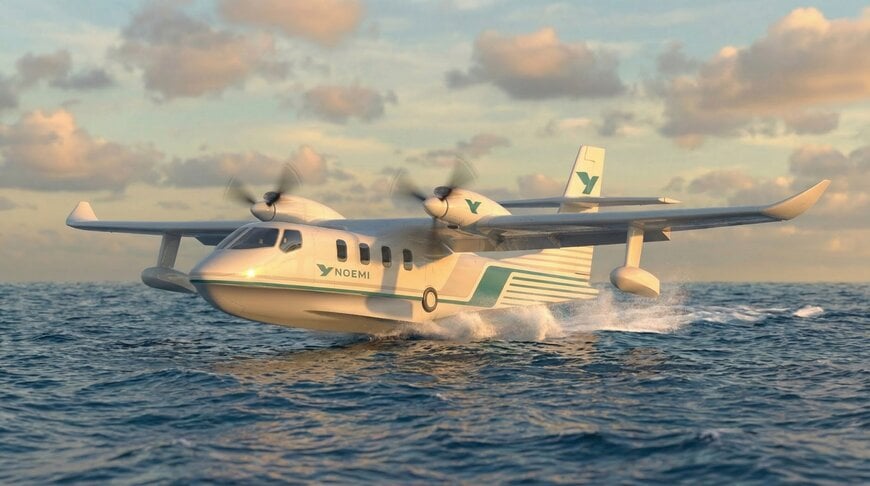
Syensqo has been selected as the advanced materials partner by NOEMI Aerospace for the development of its all-electric amphibious seaplane. Designed to carry nine passengers from both water and conventional runways, the aircraft is engineered for regional transport, cargo, and medical evacuation in coastal communities where traditional aviation infrastructure may be limited.
To meet the strict weight and structural integrity requirements necessary for electric flight and marine operations, NOEMI will utilize Syensqo’s MTM® 45-1 carbon fiber prepreg for the airframe. This includes the manufacturing of the aircraft's 21-meter single-span wing skins and spars. Additionally, the wing components will be assembled using Syensqo’s AeroPaste® structural paste adhesive. By leveraging these aerospace-grade materials, NOEMI aims to achieve the low structural weight required for its first prototype while maintaining a clear pathway to regulatory certification.
Additional Context
This section provides technological and market background not explicitly detailed in the original release.
In electric aviation, extreme weight reduction is critical to compensate for the low energy density of current battery technologies compared to traditional aviation fuel. Manufacturing large, continuous composite structures—such as a 21-meter wing span—using conventional aerospace prepregs typically requires a massive, pressurized autoclave, which entails enormous capital expenditure and tooling costs. Out-of-Autoclave (OoA) materials like the MTM® 45-1 system can be cured in standard industrial ovens using vacuum bagging, drastically lowering production costs and simplifying logistics for aerospace startups. Furthermore, seaplanes operate in highly corrosive saltwater environments while enduring severe hydrodynamic impact loads during takeoff and landing. Using advanced structural adhesives instead of traditional mechanical fasteners (such as titanium or aluminum rivets) eliminates galvanic corrosion points, further reduces overall airframe weight, and distributes stress more evenly across the composite joints. The availability of National Center for Advanced Materials Performance (NCAMP) and FAA-approved data for these specific materials also significantly accelerates the arduous regulatory certification process.
Edited by Lekshman Ramdas, Induportals editor – adapted by AI.
www.syensqo.com
