
www.aero-defence.tech
10
'26
Written on Modified on
Ballistic Missile Defense Target Integration in Multinational Exercises
Kratos Defense & Security Solutions deployed target systems to validate radar interoperability and tracking networks during allied defense operations.
www.kratosdefense.com
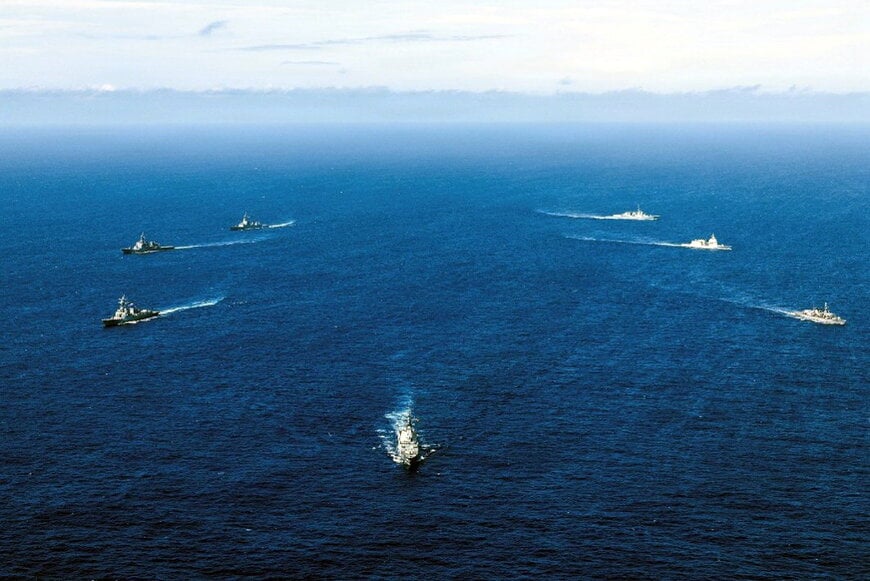
Kratos Defense & Security Solutions, Inc. collaborated with defense agencies and international naval forces to provide ballistic missile target vehicles for multinational tracking and interception exercises. The operational campaign supported joint tactical data-link integration and radar performance assessment within naval defense systems.
Operational Context and Partner Roles
Multinational defense exercises require threat-representative targets to evaluate real-time interoperability across disparate military platforms. During the Pacific Dragon exercise conducted off the Hawaiian Islands, Kratos Defense & Security Solutions worked alongside the U.S. 3rd Fleet and the U.S. Missile Defense Agency.
Cooperation between commercial target developers and allied defense organizations addressed the challenge of simulating ballistic flight profiles across multiple tactical networks. The exercise integrated naval assets from Australia, Chile, Italy, Japan, the Republic of Korea, Spain, and the United States, utilizing shared data links to test synchronized tracking and interception procedures.
Target Architecture and Technical Execution
Kratos deployed the Aegis Readiness Assessment Vehicle Type B (ARAV-B) from the Pacific Missile Range Facility. The ARAV-B functions as a two-stage, spin-stabilized ballistic target designed to emulate short- and medium-range ballistic trajectories. The system incorporates an upper stage powered by a commercial Oriole solid-propellant rocket motor.
The flight path provided active tracking opportunities for shipboard sensor suites, including the AN/SPY-6 radar and the Baseline 10 combat architecture installed on the guided-missile destroyer USS Jack H. Lucas. The mechanical and aerodynamic design of the target vehicle ensured stable, predictable flight parameters necessary to evaluate live sensor resolution, data handoffs, and interceptor fire-control loops.
System Modularity and Extended Testing Scope
The modular architecture of the target platform allows reconfigurable staging configurations depending on mission profiles. In addition to the Type B, the platform family includes two-stage Type C variants and three-stage configurations combining Terrier booster stages with Oriole motors. These configurations support variable test regimes, including low-apogee trajectories and hypersonic test conditions up to Mach 10.
Strategic Impact and Interoperability Validation
The launch registered the 43rd mission of the ARAV-B target system conducted in support of the Naval Surface Warfare Center, Port Hueneme Division, White Sands Detachment, and the Missile Defense Agency.
Dave Carter, President of the Kratos Defense & Rocket Support Services Division, stated: "By providing highly reliable target solutions, we ensure that advanced combat systems, such as the Baseline 10 and AN/SPY-6 radar on the USS Jack H. Lucas, are tested against the most realistic and demanding scenarios possible."
The operational data gathered from the launch confirmed tracking consistency and tactical communications protocols among international participants. Standardizing commercial rocket components within threat-simulation systems provides repeatable, cost-controlled test profiles for ongoing defense system validation.
Edited by Evgeny Churilov, Induportals Media - Adapted by AI.
www.kratosdefense.com
