
www.aero-defence.tech
07
'26
Written on Modified on
Electronic Warfare Integration for Allied Fighter Fleets
L3Harris Technologies collaborates with international defense operators to deploy interoperable electronic countermeasures across global combat aviation fleets.
www.l3harris.com
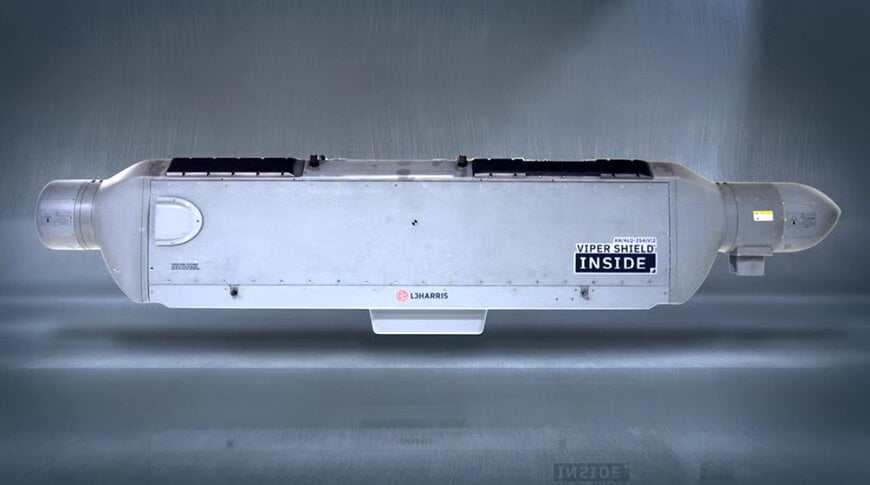
L3Harris Technologies has completed initial production of 35 digital countermeasure suites under a multinational framework equipping allied F-16 fleets with advanced electronic defense systems. This shared procurement model enables international air forces to integrate standard digital infrastructure across both modern and legacy aircraft platforms.
Operational Challenge and Multinational Architecture
Modern aerial defense operations require persistent radar detection and radio frequency protection against dense signal interference. Traditional analog defense suites lack the bandwidth to process modern electromagnetic threats and often interfere with onboard radar systems. Integrating electronic countermeasures into existing airframes requires small-form-factor designs that do not compromise aerodynamic performance or internal space.
Eight allied partner nations formed a cooperative investment group to distribute development and testing overhead. By pooling resources across 233 contracted units, the coalition established an active supply chain and high-rate manufacturing pipeline, lowering non-recurring engineering expenses for all participating air forces.
Technical Specifications and Sensor Interoperability
The electronic warfare suite utilizes an all-digital, software-defined architecture constructed with commercial-off-the-shelf components to reduce unit mass and physical volume. The system functions by intercepting incoming radio frequency signals, classifying radar emissions via an internal digital threat library, and deploying automated countermeasures to defeat guidance systems.
The architecture achieves full hardware and signal interoperability with the APG-83 Active Electronically Scanned Array radar. This interface ensures the jamming suite and the primary radar operate simultaneously without frequency collisions or mutual interference.
Deployment Configuration and Fleet Retrofitting
The system is engineered natively for Block 70 and 72 F-16 variants while retaining backward compatibility with previous airframe blocks. Implementation follows two technical profiles: an internal line-replaceable unit integrated directly into the fuselage avionics bay, or an external pod configuration mounted on standard wing stations. The external pod leverages the identical production internal line, allowing mixed-fleet operators to deploy common modules between frontline aircraft and retrofitted reserve airframes without altering primary cockpit interfaces.
Program Scale and Cost Redistribution
A combined procurement investment of $1 billion across partner nations funded software verification, operational flight testing, and production tooling.
"The $1 billion shared investment by countries operating F-16s means the U.S. Air Force and National Guard could benefit from joining the program," said Chris Aebli, President, Communications & Spectrum Dominance, L3Harris. "The foreign investment is funding development, lab testing, flight testing and current production of Viper Shield systems, which presents the United States with a savings opportunity to avoid upfront costs."
The transition into full-rate production establishes sustained manufacturing, providing subsequent operators access to verified quality-assurance baselines and established maintenance pipelines without initial research costs.
Edited by Evgeny Churilov, Induportals Media - Adapted by AI.
www.l3harris.com
