
www.aero-defence.tech
02
'26
Written on Modified on
Tactical Sensor Data Fusion Architecture for Mobile Ground Stations
Palantir and Anduril are cooperating to manufacture mobile intelligence stations that process multi-domain sensor inputs directly in operational environments.
www.anduril.com
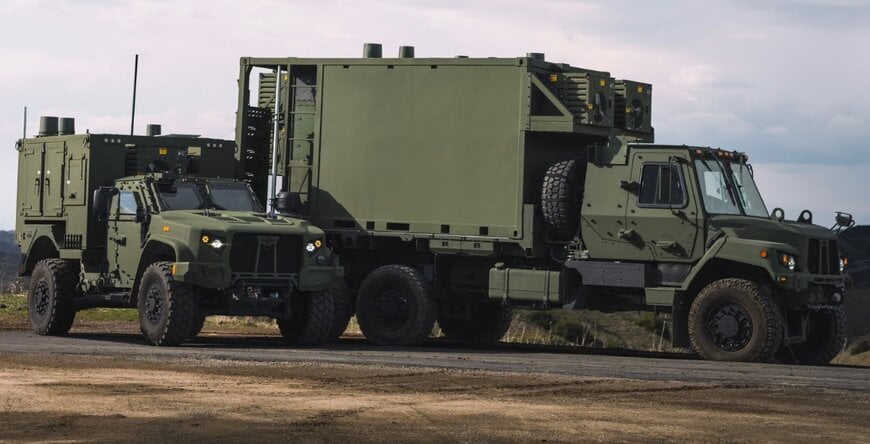
Palantir and Anduril Industries have transitioned the Tactical Intelligence Targeting Access Node from development into hardware manufacturing under an initial eight-unit production agreement. The program addresses the operational latency and vulnerability associated with routing satellite, aerial, and terrestrial reconnaissance feeds through fixed processing installations. By deploying edge computing units directly to field echelons, the platform establishes decentralized data processing for front-line units.
Hardware Architecture and Partner Roles
Palantir acts as the program prime contractor, directing overall software integration and system implementation. Anduril serves as the hardware systems architect and manufacturing partner, producing the mission shelters and vehicular subsystems.
The physical systems are engineered in Costa Mesa, California, in two distinct configurations:
- Advanced Configuration: Four units equipped for high-throughput computation, hosting expanded sensor interfaces, and managing complex multi-source data processing workloads.
- Basic Configuration: Four units optimized for reduced footprint and reduced vehicle weight to facilitate tactical transit and rapid site setup.
Anduril integrates ruggedized power management, active thermal regulation, computing enclosures, and localized operator stations onto vehicle-mounted frames. The enclosures are designed to maintain internal thermal stability and continuous operation under field conditions without external infrastructure support.
Data Ingestion and Edge Integration
Fixed command posts rely on extended long-haul communication links, creating potential single points of failure and signal interception risks. The mobile station bypasses these links by ingesting raw reconnaissance feeds directly from space-based assets, airborne platforms, and terrestrial sensors.
Palantir's processing framework and Anduril's hardware normalize disparate data protocols into a unified digital interface. This processing loop generates a synthesized operating picture locally, matching incoming intelligence feeds with compatible tactical response assets. Eliminating relay latency to central nodes reduces the sensor-to-action timeline for field units operating within contested electromagnetic zones.
Production Transition and Program Scaling
The initiative marks the shift of the vehicle platform from prototype validation to low-rate initial manufacturing, following design evaluations conducted with end-users since 2021. Hardware production involves standardized mechanical, thermal, and electrical integration across all eight initial units. The modular frame design allows subsequent technology insertions and prepares manufacturing facilities for anticipated multi-unit procurement orders planned for the 2027 fiscal cycle.
Edited by Evgeny Churilov, Induportals Media - Adapted by AI.
www.anduril.com
Data Ingestion and Edge Integration
Fixed command posts rely on extended long-haul communication links, creating potential single points of failure and signal interception risks. The mobile station bypasses these links by ingesting raw reconnaissance feeds directly from space-based assets, airborne platforms, and terrestrial sensors.
Palantir's processing framework and Anduril's hardware normalize disparate data protocols into a unified digital interface. This processing loop generates a synthesized operating picture locally, matching incoming intelligence feeds with compatible tactical response assets. Eliminating relay latency to central nodes reduces the sensor-to-action timeline for field units operating within contested electromagnetic zones.
Production Transition and Program Scaling
The initiative marks the shift of the vehicle platform from prototype validation to low-rate initial manufacturing, following design evaluations conducted with end-users since 2021. Hardware production involves standardized mechanical, thermal, and electrical integration across all eight initial units. The modular frame design allows subsequent technology insertions and prepares manufacturing facilities for anticipated multi-unit procurement orders planned for the 2027 fiscal cycle.
Edited by Evgeny Churilov, Induportals Media - Adapted by AI.
www.anduril.com
