
www.aero-defence.tech
31
'26
Written on Modified on
Development and Testing of Reduced Range Artillery Training Rockets
Lockheed Martin validates a reusable launch pod and low-cost motor to modernize live-fire military training.
www.lockheedmartin.com
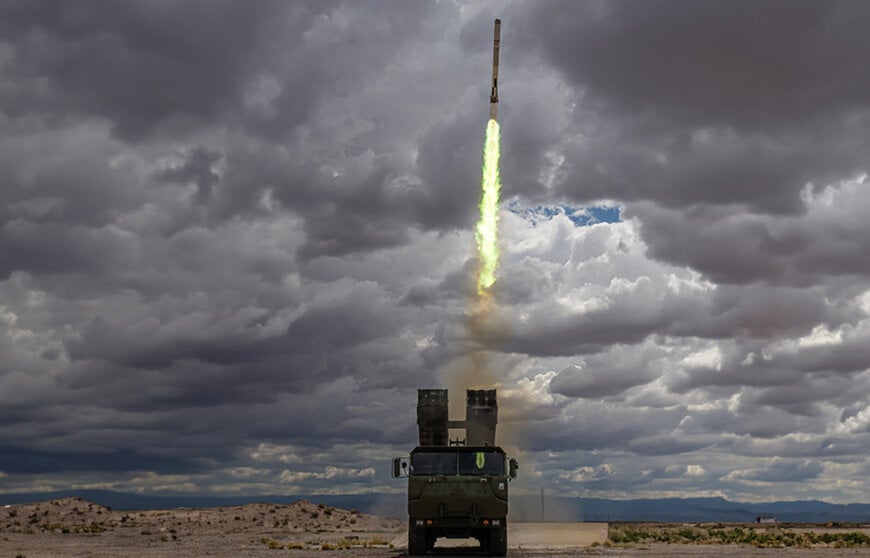
Lockheed Martin has completed the second successful flight test of its Joint Reduced Range Rocket (JR3), an affordable training munition featuring a reusable launch pod. This modular system is designed to replace legacy practice rockets used by the United States Army and allied defense forces, specifically targeting artillery crews operating in constrained environments.
System Validation and Flight Dynamics
During the flight test at the Yuma Proving Ground in Arizona, multiple JR3 rounds were launched from a High Mobility Artillery Rocket System (HIMARS). The firing sequence successfully demonstrated the rocket's necessary range, trajectory, accuracy, and marking payload effects. The JR3 functions as an all-up training round fully compatible with both HIMARS and M270 Multiple Launch Rocket System (MLRS) platforms.
Hardware Architecture and Cost Efficiency
The JR3 introduces a 24-rocket launch pod configuration designed for repeated use. The system relies on mature rocket motor technology, integrating a low-cost motor, an adaptable payload, and reloadable launch tubes within the reusable main pod. These structural mechanisms directly lower the expense per round and minimize logistical waste. Dave Griser, vice president of Lockheed Martin Precision Fires Rockets, stated that the 24-round pod provides a scalable solution to meet military demands for higher training volume and lower costs without sacrificing operational performance.
Operational Application and Future Integration
Within defense applications, the JR3 enables launcher crews to execute realistic live-fire drills. Its physical parameters allow for high-volume firing on space-constrained test ranges, supporting both daytime and nighttime operations across varying environmental conditions. A subsequent flight test is scheduled later this year to gather additional performance data. The underlying architecture of the JR3 is also being evaluated for transferability to future defense programs, including the Direct Support Fires Technology initiative aimed at mass-producing low-cost, direct-fire rockets.
Additional Context:
This section details technical specifications and competitive benchmarking not included in the original product announcement
The JR3 is designed to succeed the legacy M28A1 and M28A2 Low Cost Reduced Range Practice Rocket (LCRRPR) systems. The M28 series utilizes a blunt, high-drag nose that intentionally limits the rocket's maximum flight distance to a range of 9 to 15 kilometers, ensuring the munitions remain within the boundaries of smaller domestic military installations. While legacy M270 and HIMARS launch pods traditionally house six rockets per disposable unit, the JR3 introduces a 24-rocket reusable pod. By quadrupling the ammunition capacity of a single pod structure and utilizing reloadable tubes, the new architecture significantly decreases the hardware consumption rate compared to the standard disposable six-pack pods utilized during high-volume training exercises.
Edited by Natania Lyngdoh, Induportals editor, assisted by AI.
www.lockheedmartin.com
