
www.aero-defence.tech
28
'26
Written on Modified on
Diamond-cooled semiconductor thermal management for radio frequency microelectronics
Northrop Grumman integrates diamond substrates into defense-grade microchips to enhance heat dissipation and increase power density for radar and military communications.
www.northropgrumman.com
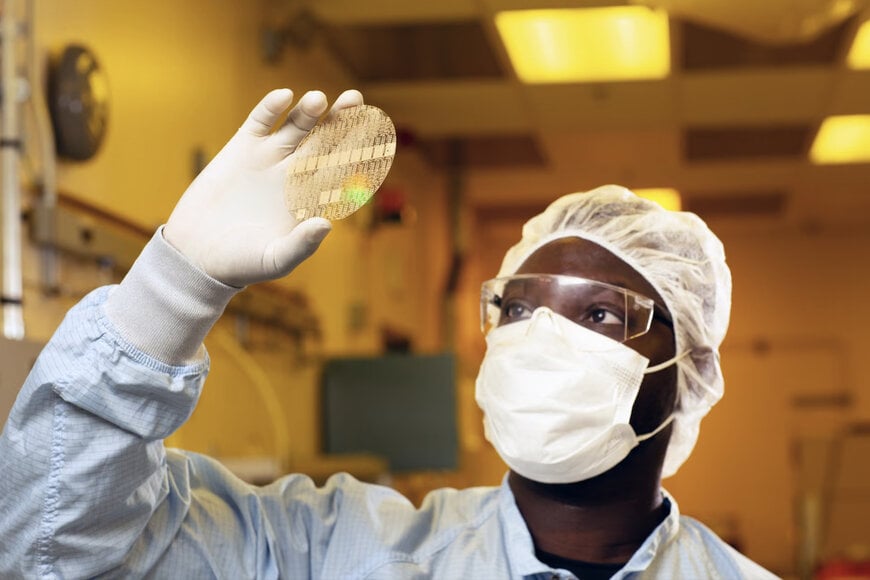
Northrop Grumman engineers manufacture new microchips cooled with diamond to help defense and commercial systems run faster and last longer. (Photo Credit: Northrop Grumman)
Northrop Grumman has secured a $7 million Darpa contract to advance diamond-cooled microchip technology under the Technologies for Heat Removal in Electronics at the Device Scale (Threads) program. This semiconductor thermal management solution addresses critical heat buildup in radio frequency systems, specifically targeting next-generation defense communications and satellite links.
Overcoming thermal bottlenecks in wide-bandgap semiconductors
Heat generation threatens the operational limits of modern radio frequency electronics. Currently, systems run below maximum capacity to prevent overheating, which reduces available power and shortens the component lifespan. Diamond offers thermal conductivity five times greater than copper and outperforms conventional high-performance semiconductor materials such as silicon carbide and gallium nitride. By conducting heat away from the device more efficiently, a diamond-cooled microchip can operate continuously at higher power thresholds without thermal failure.
Microscopic diamond integration and radio frequency power density
Engineers at the Northrop Grumman Microelectronics Center add microscopic diamonds directly into the semiconductor architecture. Through a partnership with Stanford University, the company grows a diamond layer on the backside of the device within its microscopic channels. These channels transfer heat away from active hotspots. During Phase 1 of the Darpa program, this structural integration increased power density by a factor of 3.3. Phase 2 aims to triple this power density again, establishing stronger radio frequency transmitters while reducing the physical footprint of the electronic assemblies.
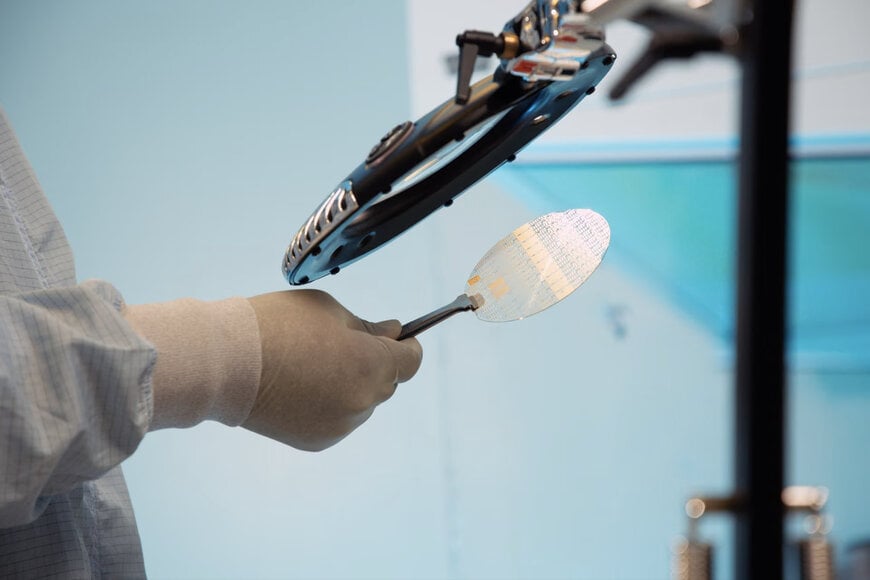
A close-up of a microchip wafer, part of Northrop Grumman’s innovation to make smaller and stronger electronics available to the defense and commercial industry. (Photo Credit: Northrop Grumman)
Strategic semiconductor manufacturing and supply chain infrastructure
The development of diamond-enhanced thermal management builds on research initiated in 2019. The company designs, manufactures, and packages these microelectronics domestically to support the defense supply chain. Ben Heying, director of microelectronics at the Space Park Foundry, stated, “Temperature has long capped what microelectronics can do, even Gallium Nitride, which is a standard. Embedding diamond directly into chips works like a turbocharged cooling system. It keeps the chips cool so we can crank up the power without risk of burnout.” This thermal capacity ensures that military radar and aerospace equipment can handle higher power inputs while remaining fast and reliable.
Additional Context:
This section details technical specifications and competitive benchmarking not included in the original product announcement
The integration of diamond cooling into gallium nitride (GaN) microchips competes with established thermal management techniques using silicon carbide (SiC) substrates. While GaN-on-SiC is the current industry benchmark for high-power radio frequency applications, SiC offers a thermal conductivity of approximately 400 W/mK. In contrast, synthetic diamond achieves thermal conductivity up to 2,000 W/mK. Benchmarking between these materials focuses on the effective thermal boundary resistance and the resulting junction temperature during maximum power output. Research indicates that replacing SiC with diamond substrates can reduce junction temperatures by 40 to 50 percent, allowing GaN-on-diamond devices to handle extreme heat fluxes. This thermal headroom translates directly into higher permissible areal radio frequency power densities for radar and electronic warfare systems compared to conventional GaN-on-SiC or GaN-on-Silicon configurations.
Edited by Natania Lyngdoh, Induportals editor, assisted by AI.
www.northropgrumman.com
Northrop Grumman has secured a $7 million Darpa contract to advance diamond-cooled microchip technology under the Technologies for Heat Removal in Electronics at the Device Scale (Threads) program. This semiconductor thermal management solution addresses critical heat buildup in radio frequency systems, specifically targeting next-generation defense communications and satellite links.
Overcoming thermal bottlenecks in wide-bandgap semiconductors
Heat generation threatens the operational limits of modern radio frequency electronics. Currently, systems run below maximum capacity to prevent overheating, which reduces available power and shortens the component lifespan. Diamond offers thermal conductivity five times greater than copper and outperforms conventional high-performance semiconductor materials such as silicon carbide and gallium nitride. By conducting heat away from the device more efficiently, a diamond-cooled microchip can operate continuously at higher power thresholds without thermal failure.
Microscopic diamond integration and radio frequency power density
Engineers at the Northrop Grumman Microelectronics Center add microscopic diamonds directly into the semiconductor architecture. Through a partnership with Stanford University, the company grows a diamond layer on the backside of the device within its microscopic channels. These channels transfer heat away from active hotspots. During Phase 1 of the Darpa program, this structural integration increased power density by a factor of 3.3. Phase 2 aims to triple this power density again, establishing stronger radio frequency transmitters while reducing the physical footprint of the electronic assemblies.
A close-up of a microchip wafer, part of Northrop Grumman’s innovation to make smaller and stronger electronics available to the defense and commercial industry. (Photo Credit: Northrop Grumman)
Strategic semiconductor manufacturing and supply chain infrastructure
The development of diamond-enhanced thermal management builds on research initiated in 2019. The company designs, manufactures, and packages these microelectronics domestically to support the defense supply chain. Ben Heying, director of microelectronics at the Space Park Foundry, stated, “Temperature has long capped what microelectronics can do, even Gallium Nitride, which is a standard. Embedding diamond directly into chips works like a turbocharged cooling system. It keeps the chips cool so we can crank up the power without risk of burnout.” This thermal capacity ensures that military radar and aerospace equipment can handle higher power inputs while remaining fast and reliable.
Additional Context:
This section details technical specifications and competitive benchmarking not included in the original product announcement
The integration of diamond cooling into gallium nitride (GaN) microchips competes with established thermal management techniques using silicon carbide (SiC) substrates. While GaN-on-SiC is the current industry benchmark for high-power radio frequency applications, SiC offers a thermal conductivity of approximately 400 W/mK. In contrast, synthetic diamond achieves thermal conductivity up to 2,000 W/mK. Benchmarking between these materials focuses on the effective thermal boundary resistance and the resulting junction temperature during maximum power output. Research indicates that replacing SiC with diamond substrates can reduce junction temperatures by 40 to 50 percent, allowing GaN-on-diamond devices to handle extreme heat fluxes. This thermal headroom translates directly into higher permissible areal radio frequency power densities for radar and electronic warfare systems compared to conventional GaN-on-SiC or GaN-on-Silicon configurations.
Edited by Natania Lyngdoh, Induportals editor, assisted by AI.
www.northropgrumman.com
