
www.aero-defence.tech
24
'26
Written on Modified on
Long-Range Carrier Logistics Lifecycle and Fleet Sustainment Integration
Northrop Grumman and the U.S. Navy maintained long-term operational readiness through shared aircraft architecture and specialized carrier-onboard-delivery logistics.
www.northropgrumman.com
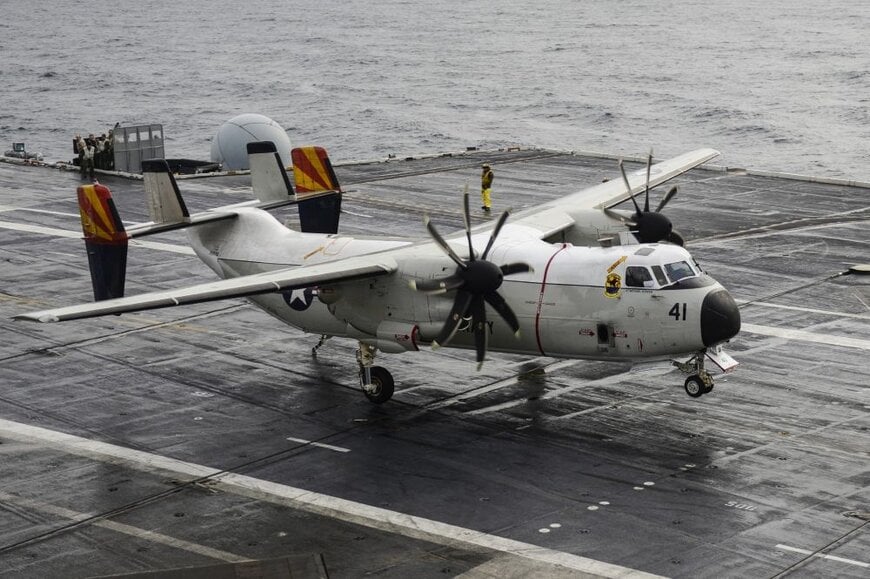
The U.S. Navy and Northrop Grumman concluded the operational lifecycle of the C-2A Greyhound, ending a sixty-year naval aviation partnership focused on carrier-onboard-delivery logistics. This defense infrastructure initiative ensured rapid supply-chain connectivity between forward-deployed carrier strike groups and remote shore bases.
Operational Challenge and Partner Roles
Sustaining combat operations at sea requires continuous transit of high-priority assemblies, replacement components, and personnel directly to active flight decks. Northrop Grumman functioned as the original equipment manufacturer and lifecycle engineering provider, while the U.S. Navy executed operational flight tasks, carrier integration, and routine maintenance protocols. Cooperation was necessary to align airframe performance with harsh maritime operating conditions and evolving naval air-wing requirements.
Technical Architecture and Cross-Platform Commonality
The technical solution relied on a specialized cargo airframe optimized for catapult launches and arrested landings. Key engineering parameters included:
- High-Capacity Loading: A straight rear-loading ramp and unobstructed fuselage compartment configured to transport high-value payloads, including complete jet engines, ground-support tools, and personnel.
- Commonality: A 53% structural and component commonality with the E-2 airborne early warning series, which lowered lifecycle costs and simplified maintenance logistics.
- Remote Self-Sufficiency: An onboard auxiliary power unit for independent engine starting and electrical power supply, combined with folding wing surfaces to minimize flight-deck footprint.
Deployment and Operational Impact
The system served as a critical node in military digital infrastructure and supply chains, supporting transitions across multiple aircraft generations ranging from the F-14 Tomcat to the F-35 Lightning II. The airframe also executed auxiliary missions, including low-altitude airdrops for maritime special warfare units. Over six decades of active deployment, this technical collaboration sustained high sortie generation rates, reduced downtime for mission-critical shipboard systems, and maintained long-range supply-chain integrity for deployed maritime forces.
Edited by Evgeny Churilov, Induportals Media - Adapted by AI.
www.northropgrumman.com
The system served as a critical node in military digital infrastructure and supply chains, supporting transitions across multiple aircraft generations ranging from the F-14 Tomcat to the F-35 Lightning II. The airframe also executed auxiliary missions, including low-altitude airdrops for maritime special warfare units. Over six decades of active deployment, this technical collaboration sustained high sortie generation rates, reduced downtime for mission-critical shipboard systems, and maintained long-range supply-chain integrity for deployed maritime forces.
Edited by Evgeny Churilov, Induportals Media - Adapted by AI.
www.northropgrumman.com
