
www.aero-defence.tech
20
'26
Written on Modified on
Immersion-Cooled Battery Systems for Marine Propulsion
XING Mobility introduces high-density energy storage architectures utilizing cell-to-pack configurations to enhance thermal management and safety in maritime electrification projects.
www.xingmobility.com
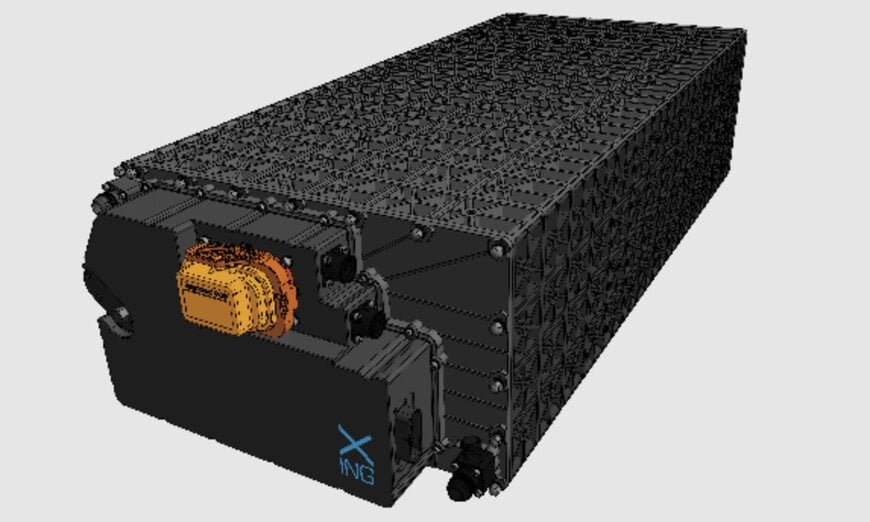
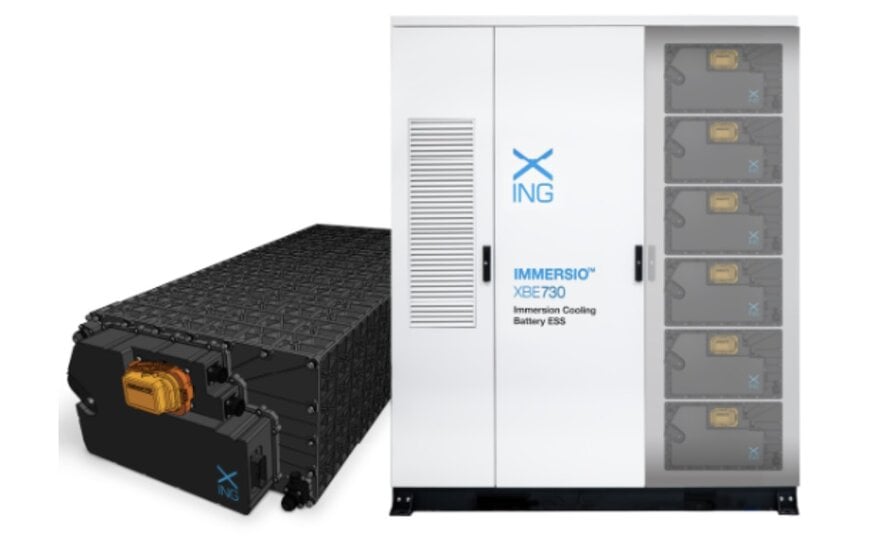
The IMMERSIO™ CTP battery system: specially designed for the electrification of ships – with double the energy density, continuous 3C discharge and active fire protection.
XING Mobility is releasing the IMMERSIO XM25 and the IMMERSIO CTP, two next-generation battery systems engineered specifically for the maritime industry. These high-performance energy storage solutions provide the marine sector with advanced thermal management hardware to support electric propulsion applications and emission-free shipping initiatives.
Immersion Cooling Architecture for Thermal Management
At the SMM Hamburg trade fair, scheduled for September 1 to 4, 2026, the company will exhibit these maritime systems at booth B5, FG 03. Both the IMMERSIO XM25 and the IMMERSIO CTP operate on a patented immersion cooling technology. In this operational framework, each individual lithium-ion battery cell is completely submerged in a non-conductive dielectric fluid. This direct liquid contact mechanism dissipates heat precisely at the source, actively minimizing the risk of thermal runaway and preventing fire propagation across adjacent cells. By stabilizing cell temperatures, this thermal management approach ensures continuous high-power output while fulfilling the stringent safety protocols required for marine environments.
Cell-to-Pack Integration and Structural Efficiency
To accommodate diverse vessel designs within the electric maritime supply chain, the modular IMMERSIO XM25 provides structural adaptability for seamless integration into existing ship frameworks. Conversely, the IMMERSIO CTP utilizes a cell-to-pack (CTP) architecture that eliminates intermediate module housings to optimize volumetric efficiency. By removing these passive structural barriers, the CTP system achieves double the energy density compared to conventional module-based marine battery assemblies. For shipbuilders and operators, these combined attributes—active thermal regulation and minimized onboard spatial requirements—provide a measurable operational advantage by maximizing payload capacity while maintaining the power delivery necessary for continuous maritime transit.
Additional Context
This section details technical specifications and competitive benchmarking not included in the original news release.
In the maritime battery sector, dielectric immersion cooling competes with traditional cold-plate liquid cooling systems utilized by manufacturers such as Corvus Energy and EST-Floattech. For instance, the established Corvus Orca Energy system utilizes standard water/glycol cooling integrated into aluminum extrusion profiles, achieving an energy density of approximately 90 to 100 Wh/kg at the pack level. While cold-plate cooling is effective for standard load profiles, direct fluid immersion cooling allows for more aggressive continuous discharge and charge rates without triggering thermal limits, due to the significantly higher heat transfer coefficient of direct fluid contact. Furthermore, implementing cell-to-pack designs in marine applications drastically reduces passive component weight, pushing pack-level energy densities higher and establishing a distinct structural efficiency benchmark against legacy modular marine energy storage systems.
Edited by Aishwarya Mambet, Induportals Editor, with AI assistance.
www.xingmobility.com
XING Mobility is releasing the IMMERSIO XM25 and the IMMERSIO CTP, two next-generation battery systems engineered specifically for the maritime industry. These high-performance energy storage solutions provide the marine sector with advanced thermal management hardware to support electric propulsion applications and emission-free shipping initiatives.
Immersion Cooling Architecture for Thermal Management
At the SMM Hamburg trade fair, scheduled for September 1 to 4, 2026, the company will exhibit these maritime systems at booth B5, FG 03. Both the IMMERSIO XM25 and the IMMERSIO CTP operate on a patented immersion cooling technology. In this operational framework, each individual lithium-ion battery cell is completely submerged in a non-conductive dielectric fluid. This direct liquid contact mechanism dissipates heat precisely at the source, actively minimizing the risk of thermal runaway and preventing fire propagation across adjacent cells. By stabilizing cell temperatures, this thermal management approach ensures continuous high-power output while fulfilling the stringent safety protocols required for marine environments.
Cell-to-Pack Integration and Structural Efficiency
To accommodate diverse vessel designs within the electric maritime supply chain, the modular IMMERSIO XM25 provides structural adaptability for seamless integration into existing ship frameworks. Conversely, the IMMERSIO CTP utilizes a cell-to-pack (CTP) architecture that eliminates intermediate module housings to optimize volumetric efficiency. By removing these passive structural barriers, the CTP system achieves double the energy density compared to conventional module-based marine battery assemblies. For shipbuilders and operators, these combined attributes—active thermal regulation and minimized onboard spatial requirements—provide a measurable operational advantage by maximizing payload capacity while maintaining the power delivery necessary for continuous maritime transit.
Additional Context
This section details technical specifications and competitive benchmarking not included in the original news release.
In the maritime battery sector, dielectric immersion cooling competes with traditional cold-plate liquid cooling systems utilized by manufacturers such as Corvus Energy and EST-Floattech. For instance, the established Corvus Orca Energy system utilizes standard water/glycol cooling integrated into aluminum extrusion profiles, achieving an energy density of approximately 90 to 100 Wh/kg at the pack level. While cold-plate cooling is effective for standard load profiles, direct fluid immersion cooling allows for more aggressive continuous discharge and charge rates without triggering thermal limits, due to the significantly higher heat transfer coefficient of direct fluid contact. Furthermore, implementing cell-to-pack designs in marine applications drastically reduces passive component weight, pushing pack-level energy densities higher and establishing a distinct structural efficiency benchmark against legacy modular marine energy storage systems.
Edited by Aishwarya Mambet, Induportals Editor, with AI assistance.
www.xingmobility.com
