
www.aero-defence.tech
19
'26
Written on Modified on
Real-Time OS for Consolidated eVTOL Avionics
AEROFUGIA and SYSGO integrate hypervisor technology to consolidate mixed-criticality computing and embedded systems within advanced air mobility platforms.
www.sysgo.com
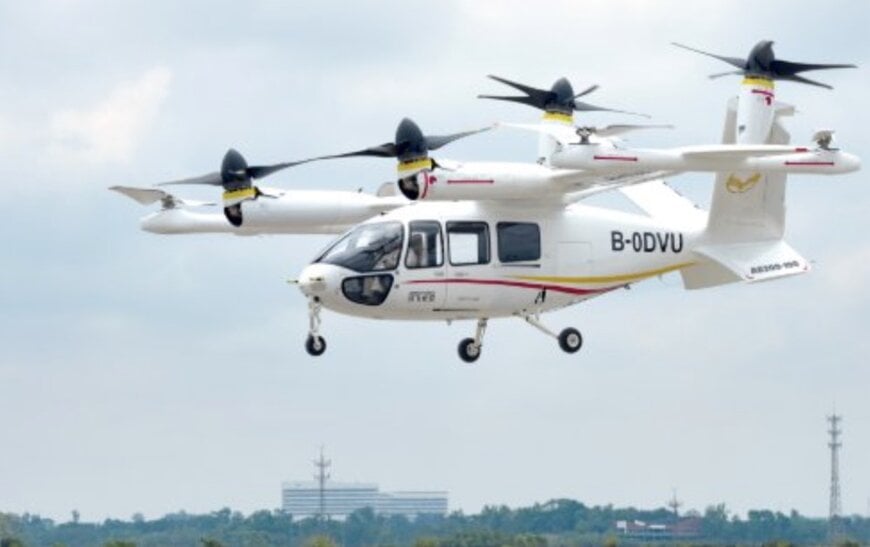
AEROFUGIA and SYSGO are collaborating to develop a partitioned avionics architecture for electric vertical take-off and landing aircraft. The cooperation utilizes a real-time operating system and hypervisor technology to manage mixed-criticality functions within commercial aviation infrastructure.
Technical Challenge and Cooperation Roles
AEROFUGIA develops electric vertical aircraft platforms, while SYSGO provides safety-critical embedded systems. Electric flight applications must consolidate flight control, electric propulsion, battery management, navigation, and communications within constrained computing hardware. This physical consolidation creates an engineering challenge regarding the isolation of safety-critical functions. The cooperation addresses the necessity to merge these mixed-criticality applications onto shared processors without compromising deterministic behavior or certification readiness.
Partitioned Architecture and Standards
The avionics platform utilizes an ARMv8 computing architecture integrated with the PikeOS real-time operating system. SYSGO supplies the separation-kernel and hypervisor functionality, while AEROFUGIA integrates this software foundation into the aircraft control hardware. The system functions by establishing strict spatial and temporal boundaries, allowing applications with varying criticality levels to operate independently on common hardware. This partitioned approach aligns with ARINC 653 standards, providing an architectural baseline for systems requiring DO-178C Design Assurance Level A compliance.
Aircraft Integration and Operational Impact
This avionics integration targets the commercial air mobility sector. By consolidating functions that previously required dedicated computing units, the architecture reduces overall aircraft size, weight, power consumption, and hardware costs. The separation-kernel design also provides security isolation, supported by Common Criteria EAL5+ certification parameters, protecting connected aircraft from cross-partition vulnerabilities. Using a pre-certified software framework mitigates development risks and minimizes architectural revisions during the compliance processes mandated by the Civil Aviation Administration of China and the European Union Aviation Safety Agency.
Edited by Aishwarya Mambet, Induportals Editor, with AI assistance.
www.sysgo.com
