
www.aero-defence.tech
30
'26
Written on Modified on
Integration of Mobile Ground-Based Air Defence Prototypes in Multidomain Architectures
Lockheed Martin, the Commonwealth of Australia, and the U.S. Navy completed a live-fire demonstration of a developmental Medium Range Ground Based Air Defence system at the Woomera Test Range in Australia.
www.lockheedmartin.com
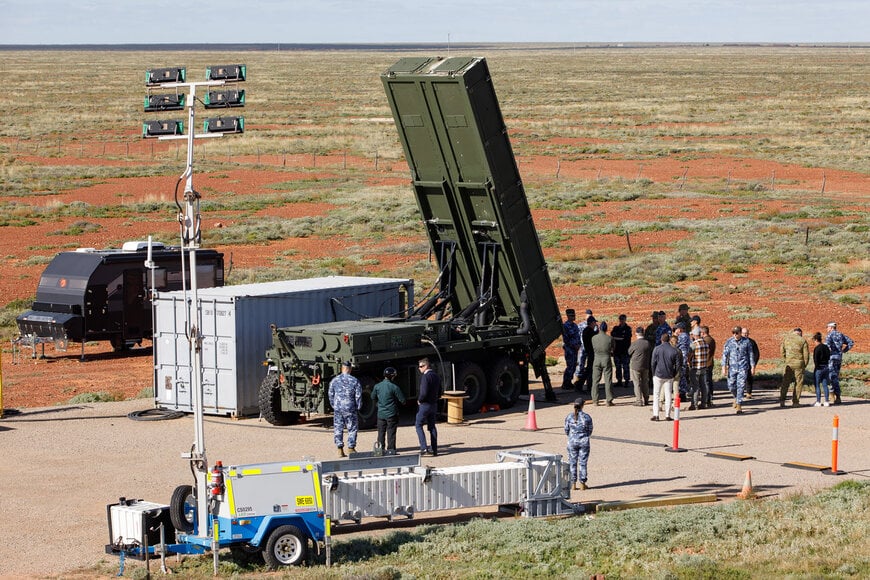
The trial, designated Taipan Strike 26, evaluated the real-time operational logic and data exchange between land-based and naval defensive infrastructure. The core objective was verifying cross-domain target tracking and engagement capabilities using existing command and control software architecture.
Technical Solution and Domain Integration
The architecture integrated key digital infrastructure components across multiple domains:
- Radar Identification: Target acquisition and track data were provided by a land-based CEA active phased array radar system operated by the Australian Defence Force.
- Command and Control: Processing and engagement logic were executed via a virtualised Aegis Weapons System deployed in a compact, expeditionary hardware form factor. This software baseline is identical to the system used in the Hobart Class Destroyer modernization and Hunter Class Frigate programs.
- Target Engagement: The virtualised Aegis system initialized a mobile ground-based launcher, which executed the fire-control sequence and engaged the representative aerial threat.
The deployment of a virtualised command and control framework allows software capabilities developed for naval combatants to execute fire control logic on mobile land-based launchers. This reduces signal latency and eliminates the need for dedicated, single-purpose software stacks for ground installations.
Application Areas and Operational Impact
The joint effort targets integrated air and missile defence requirements within modern joint force architectures. By reusing established naval fire control software, the system provides operational compatibility across sea and land forces. This standardized protocol allows ground units to fire interceptors deployed across existing naval platforms without requiring hardware redesigns.
Integrating land-based sensor data with sea-proven command systems extends the operational sensor footprint, providing earlier threat detection and longer reaction windows for decision-makers in contested environments.
Strategic Implementation and Future Development
The successfully tested prototype configuration offers a modular path for upgrading medium-range air defence capabilities within the Australian Defence Force. Under the AIR6500 Joint Air Battle Management System program, Lockheed Martin Australia is aligning this ground-based air defence prototype with broader joint air defence architecture, establishing an integrated, network-centric defense posture across regional deployment zones.
Edited by Evgeny Churilov, Induportals Media - Adapted by AI.
www.lockheedmartin.com
Application Areas and Operational Impact
The joint effort targets integrated air and missile defence requirements within modern joint force architectures. By reusing established naval fire control software, the system provides operational compatibility across sea and land forces. This standardized protocol allows ground units to fire interceptors deployed across existing naval platforms without requiring hardware redesigns.
Integrating land-based sensor data with sea-proven command systems extends the operational sensor footprint, providing earlier threat detection and longer reaction windows for decision-makers in contested environments.
Strategic Implementation and Future Development
The successfully tested prototype configuration offers a modular path for upgrading medium-range air defence capabilities within the Australian Defence Force. Under the AIR6500 Joint Air Battle Management System program, Lockheed Martin Australia is aligning this ground-based air defence prototype with broader joint air defence architecture, establishing an integrated, network-centric defense posture across regional deployment zones.
Edited by Evgeny Churilov, Induportals Media - Adapted by AI.
www.lockheedmartin.com
