
www.aero-defence.tech
22
'26
Written on Modified on
Commercial Aviation Propulsion System Deployment for Widebody Aircraft
Philippine Airlines and GE Aerospace have partnered to integrate advanced propulsion systems into a new fleet of widebody commercial aircraft.
www.geaerospace.com
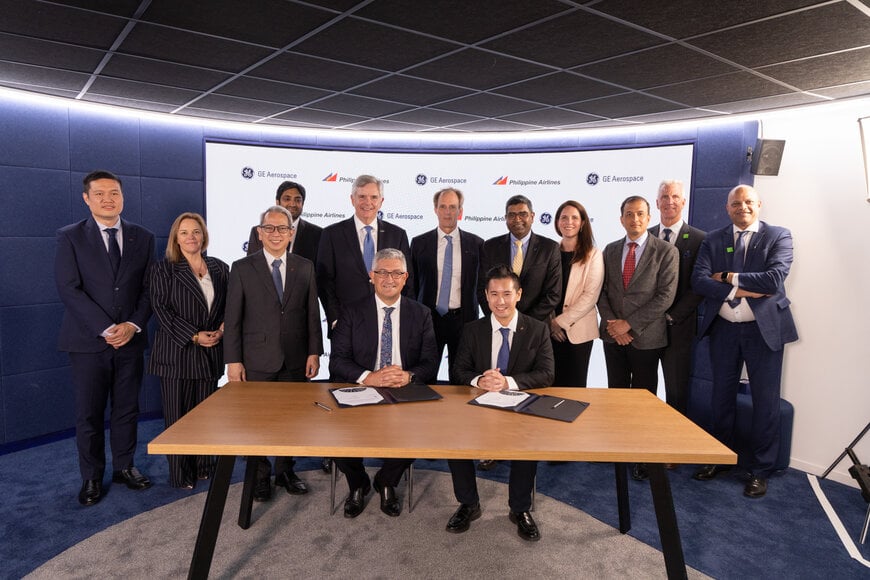
Philippine Airlines and GE Aerospace have established an agreement to equip a fleet of Boeing 787-10 aircraft with GEnx-1B propulsion systems. This cooperation addresses the operational requirements of commercial aviation by deploying high-efficiency jet engines for international long-haul passenger transport.
Strategic Cooperation for Fleet Expansion
Philippine Airlines, a commercial aviation network operator, and GE Aerospace, an engine manufacturer, are collaborating to scale widebody aircraft operations. The industrial challenge involves maintaining high dispatch reliability and fuel efficiency across long-haul international routes. The integration of specialized propulsion hardware is required to support continuous flight operations and scale the airline's global network infrastructure.
Propulsion System Architecture
GE Aerospace is responsible for manufacturing and supplying the GEnx-1B engines, while Philippine Airlines integrates these systems into its operational fleet. The GEnx-1B functions as a high-bypass turbofan engine designed for the Boeing 787 platform. At a system level, the technical architecture incorporates upgraded high-pressure turbine blades and advanced combustor coating technology. These material enhancements are engineered to increase the thermal resistance and durability of internal components when exposed to particulate matter and extreme temperatures during operation.
Hardware Integration and Implementation
The propulsion systems are being deployed on 15 new Boeing 787-10 aircraft, with strategic purchase rights for an additional five units. This implementation integrates directly into the existing Philippine Airlines maintenance and operational framework. The airline's technical infrastructure currently supports 52 GE Aerospace and CFM joint-venture engines, including the GE90 on Boeing 777-300ER platforms and the CFM56-5B on Airbus A320 aircraft. GE Aerospace provides ongoing technical lifecycle support to align engine performance with the airline's standardized maintenance protocols.
Aviation Use Cases and Operational Benefits
The targeted application area is the commercial aviation sector, specifically high-capacity, long-distance flight operations. Concrete technical use cases involve sustained high-altitude cruising across transcontinental routes, where engine thermal efficiency directly dictates fuel consumption. The resulting operational benefits for the airline include improved process stability for flight scheduling, increased fuel efficiency per passenger mile, and enhanced maintainability through extended component lifecycles.
Operational Impact and Reliability Metrics
The deployment of the GEnx-1B system introduces quantifiable operational stability to the airline's widebody fleet. The engine architecture supports a 99.98% dispatch reliability rate, statistically minimizing mechanical delays at the gate. Furthermore, the specified combustor and turbine material upgrades have measurably doubled the time-on-wing metric in severe operating environments. This mechanism extends the operational interval between required depot-level maintenance overhauls, reducing overall aircraft downtime.
Edited by Aishwarya Mambet, Induportals Editor, with AI assistance.
www.geaerospace.com
