
www.aero-defence.tech
17
'26
Written on Modified on
Standardized Charging Network Planned for United States Urban Aviation Infrastructure
Archer Aviation, BETA Technologies, and Macquarie Capital established America's Consortium for Electric Skyways to develop standardized charging infrastructure for electric aircraft.
www.archer.com
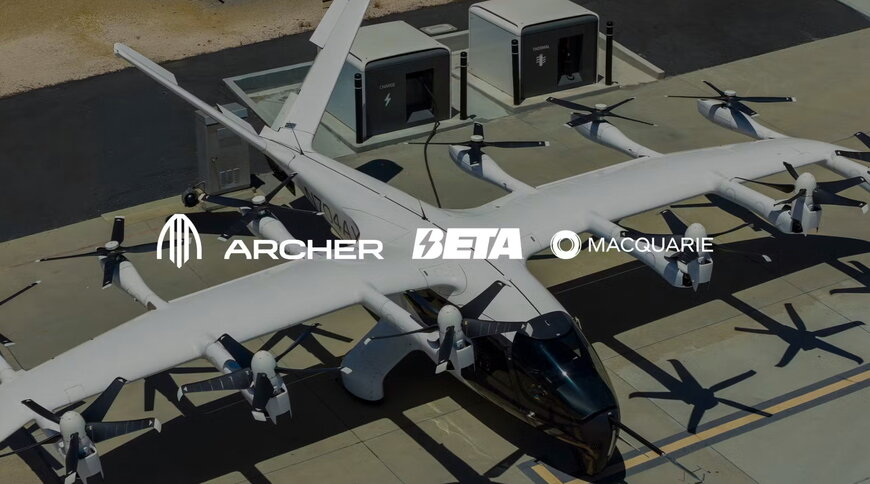
Archer Aviation, BETA Technologies, and Macquarie Capital formed America's Consortium for Electric Skyways (ACES) to deploy electric vertical takeoff and landing (eVTOL) charging systems across the United States. The initiative targets the electrification of up to 250 air taxi sites, focusing on major metropolitan areas and airports in California, Texas, Florida, and New York to support commercial digital infrastructure and industrial automation in advanced air mobility.
Cross-Industry Cooperation for Scalable Infrastructure
Developing a viable nationwide charging network for electric aviation requires integrated capabilities spanning hardware manufacturing, fleet operations, and capital deployment. No single entity possesses the requisite scope to establish this network independently. The consortium addresses the logistical and financial challenges of scaling urban air mobility by combining complementary technical and financial expertise.
Under the framework, BETA Technologies serves as the primary hardware supplier, providing purpose-built charging systems. Archer Aviation acts as the anchor operator, utilizing the network to execute passenger VTOL air taxi operations. Macquarie Capital provides strategic advisory services to coordinate the investment capital required for site acquisition, facility development, and construction phases.
Technical Specifications and Interoperability
The infrastructure relies on the Combined Charging Standard (CCS), an architecture endorsed by the General Aviation Manufacturers Association (GAMA). Utilizing an open, industry-standard interface ensures interoperability across various electric aircraft original equipment manufacturers (OEMs), preventing the fragmentation associated with proprietary charging systems.
The hardware deployment utilizes a shared infrastructure model designed to optimize utilization rates across different operational windows. Archer Aviation intends to access the charging points primarily for passenger transport during peak hours. Conversely, BETA Technologies plans to utilize the network for cargo logistics and medical transport operations. At primary airport locations, the CCS-compatible chargers will also service electric ground support equipment, integrating the system directly into existing airport utility grids.
Regulatory Integration and Operational Deployment
The deployment directly aligns with the Federal Aviation Administration (FAA) eVTOL Integration Pilot Program (eIPP). By establishing 250 interoperable sites within designated eIPP markets, the network provides the physical and technical foundation necessary for regulatory compliance and operational validation.
The implementation strategy focuses on high-density transportation hubs, linking major commercial airports with regional vertiports. This integration into established transit corridors allows the consortium to validate power grid management, turnaround efficiency, and hardware reliability under continuous commercial operating conditions.
Strategic Rationale
"The infrastructure required to open our nation’s airports and future vertiports to advanced air mobility is a fraction of what people expect," stated Kyle Clark, founder and chief executive officer of BETA Technologies. "By deploying interoperable chargers built on an open standard, we're putting in place nearly all the physical infrastructure this industry needs, built so every operator can use it."
The shared network model distributes the underlying capital and operational expenses across multiple stakeholders, improving the long-term financial viability of urban electric flight pathways.
Edited by Evgeny Churilov, Induportals Media - Adapted by AI.
www.archer.com
