
www.aero-defence.tech
06
'26
Written on Modified on
Air Launch Deployment of Orbit Modification System for Space Observatory
Northrop Grumman Corporation integrated and launched Katalyst Space Technologies' spacecraft to extend the operational lifespan of a NASA orbital observatory.
www.northropgrumman.com
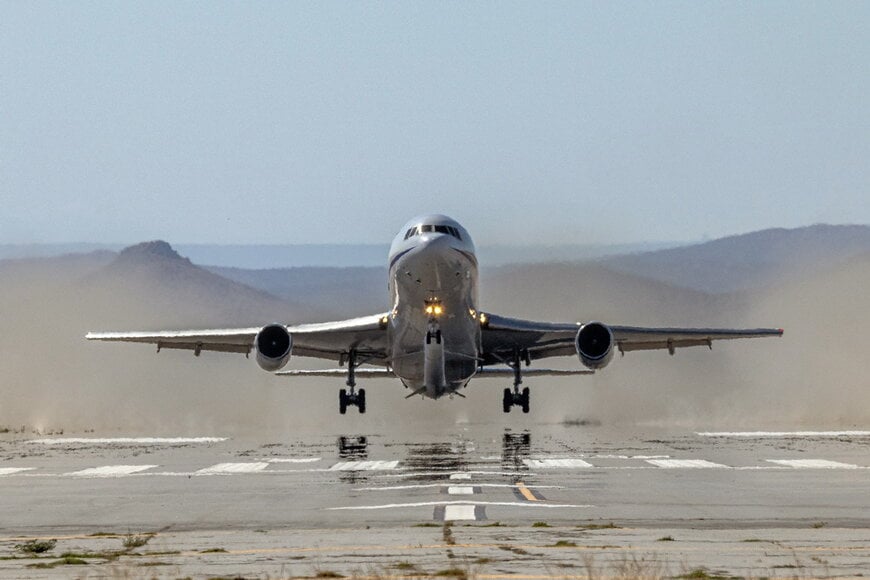
Northrop Grumman Corporation coordinated with Katalyst Space Technologies to deploy the LINK spacecraft, an orbital system designed for satellite life extension. The mission supports the continuous operation of NASA's Neil Gehrels Swift Observatory, a space telescope originally launched in 2004 with an initial two-year design life. Extending the operation of existing digital infrastructure in low-Earth orbit requires precise orbital insertion to match the target satellite's path while minimizing fuel consumption during rendezvous maneuvers.
Technical Solution and Vehicle Architecture
The deployment utilized the Pegasus launch system, a three-stage, small-class vehicle utilizing solid-fuel Orion propulsion motors across all stages. The deployment architecture relies on an air-launch mechanism rather than a traditional ground pad.
The launch sequence proceeded through specific technical phases:
- Carrier Flight: Northrop Grumman's Stargazer L-1011 aircraft transported the launch vehicle to an altitude of approximately 41,000 feet.
- Release and Ignition: The vehicle separated from the aircraft, followed by free-fall stabilization and the automated ignition of the first-stage Orion motor.
- Orbital Insertion: The subsequent stages executed predefined burn profiles to deliver the payload into its target low-Earth orbit.
This approach minimizes ground support infrastructure and allows the launch azimuth to be adjusted by altering the flight path of the aircraft, enabling access to specific orbital inclinations that face geographic or safety constraints from standard ground stations.
Infrastructure Integration and Mission Lifecycle
The target Swift Observatory was manufactured at the Northrop Grumman facility in Gilbert, Arizona, and the company continues to provide operational engineering support for the satellite. The integration of the LINK spacecraft into the telescope's operational ecosystem serves as an implementation case for in-orbit servicing. By deploying via an air-launched platform, the partners completed mission preparation, vehicle assembly, testing, and launch execution within an eight-month timeframe.
Expected Operational Impact
The primary technical benefit of this cooperation is the mitigation of orbital decay and hardware degradation on the Swift Observatory without requiring a replacement satellite deployment. Utilizing an air-launched vehicle reduces atmospheric drag penalties during the initial phase of flight, optimizing the payload capacity relative to the vehicle's mass. This mission establishes a reproducible framework for industrial automation and servicing systems in space, extending data collection capabilities for deep-space observation networks.
Edited by Evgeny Churilov, Induportals Media - Adapted by AI.
www.northropgrumman.com
Infrastructure Integration and Mission Lifecycle
The target Swift Observatory was manufactured at the Northrop Grumman facility in Gilbert, Arizona, and the company continues to provide operational engineering support for the satellite. The integration of the LINK spacecraft into the telescope's operational ecosystem serves as an implementation case for in-orbit servicing. By deploying via an air-launched platform, the partners completed mission preparation, vehicle assembly, testing, and launch execution within an eight-month timeframe.
Expected Operational Impact
The primary technical benefit of this cooperation is the mitigation of orbital decay and hardware degradation on the Swift Observatory without requiring a replacement satellite deployment. Utilizing an air-launched vehicle reduces atmospheric drag penalties during the initial phase of flight, optimizing the payload capacity relative to the vehicle's mass. This mission establishes a reproducible framework for industrial automation and servicing systems in space, extending data collection capabilities for deep-space observation networks.
Edited by Evgeny Churilov, Induportals Media - Adapted by AI.
www.northropgrumman.com
