
www.aero-defence.tech
18
'26
Written on Modified on
Solid carbide milling cutters optimize titanium machining in aerospace applications
Walter introduces differential-pitch cutting geometries to mitigate mechanical vibrations during high-parameter finishing loops.
www.walter-tools.com
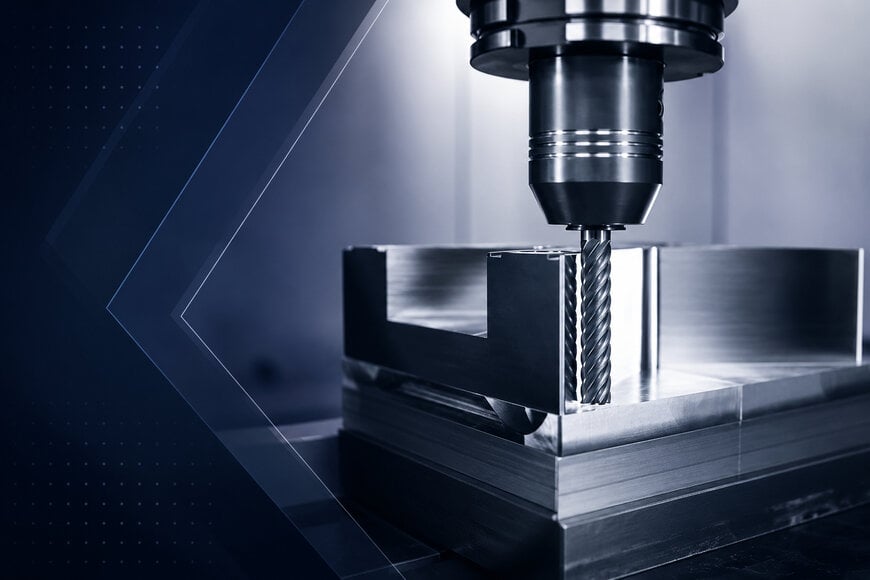
Walter has announced the expansion of its solid carbide milling cutter portfolio with the introduction of its specialized tool series engineered to optimize material removal rates across difficult-to-machine substrates. This hardware deployment introduces advanced cutting geometries developed to sustain heavy-duty processing of titanium alloys and stainless steels within the aerospace, medical, and energy manufacturing sectors. To demonstrate these machining capabilities in a high-parameter production environment, the tools feature optimized flute configurations designed to operate reliably under extreme structural shear stress.
Differential pitch mechanics and chip breaker geometry options
The structural engineering of high-performance solid carbide cutters necessitates specialized stabilization mechanisms to prevent chatter during dynamic milling paths. By incorporating a precise differential pitch layout across the cutting edges, the architecture disrupts harmonic frequencies generated during continuous high-speed contact with tough alloys. This geometric variation minimizes resonance buildup, yielding stable tool motion and precise surface finishes even when running at the upper limits of machine spindle parameters.
To align with specific machining strategies, the portfolio separates operations into specialized tool variants with five or seven flutes. The series includes the MC331 Advance configurations without chip breakers for finishing paths requiring maximum surface precision, alongside specialized MC333 Advance chip-breaker variants developed to improve evacuation kinematics.
By mechanically fracturing long, ducting titanium nests into manageable segments, the chip-breaking geometry prevents nesting around the tool holder and cuts down heat buildup at the cutting zone. This structural division isolates localized thermal stress, preventing premature edge degradation.
Multi-flute micro-geometries and structural substrate optimization
The micro-geometry introduces metric diameter configurations spanning from 6 mm to 25 mm to handle complex pocket milling and shoulder finishing routines. Utilizing universal tool grades such as the specialized WK40EA coating matrix, the cutting surfaces maintain high hot-hardness thresholds and chemical wear resistance when cutting abrasive titanium alloys like Ti6Al4V or austenitic stainless steels such as 316L. The variable cutting lengths, reaching from 2 to 5 times the cutter diameter, allow programming technicians to distribute linear wear evenly along the peripheral edges during deep trochoidal milling passes.
When deployed in dynamic milling loops with elevated material removal rates, the rigid core diameter preserves high torsional stiffness to combat lateral deflection forces. This structural stability ensures that the small corner radii maintain tight profile tolerances without triggering edge micro-chipping.
The modular dimensional scope also allows for repeatable tool reconditioning loops, reducing long-term consumption metrics. For custom spatial setups, the hardware can be adapted via specialized rapid manufacturing channels such as the Walter Xpress service to fit non-standard tool holding configurations, stabilizing the total processing footprint.
Additional Context: This section details technical specifications and competitive benchmarking not included in the original product announcement
Within the high-performance aerospace solid carbide milling market, this advanced cutter series competes directly with established lines such as the Harvi series from Kennametal or the Jabro family from Seco Tools. Objective technical benchmarking reveals that while conventional end mills feature uniform index spacing that induces severe regenerative chatter when machining titanium walls—forcing operators to decrease cutting speeds and feed rates—the Walter platform relies on asymmetrical helix and pitch angles to stabilize force vectors.
This mechanical layout lowers spindle vibration amplitudes and extends the tool life margin under high axial depths of cut. Additionally, the development framework leverages specialized substrate formulations to combat the low thermal conductivity inherent to heat-resistant superalloys.
However, achieving maximum metal removal efficiency exceeding 90 percent during deep pocket roughing requires precise synchronization with modern high-pressure through-spindle coolant networks. Sub-optimal fluid delivery inside tight machining channels can result in rapid chip recutting and localized thermal shock, reducing tool life advantages compared to specialized insert-based indexable cutters equipped with dedicated external cooling nozzles.
Edited by Sucithra Mani, Induportals editor – adapted by AI.
www.walter-tools.com
