
www.aero-defence.tech
05
'26
Written on Modified on
AN/TPS-80 G/ATOR Sets the Standard in Advanced Sensing
Northrop Grumman’s AN/TPS-80 G/ATOR provides comprehensive real time 360-degree situational awareness against a multitude of threats at long range.
www.northropgrumman.com
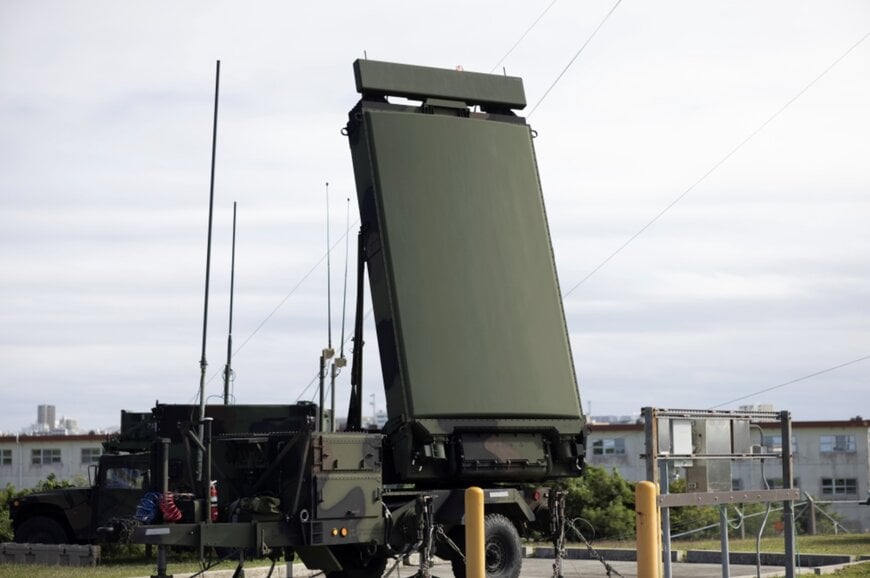
More than 40 AN/TPS-80 Ground/Air Task-Oriented Radar (G/ATOR) systems have been delivered to the United States Marine Corps and United States Air Force. Northrop Grumman’s game-changing technology is a five-in-one, 360-degree Active Electronically Scanned Array (AESA) fire control radar, built for the evolving battle space.
In a dynamic battle environment, having a reliable and agile radar system can mean the difference between mission success and failure. G/ATOR is a highly mobile ground-based radar setting new standards in detecting, identifying, tracking and cueing responses to airborne threats.
Integrated Multi-Mission Capability and Performance
The G/ATOR architecture integrates five legacy radar functions into a single mobile platform, establishing continuous 360-degree detection and tracking while minimizing operational logistical complexity. The system is built to execute air surveillance, air defense, and fire control missions simultaneously under all weather conditions.
Its automated threat tracking and cueing mechanisms facilitate accelerated response intervals against airborne hazards, including uncrewed aerial systems. Designed as a lightweight and compact platform, the system can be transported via transport aircraft, helicopter, or cargo truck to ensure rapid site deployment and breakdown in changing battlefield positions. The radar platform has entered full-rate production, and Northrop Grumman maintains manufacturing capacity to scale output in response to domestic and global ground radar demands.
Additional Context
This section details technical specifications and competitive benchmarking not included in the original news release.
Comparative Technology Analysis
Tactical ground-based military radars traditionally utilize either mechanical scanning technology or Active Electronically Scanned Array (AESA) technology. Mechanically scanned legacy radars, such as the AN/TPS-59 or AN/TPQ-36 systems, rely on motorized physical rotation to steer a singular radar beam. This approach creates vulnerabilities due to mechanical wear and slows target update intervals when scanning broad areas.
By shifting to fixed or rotating planar phased arrays powered by hundreds or thousands of solid-state Transmit/Receive (T/R) modules, modern AESA systems steer multiple radar beams electronically and nearly instantaneously. This allows the radar to perform entirely separate operational modes simultaneously, such as counter-battery weapon location and low-altitude cruise missile tracking.
Benchmark Criteria and Specifications
Evaluating mid-range tactical multi-mission radars centers on semiconductor substrate material, operational frequency bands, target tracking limits, and transportation profiles. Legacy tactical systems and initial low-rate initial production ground radars have relied on Gallium Arsenide (GaAs) semiconductor technology for RF power amplification. Modernized military benchmarks leverage Gallium Nitride (GaN) modules, which provide significantly higher power density, broader thermal limits, and increased power efficiency.
In terms of operational frequency, standard air-surveillance platforms often use lower frequency L-band arrays to achieve long ranges at the expense of precise target resolution. Modern multi-role systems favor S-band (ranging from 2 to 4 GHz) or X-band architectures, striking a balance between wide-area aerial volume search and tight fire-control tracking accuracy required to cue interceptor missiles.
The AN/TPS-80 G/ATOR operates within this S-band spectrum using an aperture containing 2,600 GaN transmit-receive modules, allowing it to sustain an instrumented detection range of over 100 miles (160 kilometers) against aerial targets. This design enables the system to track more than 500 targets simultaneously while maintaining digital interoperability with military command networks like Link-16 and the Integrated Air and Missile Defense Battle Command System (IBCS). For logistics, while legacy radar groups required multiple heavy transport aircraft or a large convoy of vehicles, current expeditionary standards mandate that a medium-range radar system must break down to fit entirely inside a single C-130 Hercules transport aircraft and achieve operational configuration within 45 minutes of arrival.
Edited by Romila DSilva, Induportals Editor, with AI assistance.
www.northropgrumman.com
