
www.aero-defence.tech
04
'26
Written on Modified on
Ramjet Propulsion Transition Testing For Long Range Missile Systems
Lockheed Martin and L3Harris Technologies have validated a next-generation propulsion system designed to extend the operational range of precision strike missiles.
www.l3harris.com
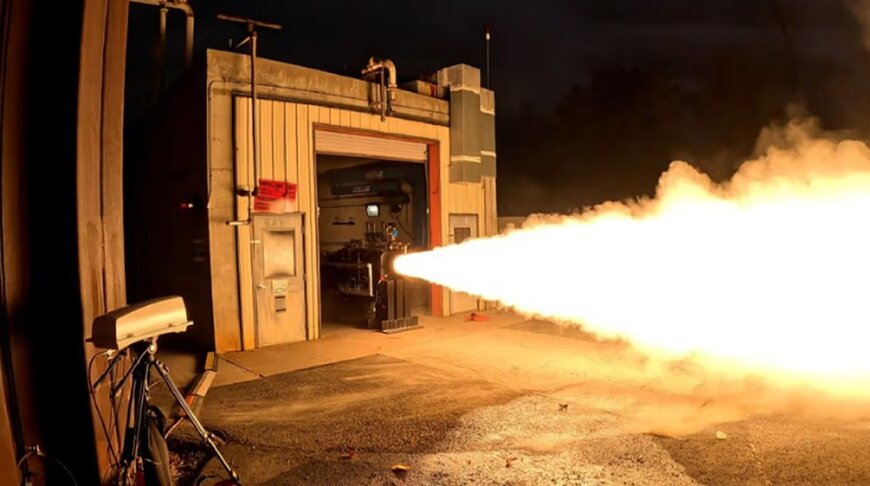
L3Harris Technologies and Lockheed Martin are cooperating with the U.S. Army Aviation and Missile Center to develop a propulsion solution for the Precision Strike Missile Increment 4 program. The collaborative effort addresses the technical challenge of extending precision strike ranges while maintaining compatibility with active field artillery. This complex integration requires complementary expertise, combining L3Harris’s propulsion manufacturing with Lockheed Martin’s systems engineering to meet fast-tracked deployment schedules.
Technical Solution and Interface Compatibility
The technical solution utilizes a dual-stage propulsion mechanism. During operation, the missile initiates flight via a solid rocket motor boost before executing a mechanical transition to a ramjet engine, which sustains high-velocity propulsion to deliver the payload.
The system architecture is engineered to interface directly with existing mobile platforms, including the High Mobility Artillery Rocket System and the Multiple Launch Rocket System. This cross-platform integration ensures compatibility with current military digital infrastructure and deployment frameworks without requiring infrastructure redesigns.
Implementation and Facility Infrastructure
The Direct Connect Transition Test occurred at the L3Harris facility in Orange County, Virginia, which features 256,000 square feet of manufacturing space. The validation process utilized a static test facility, an aerothermal propulsion laboratory, and an altitude test site to verify the transition sequence under simulated atmospheric parameters. Representatives from Lockheed Martin and the U.S. Army monitored the evaluation to verify compliance with mission requirements.
Applications and Expected Impact
The primary application for this technology is long-range tactical artillery support. By verifying the core transition mechanics, the partners have advanced the propulsion technology from a conceptual phase to a validated physical capability. The resulting operational benefits include enhanced process stability during flight transitions, increased range, and accelerated deployment timelines, supported by modern industrial automation production standards.
Edited by Evgeny Churilov, Induportals Media - Adapted by AI.
www.l3harris.com
