
www.aero-defence.tech
03
'26
Written on Modified on
Autonomous Strike Missile Advances Flight Readiness
Northrop Grumman demonstrates autonomous navigation and propulsion technologies for long-range precision strike operations.
www.northropgrumman.com
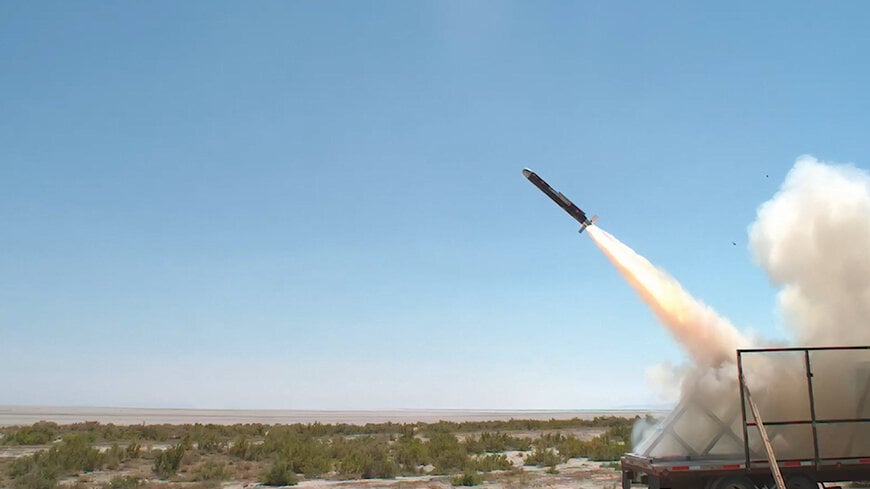
Northrop Grumman has completed a key flight test of its next-generation precision strike missile, validating critical flight systems designed for operation in contested and GPS-denied environments. The demonstration confirmed the readiness of propulsion, navigation, autonomy and flight-control technologies intended to support multi-domain precision strike missions for modern military forces.
Flight Test Validates Core Missile Systems
The recent flight test demonstrated several mission-critical capabilities, including automated turbojet engine startup, autonomous waypoint navigation, autopilot-controlled flight and high-speed maneuvering. According to Northrop Grumman, the test verified the technical maturity of the missile's airframe, propulsion architecture, navigation systems and autonomous flight controls.
The successful demonstration represents an important milestone as the program advances toward additional evaluation activities and eventual operational deployment. The missile is being developed to provide military operators with responsive strike capabilities capable of functioning in increasingly complex electromagnetic and battlefield environments.
Autonomous Navigation for Contested Environments
One of the distinguishing characteristics of the missile is its ability to operate in environments where satellite navigation signals may be degraded, disrupted or unavailable. The system incorporates autonomous navigation and AI-driven targeting algorithms designed to identify and engage threats without continuous operator intervention or direct line-of-sight communications.
This capability addresses a growing requirement among military forces for weapons that can maintain operational effectiveness in electronic warfare environments where GPS denial and communications interference have become increasingly common.
Turbojet Propulsion Extends Range and Speed
Unlike many loitering munitions that rely on electric propulsion systems, the missile employs a turbojet engine to achieve higher sustained speeds and extended operational reach. The platform is capable of maintaining speeds exceeding 300 mph (approximately 480 km/h) while reaching targets at distances up to 100 km when launched from ground-based systems and up to 125 km when launched from airborne platforms.
The combination of speed and range provides stand-off engagement capability, allowing operators to strike targets while remaining outside certain threat envelopes. The turbojet propulsion system also supports rapid response requirements where time-to-target is critical.
Multi-Domain Launch Flexibility
The missile has been designed as a common airframe capable of deployment from land, air and maritime platforms. This approach simplifies integration across different operational environments while reducing logistical complexity.
Northrop Grumman has indicated that the system can be integrated onto light tactical vehicles equipped with up to eight launch canisters, enabling rapid-fire missions and increased operational mobility. The architecture supports deployment by maneuver forces requiring flexible strike options without relying on large launch platforms.
Precision Strike and Battlefield Survivability
The missile is intended for operations in highly contested environments where survivability depends on minimizing detection and reducing target response time. According to the company, optimized flight profiles help decrease exposure to defensive systems while autonomous targeting functions support rapid engagement of dynamic threats.
The combination of precision guidance, autonomous mission execution and high-speed performance is designed to support battlefield operations requiring rapid engagement of time-sensitive targets while improving force protection.
Program Development and Future Evaluation
The completed flight test builds upon earlier development efforts focused on propulsion, autonomy and strike mission capabilities. Additional testing and evaluation activities are planned as the system progresses toward operational readiness. The program forms part of Northrop Grumman’s broader portfolio of autonomous and precision-strike technologies intended to support future military modernization requirements.
Additional Context: This section details technical specifications and competitive benchmarking not included in the original product announcement
The emerging category of long-range autonomous precision strike systems includes platforms such as AeroVironment's Switchblade 600, Lockheed Martin's Precision Strike Missile (PrSM), and General Atomics and Rafael's Bullseye standoff weapon. These systems are commonly evaluated using metrics including range, launch flexibility, navigation resilience, payload capacity, autonomous targeting capability and survivability in contested environments.
Compared with conventional loitering munitions, the missile's turbojet propulsion architecture enables higher sustained speed and greater operational reach. Publicly available information indicates a range exceeding 100 km and speeds above 300 mph, positioning it between traditional loitering munitions and larger cruise missile systems.
A key differentiator is its multi-domain launch capability combined with autonomous navigation for GPS-denied environments. As electronic warfare becomes increasingly prevalent, resilience against navigation disruption is emerging as a primary requirement in next-generation precision strike programs. Autonomous target recognition and AI-enabled mission execution are also becoming important competitive benchmarks across the precision-guided weapons sector.
The continued convergence of artificial intelligence, autonomous navigation, advanced propulsion and networked battlefield operations is expected to shape the next generation of precision strike capabilities. Systems capable of operating independently in contested environments while maintaining precision engagement performance are becoming a central focus of military modernization strategies worldwide.
Edited by Sucithra Mani, Induportals editor – adapted by AI.
www.northropgrumman.com
