
www.aero-defence.tech
22
'26
Written on Modified on
Integrated Gas Turbine Power for Naval Ocean Surveillance Ships
Austal USA integrates GE Aerospace propulsion technology into new vessel design.
www.geaerospace.com
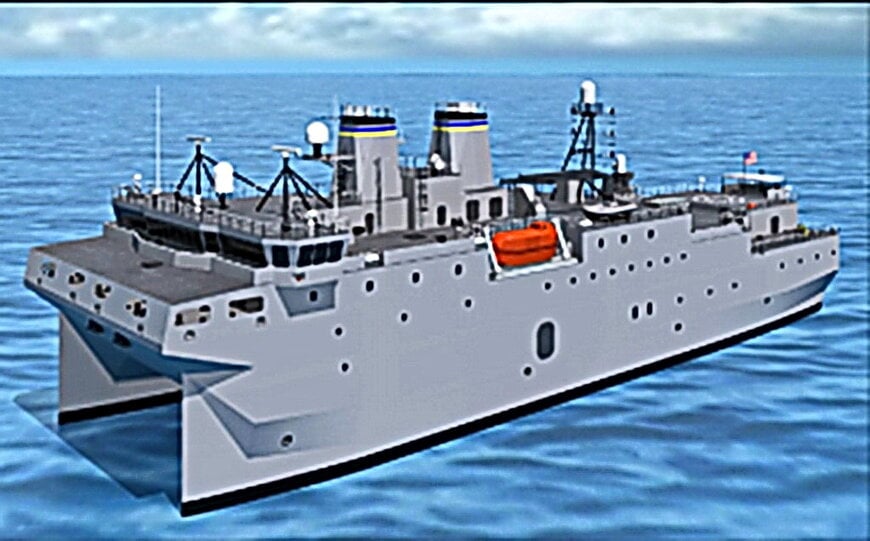
Austal USA and GE Aerospace Marine Engines & Systems have partnered to implement an integrated electric propulsion system for the United States Navy Explorer-class ocean surveillance ships. The technical solution combines gas turbine and diesel power to meet specific operational parameters for long-range, low-speed towing and high-speed transit.
Operational Challenges and System Integration
Ocean surveillance missions require a digital infrastructure and propulsion architecture capable of supporting anti-submarine warfare operations. These vessels must operate efficiently across two distinct profiles: extended low-speed towing at 5 knots for up to 9,000 nautical miles, and rapid transit at sprint speeds reaching 22 knots.
To achieve this operational flexibility, the design integrates a hybrid propulsion system. This architecture requires precise synchronization between multiple power sources to ensure process stability and continuous power availability during sonar deployment.
Technical Solution and Structural Responsibilities
The integrated electric propulsion system features four electric motors powered by a combination of three diesel generators and one GE Aerospace LM2500+G4 marine gas turbine engine. As the shipbuilder, Austal USA manages the overall system integration and vessel construction at its facility in Mobile, Alabama. GE Aerospace supplies the gas turbine engine, which is coupled with an associated generator manufactured by Brush to deliver the required electrical output.
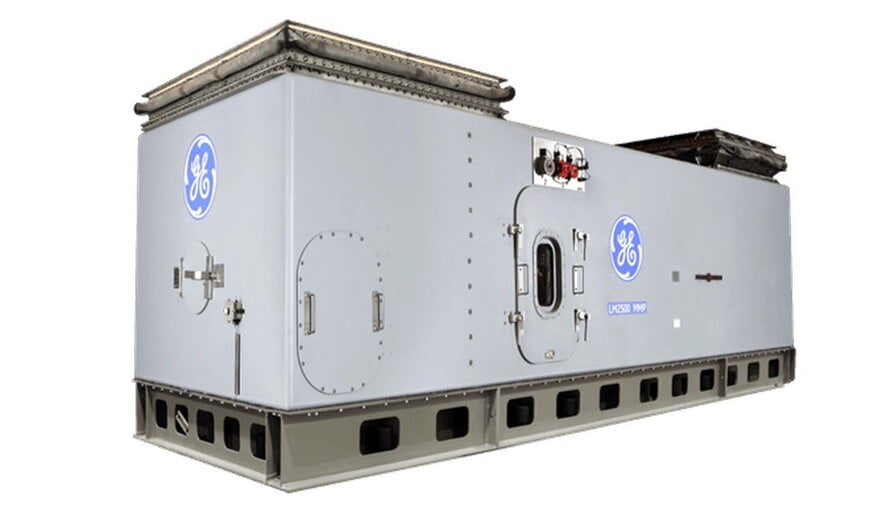
The gas turbine engine is housed within a lightweight composite enclosure certified to MIL-S-901D Grade A shock qualifications. This carbon fiber enclosure alters the physical and operational parameters of the engine room through several distinct mechanisms:
- Mass Reduction: The single-piece carbon fiber construction provides a 50% weight reduction, lowering the propulsion assembly mass by 2,500 kg compared to standard steel enclosures.
- Acoustic Attenuation: The structural composite material reduces engine room noise emissions by 60%, a critical factor for acoustic surveillance vessels.
- Thermal Management: The enclosure reduces exterior wall temperatures by 25°F to 50°F, lowering the total thermal energy rejected into the machinery space.
- Maintenance Infrastructure: The design features a lightweight main access door and allows for engine removal and reinstallation directly through the intake path.
Deployment and Target Application
The initial deployment of this technical solution occurs on the lead ship of the Explorer-class, the USNS Don Walsh (T-AGOS 25), which is currently under construction. The vessel possesses a displacement of 9,099 tons and a length of 359 feet, making it the largest asset in the Navy's ocean surveillance fleet. The propulsion layout serves as the baseline configuration for this class of vessels to support the Integrated Undersea Surveillance System.
Edited by Evgeny Churilov, Induportals Media - Adapted by AI.
www.geaerospace.com
The initial deployment of this technical solution occurs on the lead ship of the Explorer-class, the USNS Don Walsh (T-AGOS 25), which is currently under construction. The vessel possesses a displacement of 9,099 tons and a length of 359 feet, making it the largest asset in the Navy's ocean surveillance fleet. The propulsion layout serves as the baseline configuration for this class of vessels to support the Integrated Undersea Surveillance System.
Edited by Evgeny Churilov, Induportals Media - Adapted by AI.
www.geaerospace.com
