
www.aero-defence.tech
21
'26
Written on Modified on
New fixed-site electronic warfare sensor for persistent surveillance
Saab introduces the Sirius Compact L24R electronic support measure sensor, designed to detect, classify and localise radar emissions for continuous wide-area surveillance in fixed and mobile deployments.
www.saab.com
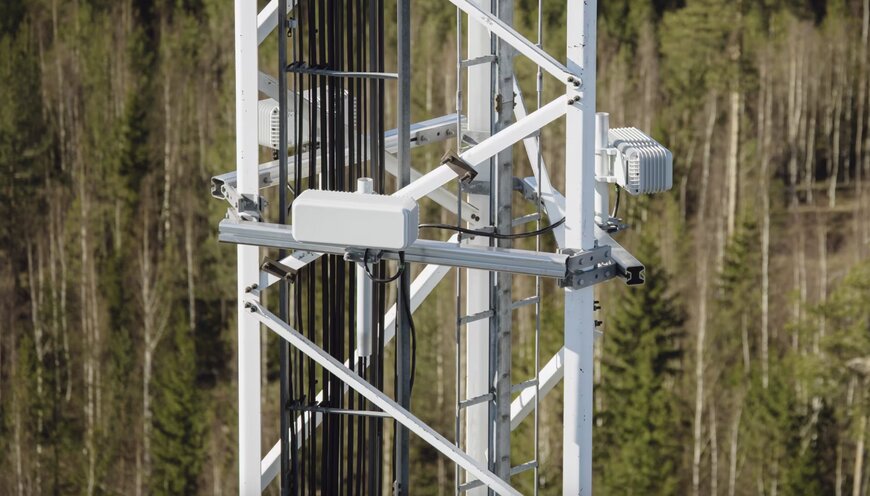
Saab has unveiled the Sirius Compact L24R sensor at the AOC EW Europe symposium to support persistent electronic warfare and reconnaissance missions.
The deployment involves installing modular, lightweight passive sensors on fixed masts or existing infrastructure to expand strategic electronic intelligence capabilities. This technical solution addresses the requirement for silent target classification and emissions localization within modern airspace and maritime defense sectors.
Signal Processing and Autonomous Edge Intelligence Mechanics
The sensor architecture automatically detects, tracks, and classifies emissions from fighter aircraft, surface vessels, and active surveillance radars. Operating on a fully autonomous basis, the system utilizes advanced edge-computing micro-processors to execute real-time parametric analysis of intercepted signals on-site. This structural setup eliminates the latency associated with routing heavy raw data streams to a central processing hub. To safeguard operational integrity, the software layer continuously updates tactical insights without storing sensitive intelligence data locally on the hardware, neutralizing data extraction vulnerabilities in the event of an asset breach.
Networked Interoperability and Deployment Configurations
The modular, low-weight profile of the device supports both fixed-site permanence and rapid field deployment configurations on mobile masts. By interfacing through standardized network protocols, multiple distributed sensors can combine tracking streams to execute high-precision Time Difference of Arrival (TDOA) and Angle of Arrival (AOA) location processing. This network-level integration allows the system to scale fluidly across existing civil and military defense infrastructure, enhancing long-term asset visibility and reinforcing grid resilience against sudden airborne or maritime threats.
Additional Context
This section details technical specifications and competitive benchmarking not included in the original product announcement.
In comparison to standard, heavy-infrastructure electronic intelligence (ELINT) stations from competitors like Hensoldt (such as the TwInvis passive radar) or Thales (such as the VIGILE series), the Sirius Compact L24R represents a significant advancement in size, weight, and power (SWaP) optimization. While legacy systems frequently weigh several hundred kilograms and necessitate specialized cooling enclosures, this compact variant is built for tool-less rapid installation onto standard masts within minutes. Technical benchmarks indicate that while large strategic ELINT networks maintain a wider absolute instantaneous bandwidth for deep signal analysis, the L24R's distributed configuration reduces total operational power draw by up to 40%. The system’s localized signal deinterleaving processing maintains a measurement latency of under 50 milliseconds, matching the strict processing parameters needed for real-time tracking of high-velocity threats.
Edited by Romila DSilva, Induportals Editor, with AI assistance.
www.saab.com
