
www.aero-defence.tech
18
'26
Written on Modified on
Polar Infrared Payload Cooperation Advances
BAE Systems supports the U.S. Space Force NGP program through delivery of sensor subsystems for missile warning and battlespace monitoring missions.
www.baesystems.com
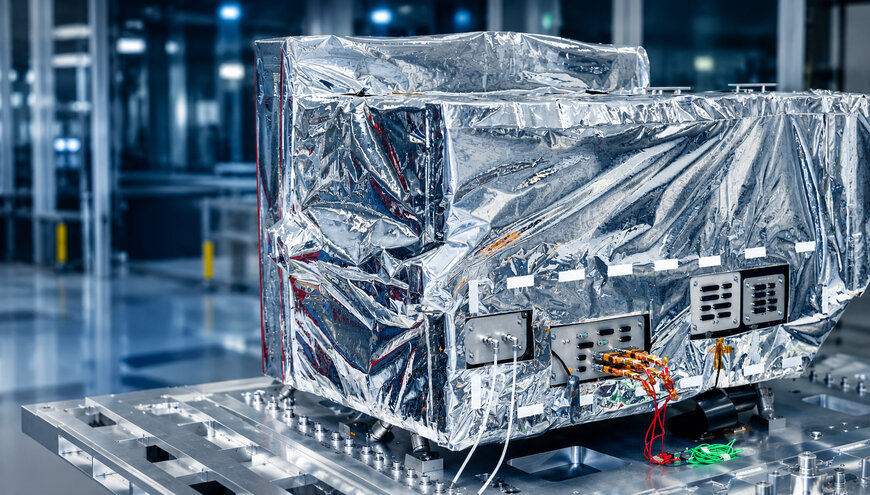
BAE Systems has delivered sensor subassembly and sensor system controller components for the Next Generation Overhead Persistent Infrared Polar (NGP) program, supporting the U.S. Space Force’s planned deployment of space-based missile warning and technical intelligence capabilities. The cooperation focuses on integrating infrared sensing technologies and spacecraft interface systems for persistent polar-orbit surveillance applications in the defense and aerospace sector.
Application Areas and Operational Context
The NGP program is intended to enhance overhead persistent infrared monitoring capabilities for missile warning, technical intelligence collection, and battlespace characterization. The system is designed for operation in polar orbit, extending coverage for high-latitude regions where geosynchronous orbit systems have operational limitations.
The cooperation involves the integration of payload subsystems with the spacecraft platform to support continuous infrared observation, telemetry exchange, and sensor control functions. The payload is scheduled for integration into Flight Unit 1, targeted for launch in 2028.
Roles and Technical Responsibilities
BAE Systems is responsible for the development and delivery of the sensor subassembly and sensor system controller. The U.S. Space Force oversees the broader NGP mission architecture and operational deployment.
The sensor subassembly includes the optical assembly, pointing mechanism, controlling electronics, and electrical bus interface required for spacecraft integration. These systems support infrared target detection and sensor positioning functions required for missile tracking and battlespace monitoring.
The sensor system controller interfaces directly with the space vehicle to process command inputs and transmit telemetry data. It also manages power conversion and distribution for sensor components while supporting high-accuracy mirror direction control for payload targeting and stabilization.
System Integration and Deployment
The delivered hardware supports the next phase of full payload assembly for Flight Unit 1. According to BAE Systems, the sensor architecture was initially developed for the geosynchronous Earth orbit element of the program before being adapted for the polar-orbit NGP mission.
The reuse and repurposing of existing hardware architecture reduced redevelopment requirements and supported schedule continuity for the mission. The adaptable system design enabled integration into the revised mission profile while maintaining compatibility with spacecraft control interfaces and payload requirements.
BAE Systems stated that a second flight unit for the NGP mission remains on schedule for delivery in support of a planned launch in 2030.
Technical Impact and Operational Relevance
The cooperation supports the deployment of digital infrastructure for space-based defense surveillance and persistent infrared sensing. By combining spacecraft interface technologies with infrared payload subsystems, the program aims to improve detection coverage, sensor responsiveness, and mission continuity in polar operational environments.
The modular design approach also demonstrates how existing aerospace hardware platforms can be adapted for new orbital configurations, reducing development timelines and supporting long-duration defense modernization programs.
“We met multiple challenges across a multiyear timeframe to successfully deliver our components for the next stage of full payload assembly,” said Thai Sheridan, vice president and general manager of Military Space for BAE Systems Space & Mission Systems.
Edited by Sucithra Mani, Induportals editor – adapted by AI.
www.baesystems.com
