
www.aero-defence.tech
15
'26
Written on Modified on
F-35 Range Extension Integration Program
Israel Ministry of Defense and Elbit Systems are cooperating to develop external fuel tank integration for the F-35 Adir multirole fighter platform.
elbitsystems.com
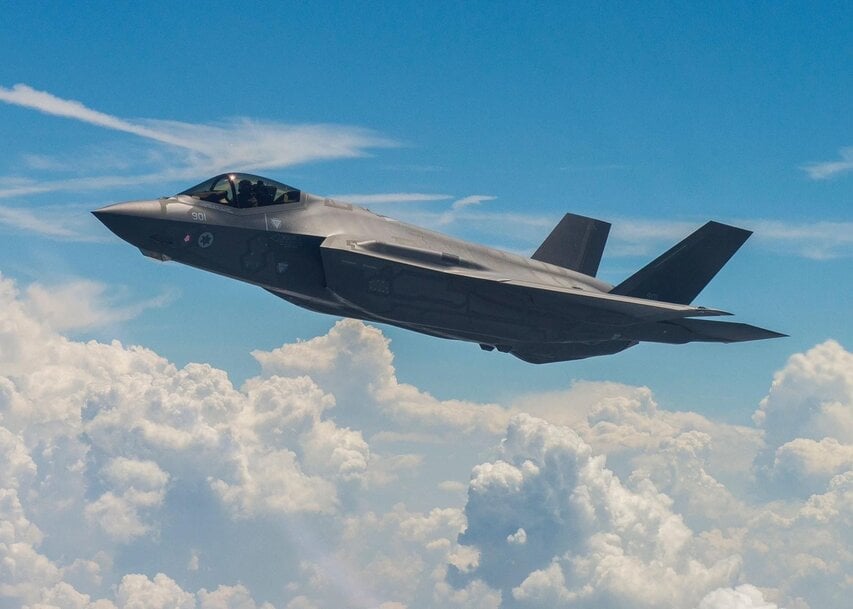
The Israel Ministry of Defense (IMOD) has signed a contract with Cyclone, a subsidiary of Elbit Systems, to develop an extended-range capability for the F-35 “Adir” fighter aircraft produced by Lockheed Martin. The program focuses on the development and integration of external fuel tanks intended to increase operational endurance and reduce dependence on aerial refueling during long-range missions.
Cooperation Scope and Industrial Roles
The agreement, managed through the Defense Procurement Directorate (DPD) of the Israel Ministry of Defense, is valued at more than $34 million. Cyclone will lead the engineering, adaptation, and manufacturing work associated with the external fuel tank system, while the ministry oversees operational requirements, qualification processes, and platform integration coordination.
The cooperation combines operational requirements from the Israeli Air Force with Cyclone’s experience in aerostructures and airborne fuel systems. The external tank concept is based on an existing design previously developed for the F-16 platform, reducing development risk and shortening integration timelines.
Technical Integration Approach
The project addresses one of the main operational constraints of tactical fighter aircraft: mission radius and loiter endurance during long-range operations. The integration of external fuel tanks is intended to increase available onboard fuel capacity while maintaining compatibility with the F-35 “Adir” airframe and mission systems.
The engineering work is expected to include aerodynamic adaptation, structural integration, fuel transfer interfaces, and compatibility validation with existing avionics and flight-control systems. Additional work may involve minimizing effects on aircraft handling, radar signature, and mission-system performance.
Because the F-35 platform uses tightly integrated mission software and low-observable design principles, external stores integration requires coordinated validation across structural, aerodynamic, and systems engineering disciplines. This makes cooperation between the defense ministry, aircraft operator, and industrial supplier necessary for certification and operational deployment.
Deployment and Operational Applications
The extended-range capability is intended for long-range strike, air superiority, and strategic deterrence missions. By reducing reliance on aerial refueling assets, the system may improve operational flexibility and mission planning resilience in contested environments.
The solution is expected to integrate with existing maintenance and operational infrastructure supporting the F-35 fleet. Cyclone’s role includes manufacturing and technical support activities associated with deployment readiness and sustainment.
Strategic and Technical Impact
The contract forms part of Israel’s broader defense modernization and force buildup strategy aimed at maintaining long-range operational capability and aerial superiority. From a technical perspective, the cooperation demonstrates how legacy subsystem expertise from earlier fighter platforms can be adapted for next-generation combat aircraft through industrial automation, advanced aerostructure engineering, and systems integration.
Edited by an industrial journalist Sucithra Mani with AI assistance.
www.elbitsystems.com
