
www.aero-defence.tech
15
'26
Written on Modified on
Integration of Multi-Domain Data for Distributed Command and Control
Lockheed Martin and the U.S. Army demonstrate cross-domain sensor-to-shooter integration during Exercise Balikatan 2026.
www.lockheedmartin.com
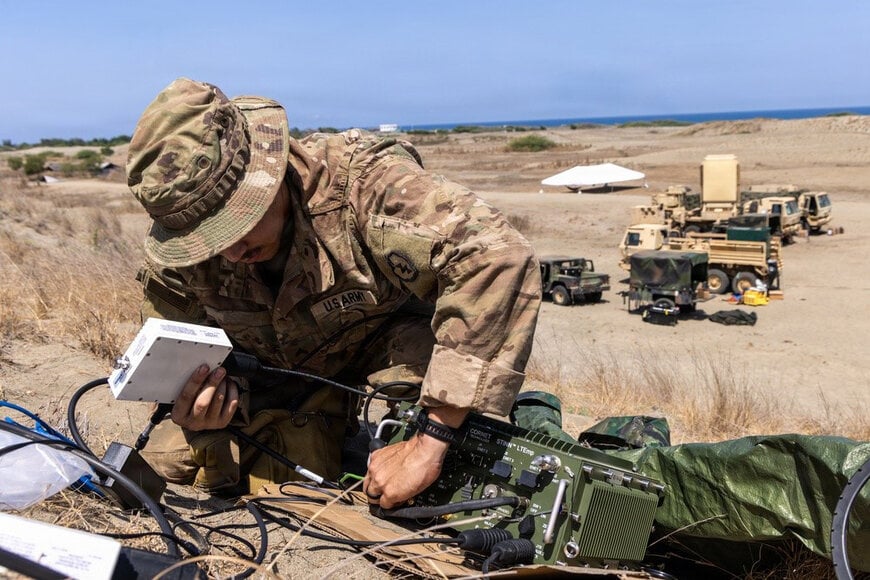
During the Balikatan 2026 exercise, Lockheed Martin and the U.S. Army’s 25th Infantry Division successfully deployed the Next Generation Command and Control (NGC2) prototype. The exercise demonstrated the integration of sensors, fires systems, and airspace management through a unified data platform to reduce sensor-to-shooter timelines in the Indo-Pacific theater.
Context of the Cooperation
The deployment involved collaboration between Lockheed Martin and several military entities, including the Armed Forces of the Philippines, the U.S. Army 25th Infantry Division, and the I Marine Expeditionary Force. To develop the NGC2 architecture, Lockheed Martin integrated technical capabilities from industry partners including Raft, Lyntris, Rune, and Amazon Web Services (AWS).
The cooperation addressed the operational challenge of managing large-scale combat operations across geographically dispersed locations. By linking nodes in the Philippines, Hawaii, and the continental United States, the partners aimed to resolve data silos and provide a common operating picture (COP) within a digital infrastructure capable of handling contested environments.
Technical Solution and Functional Architecture
The NGC2 prototype functions as a cloud-enabled data layer designed to fuse information across multiple security classification levels. The system’s primary technical responsibilities include:
- Data Linkage: Utilizing AWS cloud infrastructure and edge nodes to ingest, store, and distribute data from disparate sensors to command centers in real time.
- Airspace Deconfliction: The system integrates radar and GPS flight path data into a unified interface. This allows for the visualization of airspace lanes and the generation of "safe-to-fire" cues for both rotary-wing pilots and ground-based artillery units.
- Interoperability: The architecture supports cross-domain data sharing between international allied forces, ensuring a consistent and authoritative operational picture.
Deployment and Live-Fire Implementation
The implementation occurred during the Balikatan Counter Landing Live Fire exercise. The NGC2 platform was integrated with existing hardware, including Apache helicopters, Howitzers, mortars, and HIMARS (High Mobility Artillery Rocket System).
During the execution, the platform recorded and displayed real-time performance metrics and battle damage assessments. This phase of the deployment, part of the "Lightning Surge" series, focused on testing the end-to-end workflow of industrial automation in fires delivery. The exercise validated the system's ability to maintain process stability while coordinating assets across different military branches and international partners.
Results and Operational Impact
The demonstration marked the first division-level use of cross-domain data sharing within the 25th Infantry Division’s operational environment. By automating the deconfliction of airspace and the distribution of targeting data, the NGC2 prototype provided a measurable reduction in the time required to authorize and execute fires.
The data gathered during Balikatan 2026 will inform future Army modernization strategies. Subsequent phases, such as Lightning Surge 4, are scheduled to expand the prototype's architecture to include logistics mission threads, further testing the scalability of the data layer in varied operational contexts.
Edited by Evgeny Churilov, Induportals Media - Adapted by AI.
www.lockheedmartin.com
The implementation occurred during the Balikatan Counter Landing Live Fire exercise. The NGC2 platform was integrated with existing hardware, including Apache helicopters, Howitzers, mortars, and HIMARS (High Mobility Artillery Rocket System).
During the execution, the platform recorded and displayed real-time performance metrics and battle damage assessments. This phase of the deployment, part of the "Lightning Surge" series, focused on testing the end-to-end workflow of industrial automation in fires delivery. The exercise validated the system's ability to maintain process stability while coordinating assets across different military branches and international partners.
Results and Operational Impact
The demonstration marked the first division-level use of cross-domain data sharing within the 25th Infantry Division’s operational environment. By automating the deconfliction of airspace and the distribution of targeting data, the NGC2 prototype provided a measurable reduction in the time required to authorize and execute fires.
The data gathered during Balikatan 2026 will inform future Army modernization strategies. Subsequent phases, such as Lightning Surge 4, are scheduled to expand the prototype's architecture to include logistics mission threads, further testing the scalability of the data layer in varied operational contexts.
Edited by Evgeny Churilov, Induportals Media - Adapted by AI.
www.lockheedmartin.com
