
www.aero-defence.tech
14
'26
Written on Modified on
Partnership for software-defined defence architectures
HENSOLDT and IBM Germany sign an MoU to collaborate on software-defined defence technologies, focusing on AI-supported data management, multi-domain networking and military software architectures.
www.hensoldt.net
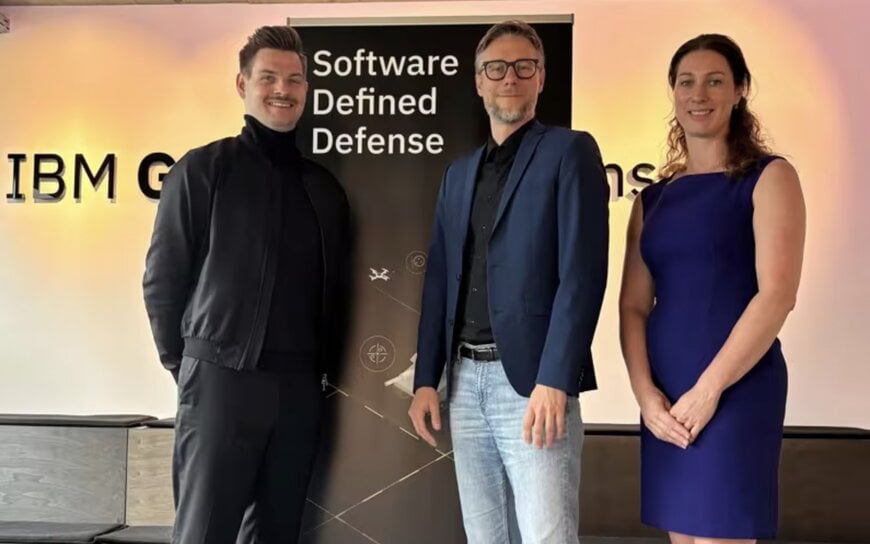
HENSOLDT and IBM Germany are collaborating to develop advanced software functionalities for the MDOcore suite to accelerate Software-Defined Defence.
The cooperation addresses the challenge of networking distributed sensors and weapon systems while maintaining national sovereignty over sensitive military data. By integrating complementary expertise in sensor technology and enterprise data platforms, the partners aim to transform unstructured big data into actionable insights across dynamic battlefield domains.
Technical solution and responsibilities
The technical framework centers on the MDOcore data management software, which orchestrates data flows from the military edge through fog data centres to secure multi-cloud environments.
- HENSOLDT is responsible for the core MDOcore suite, focusing on the networking of weapon systems and the implementation of semantic technologies for data fusion.
- IBM Germany contributes technological expertise in multi-tenant data platforms, sovereign artificial intelligence through IBM watsonx, and holistic system automation.
This integration ensures a cross-module data flow that allows for the consolidation and analysis of heterogeneous databases in real-time.
Deployment and system architecture
The architecture is designed for deployment across multiple operational layers, from individual sensors at the edge to large-scale data centres. The system can be implemented as a security-certified Software-as-a-Service (SaaS) or as an on-premises installation to meet specific customer security requirements. By utilizing proven, security-compliant technologies from IBM’s automation platforms, the collaboration aims to reduce technical risks and shorten software development cycles.
Applications and operational impact
The primary application areas include military and intelligence operations requiring automated pattern recognition and anomaly detection in distributed databases.
Deployment and system architecture
The architecture is designed for deployment across multiple operational layers, from individual sensors at the edge to large-scale data centres. The system can be implemented as a security-certified Software-as-a-Service (SaaS) or as an on-premises installation to meet specific customer security requirements. By utilizing proven, security-compliant technologies from IBM’s automation platforms, the collaboration aims to reduce technical risks and shorten software development cycles.
Applications and operational impact
The primary application areas include military and intelligence operations requiring automated pattern recognition and anomaly detection in distributed databases.
- Operational Intelligence: The system identifies patterns in big data automatically, providing a tactical advantage in complex combat environments.
- Process Stability: Holistic integration enables the orchestration of operational effects across different domains rather than focusing on individual platforms.
- Efficiency: Utilizing existing security-compliant modules reduces the time required to implement new defensive concepts.
This architectural shift ensures that reconnaissance and weapon systems remain synchronized across diverse data spaces and software environments.
Edited by Romila DSilva, Induportals Editor, with AI assistance.
Edited by Romila DSilva, Induportals Editor, with AI assistance.
