
www.aero-defence.tech
29
'26
Written on Modified on
Strategic Enhancement of Japanese Electronic Warfare Systems
Northrop Grumman collaborates with Japan Ministry of Defense to operationalize advanced electromagnetic spectrum capabilities.
www.northropgrumman.com
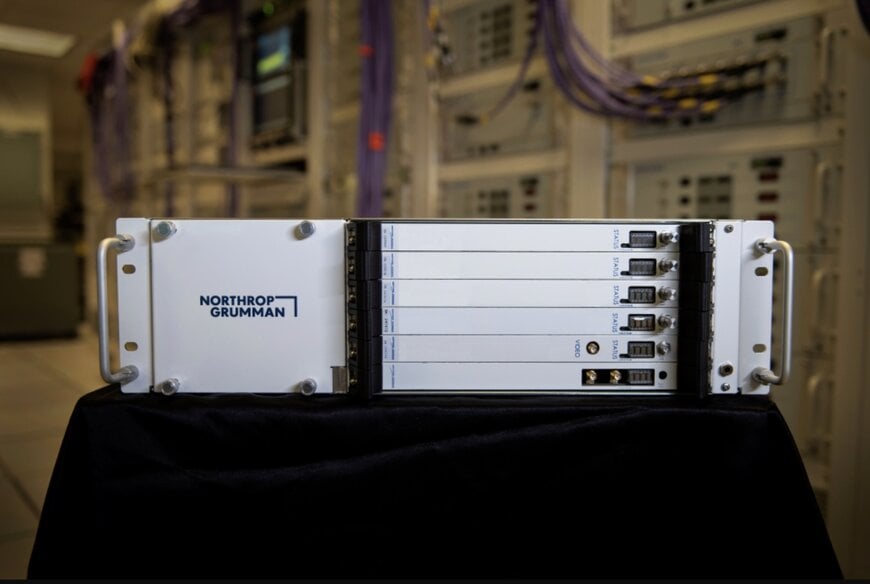
Northrop Grumman met with officials from Japan’s Ministry of Defense and embassy representatives to discuss the operationalization and enhancement of electronic warfare (EW) systems. The collaboration focuses on strengthening defense infrastructure to detect, exploit, and deny adversary use of the electromagnetic spectrum while protecting allied operations.
Threat Environment Simulation and Validation
The increasingly complex regional security landscape requires adaptable hardware and rapid software updates to counter multispectral, software-defined threats. The Combat Electromagnetic Environment Simulator (CEESIM) provides the capability to simulate these complex environments:
- Scenario Generation: CEESIM generates multiple simultaneous emitter scenarios linked to static and dynamic platforms to replicate combat conditions.
- System Development: The technology provides Angle of Arrival (AOA) stimuli for System Integration Laboratories and acts as an emitter engine for anechoic facilities.
- Proven Performance: Fielded since 1983, the technology supports programs including the ALQ-257 Integrated Viper Electronic Warfare Suite (IVEWS), ALQ-251 Radio Frequency Countermeasures, and the APR-39E(V)2 Digital Radar Warning Receiver.
- Verification: The IVEWS program utilized CEESIM throughout its development cycle to achieve predictable results during flight testing.
Training and Operational Readiness
Operationalizing EW capabilities includes the development of skilled personnel through advanced training environments.
Operationalizing EW capabilities includes the development of skilled personnel through advanced training environments.
- Joint Threat Emitter (JTE): This system offers a reactive environment designed to train military personnel in identifying and countering missile and artillery threats.
- Lifecycle Support: Current systems offer end-to-end support with operational lifespans exceeding 20 years.
Edited by Romila DSilva, Induportals Editor, with AI assistance.
