
www.aero-defence.tech
20
'26
Written on Modified on
Northrop Grumman delivers GPS-jamming-resistant airborne navigation system
Software-defined PNT solution ensures resilient navigation and flexible sensor integration for military platforms operating in contested environments.
www.northropgrumman.com
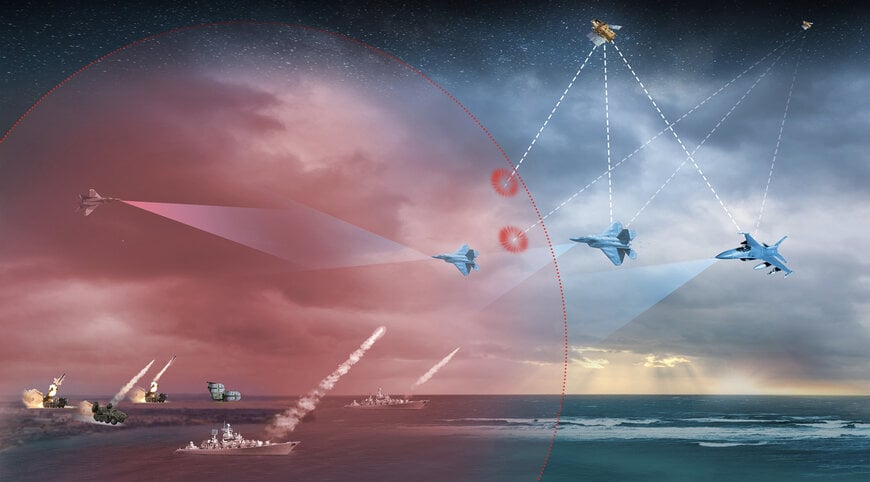
Military aviation, defense systems, and secure navigation technologies require reliable positioning even in GPS-denied environments. In this context, Northrop Grumman has delivered the first production unit of its EGI-M airborne navigation system, designed to provide resilient positioning, navigation and timing (PNT) data under conditions of GPS disruption or jamming.
The EGI-M system represents a modernized embedded GPS/inertial navigation solution that combines secure military-code GPS with advanced processing capabilities. It is engineered to maintain navigation accuracy in contested environments where satellite signals may be degraded, denied, or manipulated.
Resilient navigation in GPS-denied environments
A central feature of the system is its ability to ensure trusted navigation data through a capability known as blended navigation assurance. This function continuously evaluates GPS inputs and cross-references them with other data sources to verify signal integrity and maintain operational reliability.
Such resilience is critical for military aircraft operating in electronic warfare scenarios, where adversaries may attempt to jam or spoof GPS signals. By safeguarding the integrity of PNT data, the system enables continued mission execution without reliance on a single navigation source.
Software-defined architecture for future adaptability
Unlike conventional navigation units with fixed functionality, EGI-M is designed as a software-defined platform. Operators can integrate third-party PNT applications and additional sensors without requiring redesign of the core system. This allows adaptation to evolving threats and the integration of alternative satellite constellations beyond GPS.
This modular approach supports long-term scalability, enabling military users to update navigation capabilities through software rather than hardware replacement. It also facilitates interoperability across different airborne platforms.
Integration and deployment readiness
The system has undergone extensive hardware and software validation to meet military performance standards, supporting its transition to full-scale production. Its unified hardware and software architecture is designed for seamless integration into existing and future aircraft systems.
According to Ryan Arrington, vice president of navigation and cockpit systems at Northrop Grumman, the system is built to enhance operational effectiveness while maintaining flexibility to address emerging threats. Lt. Col. Chris Grover of the U.S. Air Force highlighted its role in enabling mission execution under contested conditions, ensuring navigation capability when and where it is required.
Applications across defense operations
Resilient PNT systems such as EGI-M are essential for a wide range of military applications, including tactical aviation, surveillance missions, and coordinated multi-domain operations. Reliable navigation under interference supports precise targeting, flight safety, and synchronization of distributed assets.
Compared to traditional embedded GPS/inertial systems, the addition of signal validation, multi-source data fusion, and software extensibility distinguishes this new generation of navigation technology. These capabilities address the increasing need for secure and adaptable navigation in modern defense environments.
Edited by Natania Lyngdoh, Induportals Editor — Adapted by AI.
www.northropgrumman.com
