
www.aero-defence.tech
14
'26
Written on Modified on
Sentinel ICBM Development Through Integrated Digital Engineering
Northrop Grumman and U.S. Air Force advance a modular, digitally engineered intercontinental ballistic missile system to accelerate deployment and modernize strategic deterrence infrastructure.
www.northropgrumman.com
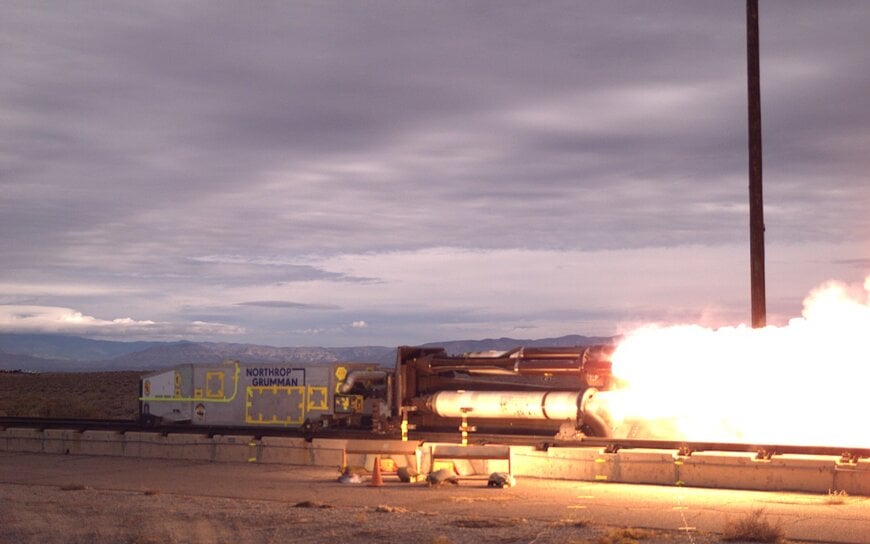
Northrop Grumman Corporation and the U.S. Air Force are jointly advancing the Sentinel intercontinental ballistic missile (ICBM) program through a revised acquisition framework. The cooperation focuses on accelerating validation cycles, integrating digital engineering, and deploying a modular missile and infrastructure system for strategic defense applications.
Context of the Cooperation
Northrop Grumman Corporation acts as the prime contractor responsible for system design, integration, and production, while United States Air Force defines operational requirements and oversees testing and certification.
The program replaces the Minuteman III system across a geographically distributed infrastructure spanning more than 32,000 square miles. The scale of modernization covering missile systems, launch facilities, and command infrastructure requires close coordination across a supply chain of more than 500 industrial partners and a workforce exceeding 10,000 personnel. Cooperation is necessary to synchronize engineering, infrastructure renewal, and operational continuity.
Technical Solution and Responsibilities
The Sentinel system is developed within a model-based digital engineering environment, enabling early validation of system architecture and continuous refinement during development. This approach supports faster iteration cycles and reduces integration risks, forming a core element of modern digital infrastructure in defense programs.
The missile architecture uses a three-stage solid rocket booster constructed from composite materials, reducing structural weight compared to legacy systems and improving payload efficiency. Subsystems such as propulsion stages, separation mechanisms, and guidance hardware have undergone staged prototyping and environmental testing to verify performance under flight-representative conditions.
Northrop Grumman leads system integration, propulsion development, and hardware validation, while the U.S. Air Force manages requirements verification, system evaluation, and certification processes.
Deployment and Implementation
The program applies an incremental acquisition strategy, allowing development, testing, and infrastructure deployment to proceed in parallel. Hardware prototypes, including a fully assembled ground test booster, have been validated to confirm design and manufacturing processes.
In parallel, a modular launch silo architecture is being introduced to replace legacy infrastructure. A prototype silo structure is under construction to validate structural integrity and construction methods, with the objective of improving maintainability and reducing lifecycle complexity.
The Launch Support System, a digital command-and-control platform, has completed its critical design review and is progressing toward integration and qualification. Transport systems have also been tested under operational conditions to ensure secure movement of critical assets.
Applications and Use Cases
The system is intended for strategic deterrence operations requiring high reliability, secure command integration, and long-term maintainability. Its modular infrastructure supports phased upgrades, while digital engineering enables consistent performance validation across distributed deployment environments.
Results and Expected Impact
The revised acquisition approach enables earlier testing and concurrent development phases, reducing the time between design validation and deployment. Continuous integration of test data into the digital model improves system accuracy and limits late-stage redesign.
The program is progressing toward a first flight test in 2027 and initial operational capability in the early 2030s, with the system designed for sustained operation through 2075.
Edited by an industrial journalist Sucithra Mani with AI assistance.
www.northropgrumman.com
