
www.aero-defence.tech
31
'26
Written on Modified on
Adaptive Computing for Autonomous Space Missions
Advanced Micro Devices supports space exploration with radiation-tolerant processors enabling AI-driven, low-latency data processing across deep-space and lunar missions.
www.amd.com
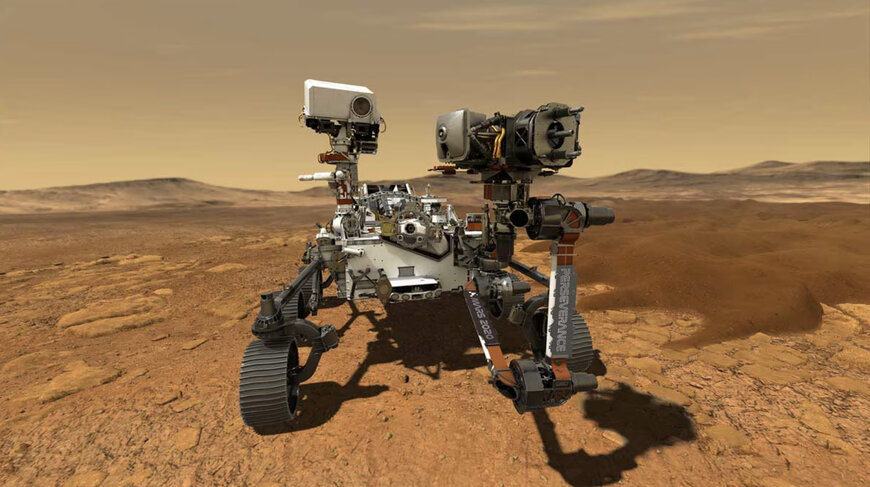
Advanced Micro Devices (AMD) is expanding its role in space systems by deploying adaptive computing platforms designed for autonomous, high-performance data processing in deep-space and orbital missions. The technologies address latency, bandwidth, and reliability constraints in environments where real-time decision-making is increasingly required.
Increasing demand for onboard computing in space
Space missions are shifting from short-duration operations to sustained lunar presence and deep-space exploration. Programs such as Artemis II and NISAR require continuous data acquisition and processing, often far from Earth-based infrastructure.
This shift introduces a fundamental constraint: communication latency and limited bandwidth between spacecraft and ground stations. As a result, onboard computing capable of processing sensor data locally has become essential for mission autonomy and responsiveness.
AMD’s portfolio of CPUs, GPUs, FPGAs, and adaptive system-on-chips (SoCs) is designed to support these requirements by enabling edge processing in space environments.
Radiation-tolerant adaptive computing architectures
At the core of these deployments are FPGA-based adaptive SoCs, which combine programmable logic, AI engines, and processor cores within a single architecture. These systems are engineered to operate under radiation exposure and extreme temperature variations typical of space missions.
Compliance with standards such as MIL-PRF-38535, along with validation through proton, heavy ion, and gamma testing, ensures operational reliability over multi-year mission durations. These characteristics are critical for applications where hardware cannot be physically serviced after launch.
Enabling real-time processing at the lunar edge
For lunar and deep-space missions, onboard processing reduces dependence on Earth-based computation. By executing data filtering, compression, and analysis directly within spacecraft systems, adaptive SoCs reduce latency and optimize bandwidth usage.
This capability is particularly relevant for lunar surface operations, where communication delays can impact navigation, system coordination, and scientific data interpretation. By moving computation closer to the data source, mission systems achieve higher autonomy and operational resilience.
Reconfigurable systems for long-duration missions
A defining feature of FPGA-based systems is post-deployment reconfigurability. Unlike fixed-function hardware, adaptive platforms allow updates to algorithms and processing pipelines after launch.
This enables:
- Deployment of updated AI models during mission runtime
- Optimization of system performance based on operational conditions
- Extension of mission capabilities without hardware replacement
Such flexibility aligns with iterative mission architectures adopted in modern space programs, where requirements evolve over time.
AI-driven data reduction in Earth observation missions
The NISAR mission illustrates the need for onboard intelligence. Synthetic aperture radar (SAR) systems generate large volumes of data, making full transmission to Earth impractical.
Adaptive SoCs enable real-time preprocessing tasks such as range-Doppler computation, filtering, and compression. By transmitting only relevant insights rather than raw datasets, missions improve efficiency and reduce communication overhead while accelerating access to actionable information for applications such as climate monitoring and disaster response.
Deployment across commercial and institutional space programs
AMD technologies are being integrated into both government and commercial space systems. Blue Origin is using adaptive SoCs in flight computers for its lunar lander development, while NEC Corporation is applying similar architectures in optical communication satellite constellations for high-speed data routing.
These implementations demonstrate the applicability of adaptive computing across navigation, communication, and onboard data processing functions.
Proven performance in planetary exploration
AMD FPGA technologies have been deployed in multiple missions, including the Mars Perseverance Rover and the OSIRIS-REx mission. In these cases, the hardware supported critical functions such as navigation, scientific instrumentation, and sample analysis.
Such flight heritage validates the use of adaptive computing platforms in environments characterized by high radiation, limited power availability, and extreme thermal conditions.
Positioning within the space computing ecosystem
Adaptive computing platforms represent a key enabler in the evolving space data ecosystem. Compared with traditional fixed-function processors, FPGA-based SoCs provide a balance between performance, flexibility, and energy efficiency—key parameters for space-qualified systems.
As mission complexity increases, the integration of AI inference, real-time analytics, and reconfigurable hardware is expected to play a central role in enabling autonomous space operations and long-duration exploration strategies.
Edited by an industrial journalist Sucithra Mani with AI assistance.
www.amd.com
AI-driven data reduction in Earth observation missions
The NISAR mission illustrates the need for onboard intelligence. Synthetic aperture radar (SAR) systems generate large volumes of data, making full transmission to Earth impractical.
Adaptive SoCs enable real-time preprocessing tasks such as range-Doppler computation, filtering, and compression. By transmitting only relevant insights rather than raw datasets, missions improve efficiency and reduce communication overhead while accelerating access to actionable information for applications such as climate monitoring and disaster response.
Deployment across commercial and institutional space programs
AMD technologies are being integrated into both government and commercial space systems. Blue Origin is using adaptive SoCs in flight computers for its lunar lander development, while NEC Corporation is applying similar architectures in optical communication satellite constellations for high-speed data routing.
These implementations demonstrate the applicability of adaptive computing across navigation, communication, and onboard data processing functions.
Proven performance in planetary exploration
AMD FPGA technologies have been deployed in multiple missions, including the Mars Perseverance Rover and the OSIRIS-REx mission. In these cases, the hardware supported critical functions such as navigation, scientific instrumentation, and sample analysis.
Such flight heritage validates the use of adaptive computing platforms in environments characterized by high radiation, limited power availability, and extreme thermal conditions.
Positioning within the space computing ecosystem
Adaptive computing platforms represent a key enabler in the evolving space data ecosystem. Compared with traditional fixed-function processors, FPGA-based SoCs provide a balance between performance, flexibility, and energy efficiency—key parameters for space-qualified systems.
As mission complexity increases, the integration of AI inference, real-time analytics, and reconfigurable hardware is expected to play a central role in enabling autonomous space operations and long-duration exploration strategies.
Edited by an industrial journalist Sucithra Mani with AI assistance.
www.amd.com
