
www.aero-defence.tech
26
'26
Written on Modified on
L3Harris Develops Submarine-Launched Autonomous Underwater System
Torpedo tube launch and recovery system enables deployment of AUVs from submarines for ISR, mine detection, and seabed warfare without surfacing.
www.l3harris.com
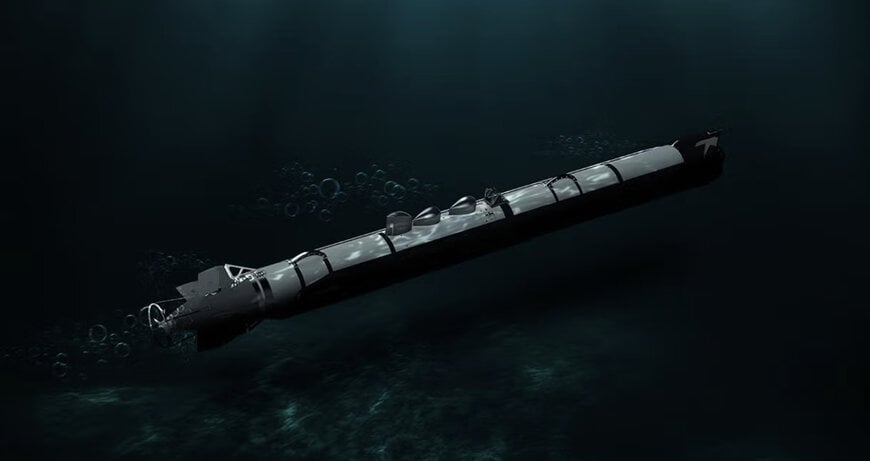
Naval defense, underwater surveillance, and maritime security operations increasingly rely on autonomous systems to extend mission capability while maintaining stealth. L3Harris Technologies has been awarded a contract by the Defense Innovation Unit to deliver a Torpedo Tube Launch and Recovery (TTLR) system, enabling submarines to deploy and retrieve autonomous underwater vehicles (AUVs) without surfacing.
The system is designed to integrate with existing submarine platforms, supporting intelligence, surveillance, reconnaissance (ISR), mine detection, and seabed warfare missions in contested maritime environments.
Submarine-based deployment of autonomous underwater vehicles
The TTLR system enables the launch and recovery of the Iver4 900 AUV directly through standard submarine torpedo tubes. This approach eliminates the need for dedicated launch platforms or surface deployment, preserving submarine stealth and reducing operational risk to personnel.
By enabling underwater deployment and retrieval, the system allows continuous mission execution without exposing the submarine’s position, which is critical in defense operations requiring low observability.
Modular system architecture for fleet integration
The TTLR system is designed as a modular solution compatible with multiple submarine classes and allied naval platforms. This interoperability supports joint operations and aligns with multinational defense collaboration initiatives such as AUKUS Pillar 2.
The system enhances existing submarine capabilities without requiring structural modifications or new vessel construction. This allows navies to expand operational capacity using current fleets, reducing both cost and deployment timelines.
Extended mission duration through advanced battery technology
A key technical feature of the system is its integration of lithium-ion battery technology approved for both submarine and aviation use. This enables longer mission durations for deployed AUVs compared to conventional battery systems.
The inclusion of hot-swap capability allows rapid replacement of battery modules, supporting continuous or extended operations without prolonged downtime. This is particularly relevant for missions requiring persistent underwater presence, such as seabed monitoring or mine countermeasures.
Enabling manned-unmanned teaming in naval operations
The TTLR system supports the concept of manned-unmanned teaming, where crewed submarines operate in coordination with autonomous platforms to extend sensing, reconnaissance, and operational reach.
AUVs deployed via the system can conduct forward-area missions independently, gathering data or performing detection tasks while the submarine remains at a safe distance. This reduces exposure to threats and increases operational flexibility.
Positioning within autonomous naval systems
Autonomous underwater systems are an expanding segment in naval defense, with comparable developments from organizations such as Boeing and Saab, which also develop AUV platforms and deployment systems.
Key differentiators in this domain include deployment flexibility, integration with existing naval platforms, mission endurance, and system interoperability. The TTLR system addresses these factors by enabling submarine-based deployment, extending mission duration, and supporting allied operational frameworks.
By enabling submarines to deploy and recover AUVs while remaining submerged, the system represents an advancement in undersea operational capability, supporting a broader shift toward autonomous and distributed maritime defense systems.
Edited by Natania Lyngdoh, Induportals Editor — Adapted by AI.
www.l3harris.com
