
www.aero-defence.tech
02
'26
Written on Modified on
Lockheed Martin Demonstrates Scalable NGC2 Prototype
AI-enabled command-and-control stack integrates sensor, fires and logistics data during live-fire exercise with the U.S. Army’s 25th Infantry Division.
www.lockheedmartin.com
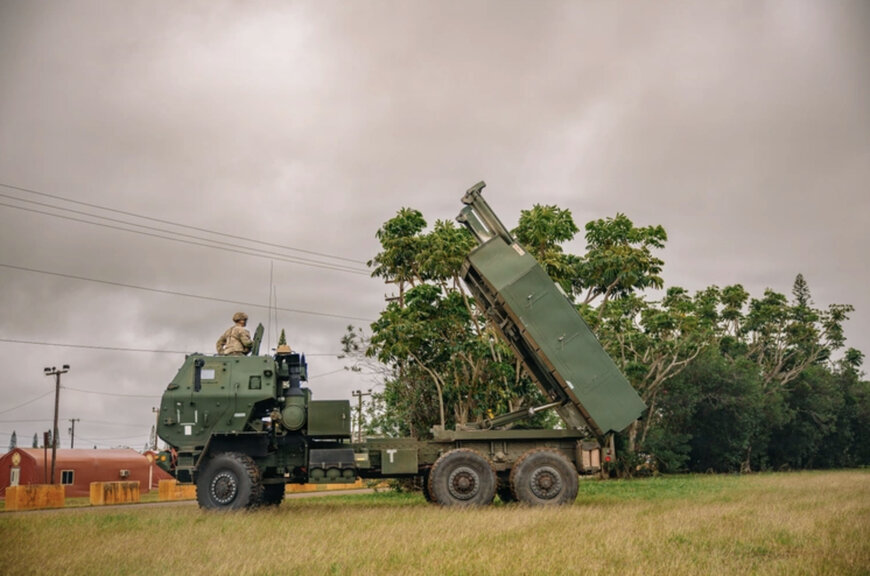
Multi-domain military operations increasingly require real-time integration of sensors, shooters and logistics systems across distributed units. During the Lightning Surge 2 live-fire exercise, Lockheed Martin and industry partners demonstrated a full-stack Next Generation Command and Control (NGC2) prototype designed to connect data sources, mission applications and sustainment systems under operational conditions.
The demonstration was conducted in collaboration with the 25th Infantry Division and the U.S. Army’s Capability Program Executive Office for Command, Control and Communications Network (CPE C2IN), validating digital sensor-to-shooter workflows in a live-fire environment.
Full-stack NGC2 architecture for operational integration
The NGC2 prototype integrates artificial intelligence-driven data processing with the Army’s C2 transport and compute layers. The architecture combines contributions from multiple industry partners:
- Raft provides the foundational data platform and AI mission system.
- Accelint delivers the Neo mission-command interface.
- Rune supplies the TyrOS logistics platform.
Together, these elements form a layered command-and-control system capable of aggregating electronic warfare targeting inputs, unmanned aerial system (UAS) feeds, and battle damage assessments into unified digital fires workflows.
Live sensor-to-shooter execution under combat conditions
During Lightning Surge 2, soldiers from the 25th Infantry Division used the NGC2 prototype to execute real-time fires missions. HIMARS rocket systems and M777 howitzers were employed to validate the end-to-end digital chain.
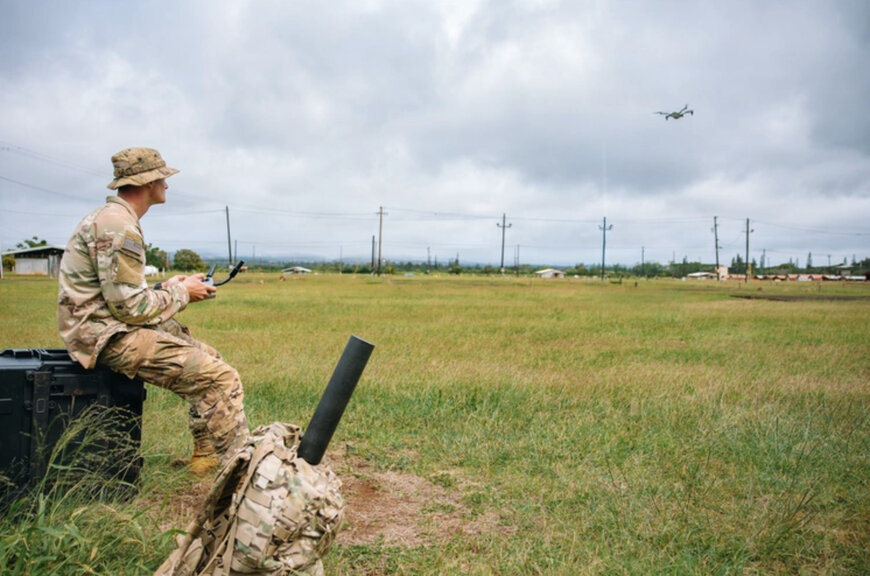
Electronic warfare data, drone video streams and target assessments were ingested into the data layer, processed and relayed to digital fire-control systems. The objective was to assess whether sensors, decision-makers and firing platforms could exchange actionable information without latency that would degrade operational effectiveness.
Voice commands issued through Raft’s AI mission system automated selected operational tasks. High-definition video feeds were synchronized with live drone position data, reducing the time between target detection and airspace clearance for engagement. The integration demonstrated how AI-enabled command-and-control systems can compress decision cycles in contested environments.
Unified operational picture for division-level command
Accelint’s Neo interface consolidated live track data, UAS positions and multi-source intelligence feeds into a single mission-command display. Presenting this information within a unified operational picture supports commanders in maintaining situational awareness during high-tempo operations.
In parallel, ammunition expenditure data from firing systems was automatically recorded and transmitted to Rune’s TyrOS platform. Linking live fires data to logistics forecasting addressed sustainment planning by improving visibility into ammunition levels and future supply requirements.
This integration highlights a key design principle of NGC2: command-and-control effectiveness depends not only on targeting accuracy but also on real-time sustainment data.
Incremental development through field validation
The NGC2 prototype is designed as a scalable architecture, with iterative updates informed by soldier feedback collected during each Lightning Surge event. The modular structure allows new capabilities to be integrated within Raft’s data layer and surfaced through the Neo interface as operational requirements evolve.
Lightning Surge 3, scheduled for April 2026, will focus on an airspace mission thread in support of the 25th Infantry Division, further testing the adaptability of the NGC2 framework.
Position within modern command-and-control modernization efforts
Military modernization programs worldwide are seeking to implement AI-enabled command-and-control systems capable of integrating heterogeneous sensors, effectors and sustainment assets. Key technical criteria typically include:
Live sensor-to-shooter execution under combat conditions
During Lightning Surge 2, soldiers from the 25th Infantry Division used the NGC2 prototype to execute real-time fires missions. HIMARS rocket systems and M777 howitzers were employed to validate the end-to-end digital chain.
Electronic warfare data, drone video streams and target assessments were ingested into the data layer, processed and relayed to digital fire-control systems. The objective was to assess whether sensors, decision-makers and firing platforms could exchange actionable information without latency that would degrade operational effectiveness.
Voice commands issued through Raft’s AI mission system automated selected operational tasks. High-definition video feeds were synchronized with live drone position data, reducing the time between target detection and airspace clearance for engagement. The integration demonstrated how AI-enabled command-and-control systems can compress decision cycles in contested environments.
Unified operational picture for division-level command
Accelint’s Neo interface consolidated live track data, UAS positions and multi-source intelligence feeds into a single mission-command display. Presenting this information within a unified operational picture supports commanders in maintaining situational awareness during high-tempo operations.
In parallel, ammunition expenditure data from firing systems was automatically recorded and transmitted to Rune’s TyrOS platform. Linking live fires data to logistics forecasting addressed sustainment planning by improving visibility into ammunition levels and future supply requirements.
This integration highlights a key design principle of NGC2: command-and-control effectiveness depends not only on targeting accuracy but also on real-time sustainment data.
Incremental development through field validation
The NGC2 prototype is designed as a scalable architecture, with iterative updates informed by soldier feedback collected during each Lightning Surge event. The modular structure allows new capabilities to be integrated within Raft’s data layer and surfaced through the Neo interface as operational requirements evolve.
Lightning Surge 3, scheduled for April 2026, will focus on an airspace mission thread in support of the 25th Infantry Division, further testing the adaptability of the NGC2 framework.
Position within modern command-and-control modernization efforts
Military modernization programs worldwide are seeking to implement AI-enabled command-and-control systems capable of integrating heterogeneous sensors, effectors and sustainment assets. Key technical criteria typically include:
- Data interoperability across legacy and modern platforms
- Latency performance in live operational conditions
- Scalability of compute and data layers
- Integration of logistics and sustainment forecasting
By demonstrating sensor-to-shooter connectivity, AI-assisted task automation, and logistics data integration during a live-fire exercise, Lockheed Martin’s NGC2 prototype illustrates how layered digital architectures can be validated under operational stress rather than limited to laboratory environments.
For defense organizations evaluating next-generation command-and-control systems, the Lightning Surge 2 demonstration provides a field-tested example of how AI-driven data integration can support distributed, multi-domain operations.
www.lockheedmartin.com
For defense organizations evaluating next-generation command-and-control systems, the Lightning Surge 2 demonstration provides a field-tested example of how AI-driven data integration can support distributed, multi-domain operations.
www.lockheedmartin.com
