
www.aero-defence.tech
22
'26
Written on Modified on
Rotterdam Shore Power selects ABB for world’s largest shore power project
Maritime & Offshore NL reports that the project supplies over 100 MVA shore power capacity, supporting emissions reduction, regulatory compliance, and scalable port electrification.
www.maritimetechnology.nl
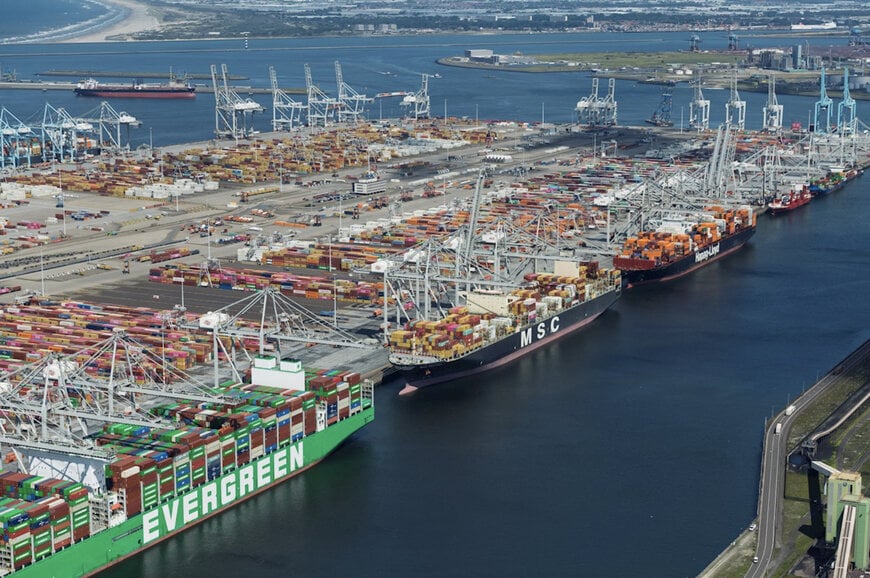
ABB has been selected by Rotterdam Shore Power (RSP), a joint venture of the Port of Rotterdam and Eneco, to design and deliver shore power systems for multiple deep-sea container terminals in the Port of Rotterdam.
The combined installations will exceed 100 megavoltamperes (MVA) of total capacity, making them the largest shore power systems deployed globally to date based on installed capacity. The systems are scheduled to become operational in the second half of 2028 and are designed to support compliance with the FuelEU Maritime Regulation, which requires container and passenger vessels above 5,000 gross tonnage to use shore power or equivalent zero-emission technologies from 1 January 2030.
The project will supply electrical power to three major container terminals: APM Terminals Maasvlakte II, Hutchison Ports ECT Delta, and Hutchison Ports ECT Euromax. ABB’s shore power infrastructure will provide 35 connection points, enabling up to 32 container vessels to be powered simultaneously while berthed during cargo operations. Each terminal contract includes a multi-year service agreement. The contracts were booked in December 2025; financial terms were not disclosed.
ABB’s scope includes system engineering, prefabricated delivery, installation, on-site testing, and commissioning. The prefabricated approach reduces installation time and minimizes operational disruption, while the modular design allows scalability for future capacity expansion and integration with renewable energy sources. ABB will also supply the supervisory control and data acquisition (SCADA) system, enabling real-time monitoring, operational control, and accurate energy metering for customer billing.
By allowing vessels to shut down auxiliary engines while docked, the shore power systems are expected to significantly reduce port-related emissions. According to Rotterdam Shore Power estimates, CO₂ emissions from vessels calling at the three terminals could be reduced by approximately 96,000 tonnes annually from 2030, assuming shore power is used for at least 90 percent of berthing time. Additional benefits include the elimination of local noise emissions and improved air quality within the port area.
www.maritimetechnology.com
