
www.aero-defence.tech
09
'26
Written on Modified on
Rim-Drive Thrusters for Acoustic Research Vessel
Kongsberg Maritime and Garden Reach Shipbuilders & Engineers cooperate to equip an advanced acoustic research vessel for India’s Naval Physical and Oceanographic Laboratory with low-noise electric propulsion.
www.kongsberg.com
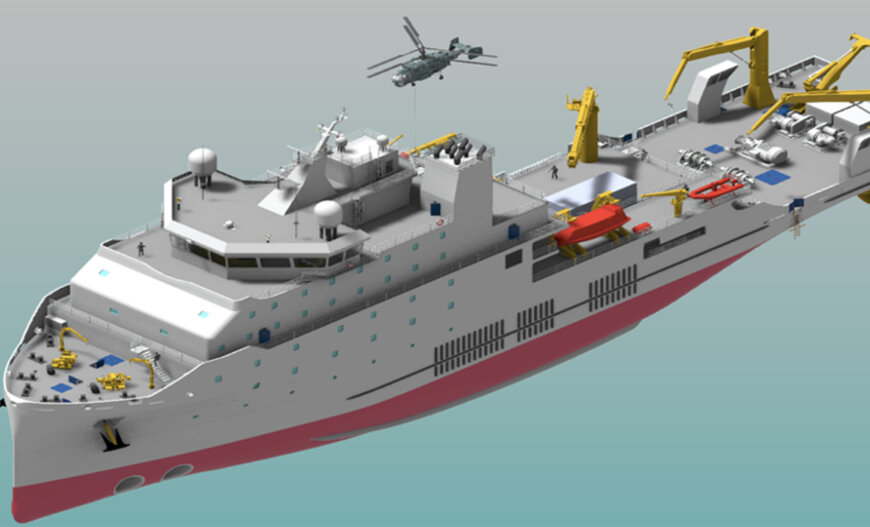
A new advanced acoustic research vessel being built for India’s Naval Physical and Oceanographic Laboratory will use electric rim-drive thrusters supplied by Kongsberg Maritime to meet strict underwater radiated noise limits required for acoustic and oceanographic research operations.
Context of the Cooperation
The project involves Kongsberg Maritime, responsible for propulsion and control systems, and Garden Reach Shipbuilders & Engineers, which is constructing the vessel in India. The end user is Naval Physical and Oceanographic Laboratory, part of Defence Research and Development Organisation.
The primary technical challenge addressed by the cooperation is achieving vessel manoeuvrability and propulsion performance while maintaining exceptionally low underwater noise levels. Such requirements are critical for acoustic signature measurement, sonar testing, and oceanographic data collection, where self-noise can compromise measurement accuracy. Meeting these requirements requires close integration between vessel design, propulsion architecture, and control systems.
Technical Solution and Responsibilities
Kongsberg Maritime is supplying a rim-drive propulsion package consisting of two RD-AZ2600 azimuth thrusters, two RD-TT1600 tunnel thrusters, and the MCON propulsion control system. GRSE is responsible for hull construction, mechanical integration, and overall vessel systems integration.
Rim-drive thrusters differ from conventional shaftline or geared azimuth systems by integrating a permanent magnet electric motor directly into the propeller nozzle. The design eliminates gearboxes and blade tips, reducing mechanical vibration and cavitation, which are primary contributors to underwater radiated noise. A six-bladed propeller housed in a nozzle improves low-speed thrust efficiency while maintaining acoustic performance. With no gears apart from the steering mechanism and no separate cooling circuit, the system also reduces maintenance complexity.
Deployment and Integration
The propulsion systems are being installed as part of the vessel’s construction programme at GRSE. Integration includes mechanical installation, power and control interfaces, and alignment with onboard laboratories and acoustic measurement equipment. The MCON control system provides coordinated control of azimuth and tunnel thrusters to support precise low-speed manoeuvring during research operations.
Applications and Expected Impact
The vessel is intended for oceanographic research, sonar evaluation, and acoustic signature analysis. The rim-drive configuration supports these applications by minimising propulsion-induced noise across low and medium operating speeds. From an operational perspective, the electric, gearless architecture improves reliability and simplifies maintenance, contributing to higher vessel availability for research missions.
This project also represents the deployment of Kongsberg Maritime’s rim-drive technology beyond its 100th delivered unit worldwide, indicating a broader adoption of this propulsion approach for research, naval, and specialised vessels where acoustic performance is a defining operational parameter.
www.kongsberg.com
