
www.aero-defence.tech
22
'25
Written on Modified on
Lockheed Martin Successfully Tests Extended Range GMLRS
The 112-kilometer flight test of the Alternative Warhead variant doubles the previous range, providing enhanced precision and lethality for the U.S. Army and partners.
www.lockheedmartin.com
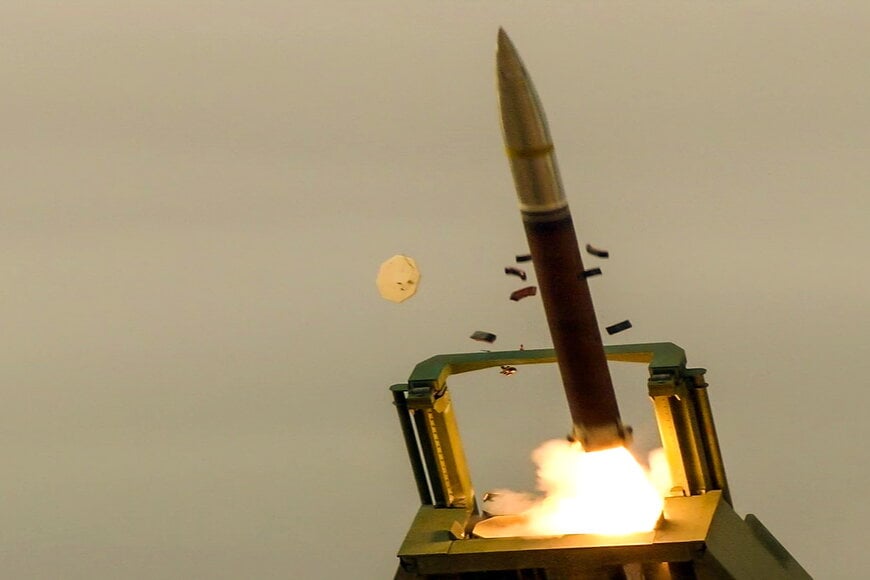
Lockheed Martin’s Extended-Range Guided Multiple Launch Rocket System (ER GMLRS) has demonstrated enhanced operational performance in a recent flight test, reinforcing its position as a next-generation precision fires munition with extended reach and improved capability against area targets. The test, conducted at White Sands Missile Range in New Mexico, underscores how ER GMLRS builds on established guided rocket technology to address evolving tactical requirements.
Expanded Range and Mission Profile
The Extended-Range variant is designed to operate at significantly greater distances than the legacy GMLRS rocket. While the original GMLRS munition typically reaches targets at approximately 70 kilometers, ER GMLRS is engineered to extend this reach up to approximately 150 kilometers, more than doubling engagement distance. This expanded range improves stand-off distance for launch platforms such as the High Mobility Artillery Rocket System (HIMARS) and the M270 family of launchers, providing commanders with increased tactical flexibility.
In the December 2025 demonstration, an ER GMLRS round equipped with an Alternative Warhead (AW) variant was fired and successfully flew 112 kilometers, validating the extended reach as well as accuracy and lethality against area target sets — those that are imprecisely located or dispersed across a battle space.
Technology and Performance Characteristics
ER GMLRS retains the core precision guidance and responsiveness of its predecessor, employing inertial navigation with global positioning to support all-weather operations. The system is compatible with existing HIMARS and M270 launchers, facilitating integration with current precision fires architectures without requiring new launch vehicles. The munition’s design incorporates a larger motor and enhanced control mechanisms that contribute to its extended range and maneuverability.
Both unitary and alternative warhead options are available for ER GMLRS. The unitary warhead addresses point targets with reduced collateral effects, while the alternative warhead is optimized for engaging area targets and minimizes unexploded ordnance on the field. These dual options support a broader set of missions than some competing rockets that may focus on a narrower target set.
Operational Implications and Competition
Compared with traditional rocket artillery, which generally trades precision for volume or range, ER GMLRS offers a blend of extended reach and precision engagement that aligns with modern multi-domain operational concepts. Its ability to engage targets at distances up to roughly 150 kilometers enhances the survivability of launch platforms by enabling operations outside the reach of many short-range counter-battery systems. Integration with widely fielded systems like HIMARS also simplifies logistics and deployment relative to entirely new rocket families.
In contrast to longer-range precision strike missiles — such as the Precision Strike Missile (PrSM), which is engineered for ranges exceeding 400 kilometers — ER GMLRS fills an intermediate role. It bridges the gap between short-range guided rockets and long-range missiles by delivering extended reach without the logistical and operational complexities associated with heavier strategic systems.
Progress Toward Fielding and Production Context
ER GMLRS has been undergoing development and qualification testing for several years and recently entered production. The December 2025 test marks another milestone in validating performance as the U.S. Army and allied users prepare for broader fielding. Production ramp-ups for GMLRS and its extended-range variants are supported by substantial U.S. Department of Defense procurement contracts, reflecting sustained demand for these precision fires capabilities.
www.lockheedmartin.com
