
www.aero-defence.tech
15
'25
Written on Modified on
L3Harris Demonstrates Interoperable Software-Defined Network for Multi-Agency Operations
The demonstration showed how a software-defined architecture can connect defense and civilian agencies across domains, supporting faster coordination for homeland security, crisis response, and contested environments.
www.l3harris.com
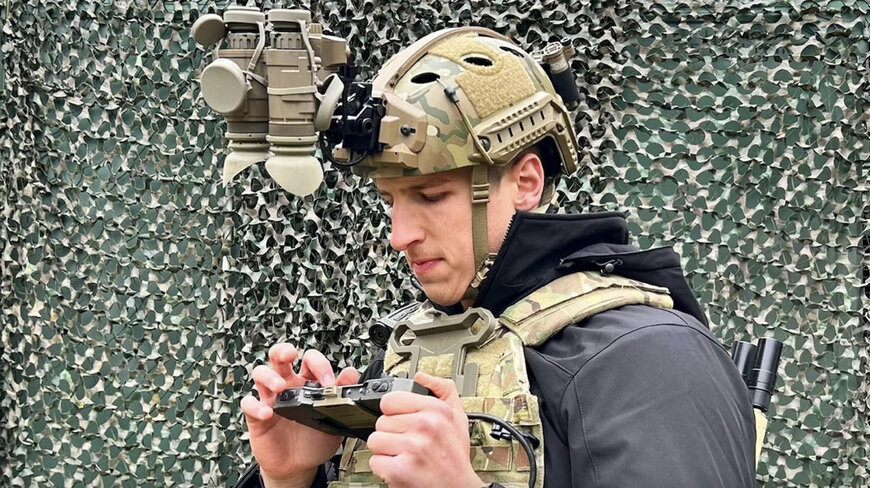
Addressing cross-domain interoperability challenges
L3Harris Technologies demonstrated a software-defined communications network designed to enable real-time interoperability between defense and civilian government agencies. The event brought together U.S. government officials to observe how previously separate systems can be unified to support coordinated operations across land, air, and command-and-control domains.
Interoperability remains a critical challenge for national security and emergency response operations, where agencies often rely on different communication standards, security domains, and operational networks. The demonstration focused on overcoming these barriers through a shared, adaptable network architecture.
Integrated network spanning tactical to command levels
The end-to-end demonstration connected tactical communications devices, counter-uncrewed aerial system capabilities, advanced imaging sensors, mobile operations centers, and centralized command-and-control platforms. By integrating these elements into a single software-defined framework, the network enabled instant data exchange and coordinated response across multiple operational layers.
A combination of public safety radios and military-grade tactical radios was used to link both manned and unmanned assets. This mixed-network approach reflects real-world operating environments, where civil authorities, defense forces, and emergency responders must collaborate using different equipment and security requirements.
Software-defined architecture supports resilience and speed
Key technologies highlighted included the T-HAWC tactical networking solution, the AN/PRC-158C software-defined data device, and 5G gateway technologies. Together, these components demonstrated how multi-path connectivity can be maintained even in degraded or contested conditions.
By relying on software-defined capabilities rather than fixed hardware configurations, the network can be rapidly adapted to new missions and operating environments. This flexibility supports faster deployment cycles and allows capabilities to be delivered and updated more quickly than traditional defense acquisition timelines.
Applications beyond defense operations
While the demonstration focused on national security use cases, the interoperable network architecture is also intended to support disaster response, border security, and large-scale public events. In these scenarios, maintaining reliable communication between multiple agencies is essential for situational awareness and coordinated decision-making.
The demonstration illustrates how software-defined, multi-domain communications can serve as a foundation for unified operations across the Department of War, other federal agencies, and civil authorities facing increasingly complex operational demands.
www.l3harris.com
