
www.aero-defence.tech
28
'26
Written on Modified on
Autonomous Drone Coordination Through Distributed Artificial Intelligence
Airbus Defence and Space and Primoco UAV SE demonstrated an integrated multi-platform autonomy system for uncrewed aerial vehicles.
www.airbus.com
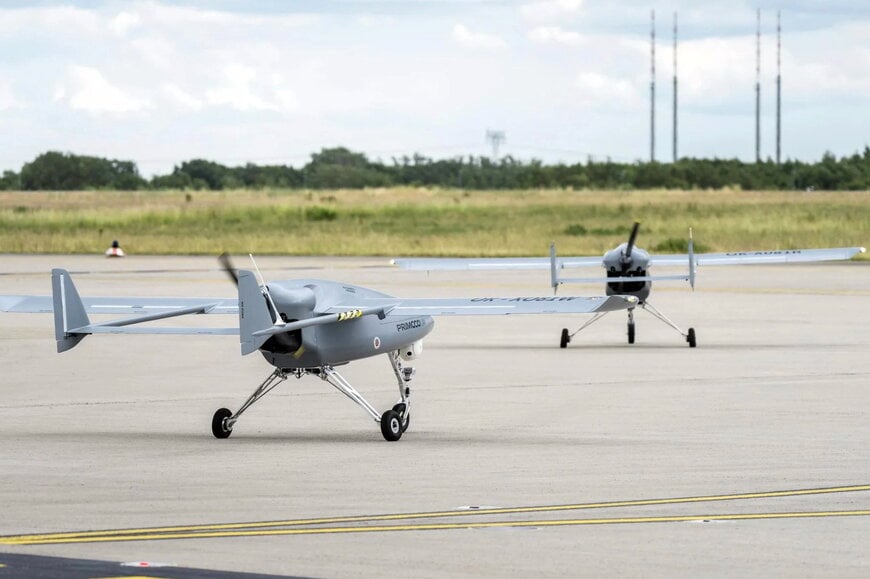
Airbus Defence and Space and Primoco UAV SE have demonstrated collaborative autonomous flight capabilities by integrating software-defined control suites into uncrewed aerial vehicles to streamline multi-platform operational coordination.
Technical Challenge and Integration Rationale
Conventional uncrewed aerial vehicle (UAV) operations require dedicated human operators for individual platforms to control navigation, manage payloads, and monitor flight trajectories. Managing multiple UAVs simultaneously creates high cognitive workloads and operational friction during complex tactical assignments.
To resolve these limitations, Airbus Defence and Space collaborated with Primoco UAV SE to implement distributed intelligence across multiple airborne assets. The joint project combines Airbus software architecture with Primoco One 150 UAV hardware to enable uncrewed-uncrewed and crewed-uncrewed teaming without requiring separate manual flight control for each aircraft.
Software Architecture and Operational Division
The technical solution centers on the Airbus Multiplatform Autonomous Reconfigurable and Secure (MARS) Autonomy suite. The software functions as a distributed intelligence network operating across independent physical platforms. Within this architecture, Primoco UAV SE provides the Primoco One 150 aerial platforms, while Airbus provides the underlying mission system. Responsibilities are divided into four main functional clusters:
- Multi-Platform Mission Planning: Automated task distribution and route calculations based on operational parameters.
- Mission Management: Real-time task execution and dynamic flight replanning during changing environmental conditions.
- Data Distribution: Automated target recognition, sensor data fusion, and live streaming across networked units.
- Flight Management: Automated maneuvering, route adherence, and collision avoidance algorithms.
The MARS Autonomy software utilizes an open, modular framework designed to be platform-agnostic, allowing integration into third-party uncrewed and crewed aircraft.
Implementation and Operational Capabilities
During live flight demonstrations at the ILA Berlin Air Show, two Primoco One 150 UAVs executed autonomous surveillance missions: teamed multi-role surveillance and teamed surveillance for accelerated coverage. The platforms shared continuous sensor data, automatically reallocating search tasks without direct operator guidance for routine maneuvering.
The human operator transitions from a flight driver to a mission manager. Under this control hierarchy, non-critical flight tasks are processed autonomously by the software, while safety-critical decisions require explicit operator authorization.
Initial operational deployment of the MARS Autonomy suite on Primoco One 150 UAVs is planned for 2026. Future deployment schedules include integration into the Airbus U740 Valkyrie platform by 2029 and the Airbus U760 Ravenstorm by 2032.
Expected Impact on Industrial Automation
By offloading path planning and data processing to the edge software, the integrated system reduces pilot fatigue and increases tactical responsiveness in digital infrastructure and surveillance tasks. The collaborative framework scales to accommodate additional UAVs and mission roles, including cargo logistics and collaborative intelligence gathering, while maintaining predictable operational stability.
Edited by Evgeny Churilov, Induportals Media - Adapted by AI.
www.airbus.com
Implementation and Operational Capabilities
During live flight demonstrations at the ILA Berlin Air Show, two Primoco One 150 UAVs executed autonomous surveillance missions: teamed multi-role surveillance and teamed surveillance for accelerated coverage. The platforms shared continuous sensor data, automatically reallocating search tasks without direct operator guidance for routine maneuvering.
The human operator transitions from a flight driver to a mission manager. Under this control hierarchy, non-critical flight tasks are processed autonomously by the software, while safety-critical decisions require explicit operator authorization.
Initial operational deployment of the MARS Autonomy suite on Primoco One 150 UAVs is planned for 2026. Future deployment schedules include integration into the Airbus U740 Valkyrie platform by 2029 and the Airbus U760 Ravenstorm by 2032.
Expected Impact on Industrial Automation
By offloading path planning and data processing to the edge software, the integrated system reduces pilot fatigue and increases tactical responsiveness in digital infrastructure and surveillance tasks. The collaborative framework scales to accommodate additional UAVs and mission roles, including cargo logistics and collaborative intelligence gathering, while maintaining predictable operational stability.
Edited by Evgeny Churilov, Induportals Media - Adapted by AI.
www.airbus.com
