

www.aero-defence.tech
14
'26
Written on
Modified on
General Dynamics News
General Dynamics Mission Systems Showcases Secure Technologies for Contested Domains
Tactical cross-domain solutions, space networking, resilient PNT and software-defined radios support secure communications, information sharing and mission assurance across air, space and cyber.
www.gd.com
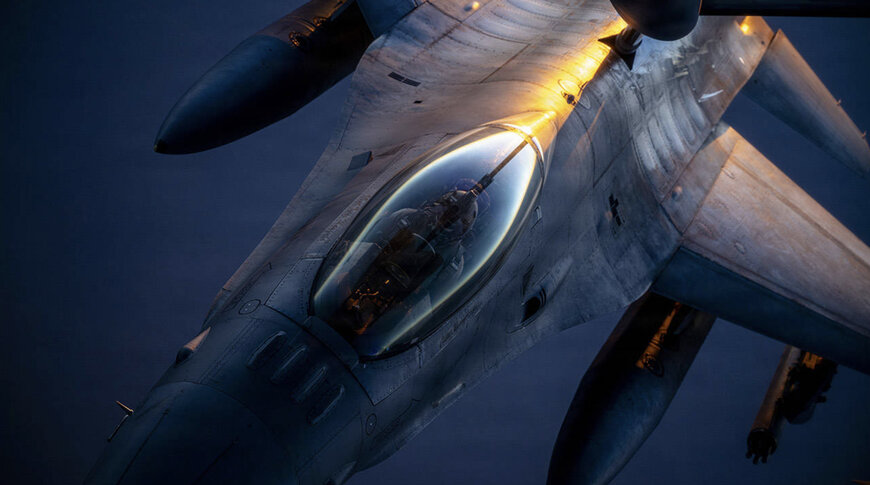
General Dynamics Mission Systems is presenting its secure processing, cross-domain data protection, and resilient communications systems at the Air, Space and Cyber Conference, held from September 14 to 16, 2026, at the Gaylord National Resort and Convention Center in National Harbor, Maryland. The technical exhibition covers hardware and software systems designed for aerospace, spaceflight, and joint all-domain defense networks operating within electronically degraded or contested operational environments.
Cross-Domain Data Security and Multi-Level Architecture
Operating across mixed-classification environments requires verified cryptographic and architectural isolation between security levels. The tactical cross-domain solution, designated TACDS, provides certified bidirectional data filtering to allow the transit of mission data across disparate security enclaves at the tactical edge. In fixed and mobile command infrastructures, the truMLS system establishes a unified multilevel security platform, replacing segmented physical terminal stacks with single-endpoint access to streamline system footprints and lower lifecycle administrative overhead.
For space-based networking, the radiation-tolerant Secure Network Processor integrates cryptographic processing and data transport routing into a compact unit optimized for size, weight, and power constraints. The processor supports SmallSat constellations deploying into proliferated low Earth orbit architectures, providing direct routing capability across dynamic satellite mesh configurations.
Spaceflight Navigation and Military-Code Positioning
Spacecraft navigation in contested orbital regimes relies on specialized radio frequency front-ends capable of tracking military and commercial satellite navigation signals. The Sentinel receiver is a space-qualified unit certified for Military-Code GPS signal processing, providing positioning, velocity, and timing telemetry for platforms operating across low Earth orbit and geostationary Earth orbit.
Complementary space navigation equipment includes the Explorer receiver, an energy-efficient unit tracking civil and commercial GPS signals, alongside a three-to-five-year mission-life navigation subsystem designed for low-cost defense and commercial small-satellite constellations.
Multi-Function Edge Processing and Avionics Stores Management
Edge computing on airborne and tactical platforms is supported by modular multi-function processors configured with physical cross-domain safeguards and multi-level data handling. These processors are supplied with either forced-air or liquid conduction thermal management systems to match varying aircraft integration bays. Auxiliary platform storage includes network-attached storage assemblies featuring integrated Type 1 hardware encryption. For platform weapons release, open-architecture stores management systems support integration via the Universal Armament Interface and MIL-STD-1760E electrical interfaces.
Tactical Ground and Airborne RF Platforms
Survival and tactical voice equipment includes the Next Generation Combat Survival Radio, an Air Force-led joint program delivering line-of-sight voice and encrypted over-the-horizon bidirectional data communications to support combat search and rescue teams during pilot recovery missions.
For ground-to-air communications, the URC-300 transceiver incorporates high-rejection radio frequency filtering to mitigate electromagnetic interference from co-located airfield systems, commercial frequency modulation transmitters, and wireless local-area networks. The RF receiver architecture allows multiple transceivers to operate simultaneously at separation distances of 6.5 feet without cross-channel desensitization, compared to separation distances of 50 to 115 feet required by standard military tactical transceivers.
Distributed Swarming and Precision Guidance
Unmanned platform coordination is implemented through the Quiver software-defined radio, developed by the company's Project G13 team. The system integrates digital signal processing, electronic warfare capabilities, resilient positioning, and autonomous swarming logic to coordinate unmanned aerial and ground formations. For long-range precision fires, the company displays guidance electronic units, anti-tamper security mechanisms, and software-defined radio sub-assemblies engineered for kinetic munitions.
In the conference proceedings, Dan Feller, Vice President of Space and Embedded Cryptographic Solutions, participates in an expert panel addressing cyber resilience and mission assurance on Wednesday, September 16, at 9:10 a.m. in Room Potomac D.
Additional Context:
This section details technical specifications and competitive benchmarking not included in the original product announcement
Military-grade space navigation systems and tactical software-defined radios are evaluated by cryptographic certification levels (National Security Agency Type 1), multi-access interference immunity, operational thermal envelope, and power consumption under high-g flight profiles.
In space-qualified Military-Code GPS receivers, the General Dynamics Sentinel competes directly with systems like the BAE Systems Miniature Airborne GPS Receiver 2000 and the L3Harris Appliqué GPS Receiver. While BAE Systems platforms emphasize common avionics form factors for fixed-wing military aircraft, spaceborne units must meet stringent single-event upset thresholds and cumulative total ionizing dose radiation tolerances above 100 kilorads. In the tactical edge radio domain, the URC-300 competes against the Collins Aerospace AN/ARC-210 Gen6 and L3Harris Falcon IV AN/PRC-163. The primary technical differentiation for the URC-300 rests in its near-field co-site interference rejection, utilizing high-dynamic-range front-end filtering that enables multi-unit operation at 6.5-foot spacing, whereas standard VHF and UHF military tactical transceivers require tuned bandpass cavity filters or substantial physical displacement to prevent front-end receiver saturation.
Edited by Natania Lyngdoh, Induportals editor, assisted by AI.
www.gdmissionsystems.com
