
www.aero-defence.tech
20
'26
Written on Modified on
High-Performance Computing Infrastructure Deployment for Aerospace Simulation
Airbus deployed modular supercomputing infrastructure from Bull to triple simulation capacity for aerodynamic design and structural stress analysis.
www.bull.com
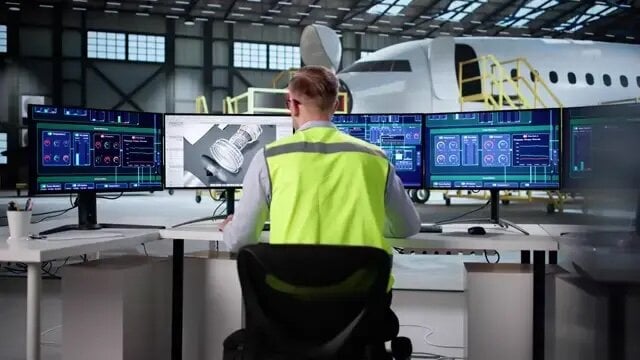
Operating within the aerospace manufacturing industry, Airbus requires substantial computational resources to design next-generation aircraft and maintain rigorous safety standards. Increasing demand on existing high-performance computing (HPC) infrastructure necessitated a scalable solution to handle complex engineering workloads. The primary operational challenge involved executing large-scale simulations for aerodynamic design, acoustic modeling of the cockpit, fuselage, and cabin, as well as structural stress analysis. The objective was to triple the existing simulation capacity while simultaneously improving the energy efficiency of the data center operations.
Modular High-Performance Computing Architecture
To meet these computational demands, Airbus selected a supercomputing infrastructure developed by Bull, implemented through an HPC-as-a-service model. The selected solution incorporates a modular data center architecture comprising pre-built, interchangeable components. Rather than constructing a traditional server facility from the ground up, the computing systems, storage hardware, and networking infrastructure are pre-integrated into modules at a manufacturing facility in Angers, France. These modules are then transported and assembled on-site to form a fully operational, turnkey data center.
Multi-Site Deployment and Integration Support
The deployment was structured as a multi-site program. The first computing system entered service in Toulouse, France, in 2025, reaching operational status 14 months after the initial contract signature. The secondary system was subsequently commissioned in Hamburg, Germany, in 2026. Throughout the implementation phase, industrial HPC engineers provided specialized integration support in Germany. This support focused on application optimization and the configuration of simulation environments to ensure the new hardware architecture aligned with the specific engineering software utilized by Airbus.
Thermal Management and Operational Results
The completed infrastructure successfully tripled the aerospace manufacturer's overall simulation capacity. To manage the thermal output generated by the high-density computing systems, the installations utilize Direct Liquid Cooling technology. This thermal management mechanism captures heat directly at the component level, optimizing the power consumption of the servers. Furthermore, the heat extracted from the supercomputing infrastructure is recovered and repurposed to supply heating to neighboring buildings on the industrial campus, thereby improving the overall material and energy efficiency of the site.
Edited by an industrial journalist, Lekshman Ramdas, with AI assistance.
www.bull.com
